

Partager
Fr. 135.00
G Scott, G Scott, Mik R Schoenberg, Mike R Schoenberg, Michael R. Schoenberg, Mike R. Schoenberg...
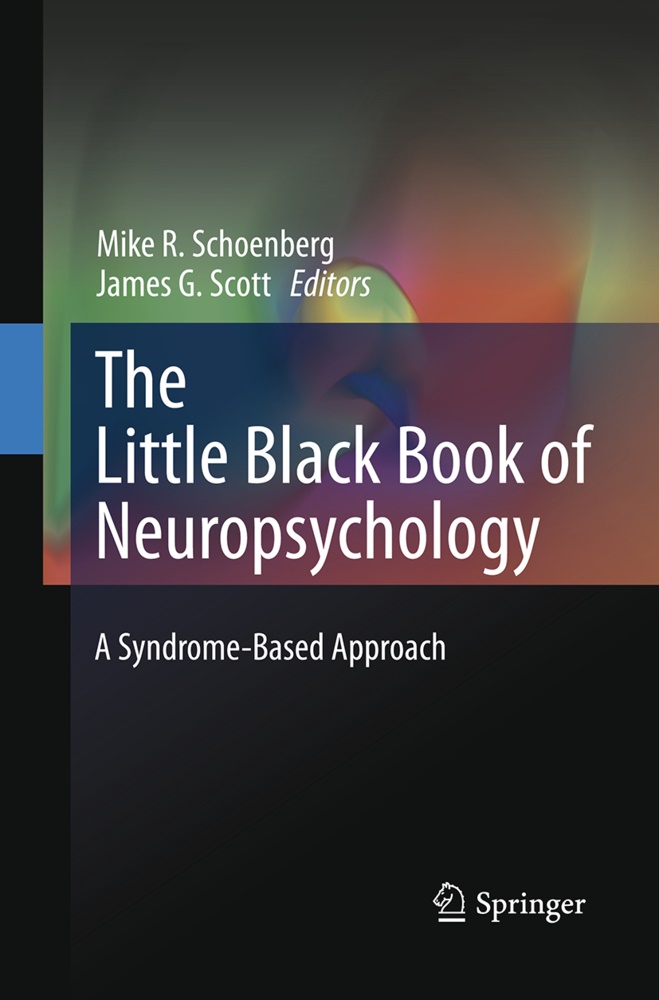
The Little Black Book of Neuropsychology - A Syndrome-Based Approach
Anglais · Livre de poche
Expédition généralement dans un délai de 6 à 7 semaines
Description
From translating the patient's medical records and test results to providing recommendations, the neuropsychological evaluation incorporates the science and practice of neuropsychology, neurology, and psychological sciences. The Little Black Book of Neuropsychology brings the practice and study of neuropsychology into concise step-by-step focus-without skimping on scientific quality. This one-of-a-kind assessment reference complements standard textbooks by outlining signs, symptoms, and complaints according to neuropsychological domain (such as memory, language, or executive function), with descriptions of possible deficits involved, inpatient and outpatient assessment methods, and possible etiologies.
Additional chapters offer a more traditional approach to evaluation, discussing specific neurological disorders and diseases in terms of their clinical features, neuroanatomical correlates, and assessment and treatment considerations. Chapters in psychometrics provide for initial understanding of brain-behavior interpretation as well as more advanced principals for neuropsychology practice including new diagnostic concepts and analysis of change in performance over time. For the trainee, beginning clinician or seasoned expert, this user-friendly presentation incorporating 'quick reference guides' throughout which will add to the practice armentarium of beginning and seasoned clinicians alike. Key features of The Black Book of Neuropsychology:
- Concise framework for understanding the neuropsychological referral.
- Symptoms/syndromes presented in a handy outline format, with dozens of charts and tables.
- Review of basic neurobehavioral examination procedure.
- Attention to professional issues, including advances in psychometrics and diagnoses, including tables for reliable change for many commonly used tests.
- Special "Writing Reports like You Mean It" section andguidelines for answering referral questions.
- Includes appendices of practical information, including neuropsychological formulary.
The Little Black Book of Neuropsychology is an indispensable resource for the range of practitioners and scientists interested in brain-behavior relationships. Particular emphasis is provided for trainees in neuropsychology and neuropsychologists. However, the easy to use format and concise presentation is likely to be of particular value to interns, residents, and fellows studying neurology, neurological surgery, psychiatry, and nurses. Finally, teachers of neuropsychological and neurological assessment may also find this book useful as a classroom text.
"There is no other book in the field that covers the scope of material that is inside this comprehensive text. The work might be best summed up as being a clinical neuropsychology postdoctoral residency in a book, with the most up to date information available, so that it is also an indispensible book for practicing neuropsychologists in addition to students and residents...There is really no book like this available today. It skillfully brings together the most important foundationsof clinical neuropsychology with the 'nuts and bolts' of every facet of assessment. It also reminds the more weathered neuropsychologists among us of the essential value of neuropsychological assessment...the impact of the disease on the patient's cognitive functioning and behavior may only be objectively quantified through a neuropsychological assessment."
Arch Clin Neuropsychol (2011) first published online June 13, 2011
Read the full review acn.oxfordjournals.org
Table des matières
Part I: Neuropsychology - General Issues: The Neuropsychological Referral.- Medical Records.- Basic Neuroanatomy.- Basic components of a Neuropsychological Evaluation.- Part II: Neuropsychological Domains: Arousal: The drowsy, lethargic, or stuporous patient.- Attention/Concentration Problems: The distractible patient.- Inattention/Neglect Syndromes.- Language Problems.- Learning and Memory: The Forgetful Patient.- Visuospatial/Visuoconstructional Problems.- Apraxias.- Agnosias.- Executive Functions (problem solving, abstraction, sequencing, inhibition, self-monitoring, planning, and initiation).- Emotional/Mood.- Episodic Neurological Dysfunction.- Part III: Specific Neurological Diseases: Aphasia.- Cerebrovascular Disease and Stroke.- Dementia.- Seizures/Epilepsy.- Somatization Disorders, blackout spells, fits/convulsions.- Parkinson's Disease and other movement disorders.- Multiple Sclerosis and Other Demyelinating Disorders.- Traumatic Brain Injury and Concussion.- Infections.- Neoplasms/Neoplastic Syndromes .- Psychiatric - depression and anxiety.- Part IV: Special Considerations: Medicolegal exposure.- Reporting Test performance/scores.- Limitations.- Answering Referral Questions.- Placement issues.
A propos de l'auteur
Mike R. Schoenberg, Ph.D., is an Assistant Professor of Neurology at University Hospitals of Cleveland and Case Western Reserve University School of Medicine. He completed a two year post-doctoral fellowship in clinical neuropsychology at the University of Oklahoma Health Sciences Center and an internship at the University of Kansas School of Medicine, Wichita. He provides academic instruction and supervision in clinical neuropsychology to medical students and psychology trainees, and conducts research in clinical neuropsychology. James G. Scott, Ph.D., ABPP-Cn is a Professor of Psychiatry at the University of Oklahoma Health Sciences Center. He completed two years of postdoctoral training in clinical neuropsychology at the University of Oklahoma Health Sciences Center and an internship at Tulane University Medical School. He is board certified by the American Board of Professional Psychology in clinical neuropsychology and provides academic instruction and supervision to medical students and psychology trainees in clinical neuropsychology and conducts research in clinical neuropsychology.
Résumé
The work might be best summed up as being a clinical neuropsychology postdoctoral residency in a book, with the most up to date information available, so that it is also an indispensible book for practicing neuropsychologists in addition to students and residents…There is really no book like this available today.
Texte suppl.
From the book reviews:
“This text has allowed me to get a really good comprehensive source reference when preparing for assessments and during the write up. It was also a very good refresher for main neuropsychological concepts. … This is another great quick reference guide to have on my bookshelf at work … . I would highly recommend this text for any graduate student studying neuropsychology or any medical student studying neuro.” (CouragePsyc, couragepsyc.blogspot.com.au, July, 2014)
Commentaire
From the book reviews:
"This text has allowed me to get a really good comprehensive source reference when preparing for assessments and during the write up. It was also a very good refresher for main neuropsychological concepts. ... This is another great quick reference guide to have on my bookshelf at work ... . I would highly recommend this text for any graduate student studying neuropsychology or any medical student studying neuro." (CouragePsyc, couragepsyc.blogspot.com.au, July, 2014)
Détails du produit
| Collaboration | G Scott (Editeur), G Scott (Editeur), Mik R Schoenberg (Editeur), Mike R Schoenberg (Editeur), Michael R. Schoenberg (Editeur), Mike R. Schoenberg (Editeur), James G. Scott (Editeur) |
| Edition | Springer, Berlin |
| Langues | Anglais |
| Format d'édition | Livre de poche |
| Sortie | 01.01.2016 |
| EAN | 9781489977557 |
| ISBN | 978-1-4899-7755-7 |
| Pages | 968 |
| Dimensions | 154 mm x 233 mm x 56 mm |
| Poids | 1484 g |
| Illustrations | XVIII, 968 p. |
| Catégories |
Littérature spécialisée
> Psychologie, ésotérique, spiritualité, anthroposophie
> Psychologie appliquée
Sciences humaines, art, musique > Psychologie > Autres Sciences naturelles, médecine, informatique, technique > Médecine > Spécialités non cliniques B, Behavioral Science and Psychology, neuropsychology, neuropsychological evaluation, Neuropsychological intervention, neuropsychological syndrome |
Commentaires des clients
Aucune analyse n'a été rédigée sur cet article pour le moment. Sois le premier à donner ton avis et aide les autres utilisateurs à prendre leur décision d'achat.
Écris un commentaire
Super ou nul ? Donne ton propre avis.