

Partager
Fr. 140.00
Judit Kiss, Yudit Kiss, Yudit (s Independent economic researcher and author Kiss, Kiss Yudit
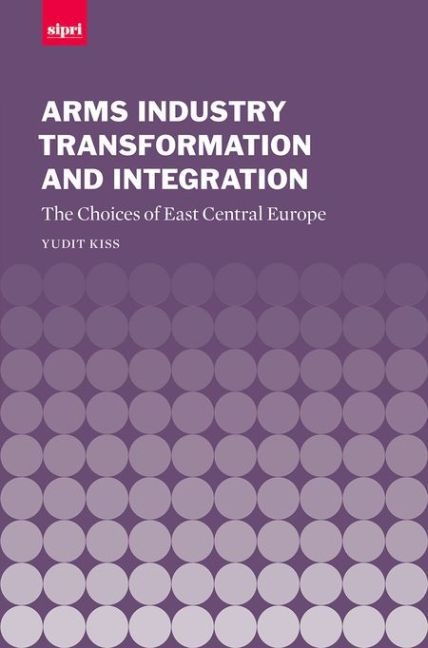
Arms Industry Transformation and Integration - The Choices of Central Europe - SIPRI Research Reports: Volume 244
Anglais · Livre Relié
Expédition généralement dans un délai de 3 à 5 semaines
Description
Informationen zum Autor Yudit Kiss (Hungary) is an economist. She received her PhD from Karl Marx University of Economics, Budapest, in 1989. Since 1992 she has worked as an independent researcher, based in Geneva. From 1993 to 1995 she studied conversion and defence industry restructuring under a MacArthur Foundation grant. Her publications include The Defence Industry in East-Central Europe: Restructuring and Conversion (OUP 1997), Regional and Employment Consequences of the Defence Industry Transformation in East Central Europe (International Labour Office, 1999), Small Arms and Light Weapons Production in Eastern, Central and Southeast Europe (Small Arms Survey, 2004) and East-Central European arms industries: between consolidation and crisis, Contemporary Security Policy (August 2011). Klappentext The defence industry was one of the pillars of the classic command economy system in Central Europe. Since the early 1990s the sector has gone through dramatic changes. This report describes how the defence industry adjusted to the changed political and economic environment in both the domestic and international context. The comparative analysis of the post-cold war experience of six Central European countries - Bulgaria, the Czech Republic, Hungary, Poland, Romania and Slovakia, which joined in the first two waves of enlargement - provides valuable lessons for other countries in their processes of socio-economic transformation. Zusammenfassung The defence industry was one of the pillars of the classic command economy system in Central Europe. Since the early 1990s the sector has gone through dramatic changes. This report describes how the defence industry adjusted to the changed political and economic environment in both the domestic and international context. Inhaltsverzeichnis 1. Introduction I.: Post-cold war East Central Europe II.: The importance of the topic III.: Methodology 2. The post-cold war evolution of the arms industry I.: Drivers of the transformation of the arms industry II.: The new structure of the arms industry III.: The arms industries of East Central Europe: crisis and partial recovery 3. Poland: a qualified success story I.: Arms industry policy in the 1990s: protection II.: Arms industry policy in the 2000s: promotion III.: The arms industry IV.: Military expenditure and procurement policy V.: Recent developments VI.: Conclusions Appendix 3A. Polish company case studies I.: Bumars rise from a domestic company to a potential regional giant II.: ARP: an indigenous engine of development III.: PZL-Swidnik: succcess via international cooperation IV.: PZL-Mielec: a regional company that became an international player V.: The Euro-Park Mielec special economic zone and the Aviation Valley VI.VII.VIII.: The F-16 dealZM Mesko: profitable use of offset dealsZM Tarnów: a typical Polish company 4. Hungary: the twists and turns of transformation I.: Arms industry policy: liberalism with elements of protectionism II.: The arms industry III.: Military expenditure and procurement policy III.: Military expenditure and procurement policy V.: Conclusions Appendix 4A. Hungarian company case studies I.: Fegyver- és Gázkészülékgyár Ltd: coping without the state II.: Rába Jármuipari Holding NyRt: a winner III.: Dunai Repülogépgyár Rt: the history in a nutshell IV.: MFS 2000 Ltd: a typical Hungarian company V.: HM Currus Gödölloi Harcjármutechnikai Rt: an MOD company VI.: Pro Patria Electronics: an amphibian-like company in a turbulent environment VII.: The new Hungarian aviation industry 5. A comparison of Poland and Hungary I.: The size and the state of the economy and the arms industry II.: The arms industrys place in the economy III.: Defence industrial policy IV.: The Warsaw Pact heritage V.: The arms industrys links with ...
Table des matières
- 1. Introduction
- I.: Post-cold war East Central Europe
- II.: The importance of the topic
- III.: Methodology
- 2. The post-cold war evolution of the arms industry
- I.: Drivers of the transformation of the arms industry
- II.: The new structure of the arms industry
- III.: The arms industries of East Central Europe: crisis and partial recovery
- 3. Poland: a qualified success story
- I.: Arms industry policy in the 1990s: protection
- II.: Arms industry policy in the 2000s: promotion
- III.: The arms industry
- IV.: Military expenditure and procurement policy
- V.: Recent developments
- VI.: Conclusions
- Appendix 3A. Polish company case studies
- I.: Bumars rise from a domestic company to a potential regional giant
- II.: ARP: an indigenous engine of development
- III.: PZL-Swidnik: succcess via international cooperation
- IV.: PZL-Mielec: a regional company that became an international player
- V.: The Euro-Park Mielec special economic zone and the Aviation Valley
- VI.VII.VIII.: The F-16 dealZM Mesko: profitable use of offset dealsZM Tarnów: a typical Polish company
- 4. Hungary: the twists and turns of transformation
- I.: Arms industry policy: liberalism with elements of protectionism
- II.: The arms industry
- III.: Military expenditure and procurement policy
- III.: Military expenditure and procurement policy
- V.: Conclusions
- Appendix 4A. Hungarian company case studies
- I.: Fegyver- és Gázkészülékgyár Ltd: coping without the state
- II.: Rába Jármuipari Holding NyRt: a winner
- III.: Dunai Repülogépgyár Rt: the history in a nutshell
- IV.: MFS 2000 Ltd: a typical Hungarian company
- V.: HM Currus Gödölloi Harcjármutechnikai Rt: an MOD company
- VI.: Pro Patria Electronics: an amphibian-like company in a turbulent environment
- VII.: The new Hungarian aviation industry
- 5. A comparison of Poland and Hungary
- I.: The size and the state of the economy and the arms industry
- II.: The arms industrys place in the economy
- III.: Defence industrial policy
- IV.: The Warsaw Pact heritage
- V.: The arms industrys links with national armed forces and participation in foreign operations
- VI.: Foreign ownership and partnerships
- VII.: Conclusions
- Appendix 5A. Comparing a Polish and a Hungarian company
- I.: Osrodek Badawczo-Rozwojowy Sprzetu Mechanicznego Sp. z o.o.
- II.: Gamma Muszaki ZRt
- 6. The Czech Republic: bright promises and sober reality
- I.: Defence industrial policy: from conversion to selective promotion
- II.: The arms industry
- III.: Military expenditure and procurement
- Appendix 6A. Czech company case studies
- I.: Aero Vodochody: out of the zone of turbulence
- II.: The VERA surveillance system: endogenous research and development
- III.: Tatra: success via foreign ownership
- IV.: The Sellier and Bellot ammunition company: a typical Czech Company
- 7. Slovakia: from a nationalist backwater to a Slavic tiger
- I.: Defence industrial policy
- II.: The arms industry
- III.: Military procurement and exports
- Appendix 7A. Slovak company case studies
- I.: The spectacular conversion of the Slovak military triangle
- II.: ZTS-peciál and ZTS-Metalurgia: dealing with the legacy of the Warsaw Pact
- III.: Way Industry: a successful conversion
- IV.: ZVS Holding: a typical Slovak company
- 8. Bulgaria: the challenge of catching up
- I.: A stopgo defence industrial policy
- II.: The arms industry
- III.: Procurement
- Appendix 8A. Bulgarian company case studies
- I.: The Terem group: a difficult privatization
- II.: Arcus: successful privatization via management employee buyout
- III.: Arsenal: a typical Bulgarian company
- IV.: Vazov Engineering Works: a difficult transformation
- V.: Electron Progress: success on civil and military markets
- 9. Romania: high ambitions, harsh realities and pragmatism
- I.: Defence industrial policy
- II.: The arms industry
- III.: Military procurement
- IV.: Exports
- V.: Poland and Romania: a comparison
- Appendix 9A. Romanian company case studies
- I.: Romarm: a difficult transformation
- II.: Cugir: a typical Romanian company
- III.: The Romanian aviation industry
- 10. The new arms industry in East Central Europe
- I.: Key factors affecting the choice of a new defence industrial model
- II.: Defence industrial adjustment models
- III.: The outcome of defence industrial transformations
- IV.: The revitalized arms industry in East Central Europe
- V.: The arms industry and politics
- VI.: Changes at the company level
- 11. The impact of EU and NATO membership
- I.: The rush towards EU and NATO membership
- II.: East Central Europe and membership of NATO
- III.: EU membership
- IV.: Striking a balance between the EU and NATO
- V.: Future prospects
- 12. Conclusions
- I.: The arms industry in East Central Europe today: its nature and status
- II.: The East Central European defence industry in the global production and trade of weapons
- III.: General lessons and insights from East Central Europe
Détails du produit
| Auteurs | Judit Kiss, Yudit Kiss, Yudit (s Independent economic researcher and author Kiss, Kiss Yudit |
| Edition | Oxford University Press |
| Langues | Anglais |
| Format d'édition | Livre Relié |
| Sortie | 08.05.2014 |
| EAN | 9780199271733 |
| ISBN | 978-0-19-927173-3 |
| Pages | 464 |
| Dimensions | 160 mm x 240 mm x 30 mm |
| Thèmes |
SIPRI Monographs SIPRI Monographs Sipri Monograph |
| Catégories |
Littérature spécialisée
Sciences sociales, droit, économie > Sciences politiques > Sciences politiques et formation politique POLITICAL SCIENCE / Security (National & International), HISTORY / Military / General, POLITICAL SCIENCE / Political Economy, POLITICAL SCIENCE / International Relations / General, Politics & government, Political Economy, Politics and government, EU (European Union), International institutions, EU & European institutions, Other Warfare & Defence Issues, Other warfare and defence issues |
Commentaires des clients
Aucune analyse n'a été rédigée sur cet article pour le moment. Sois le premier à donner ton avis et aide les autres utilisateurs à prendre leur décision d'achat.
Écris un commentaire
Super ou nul ? Donne ton propre avis.