En savoir plus
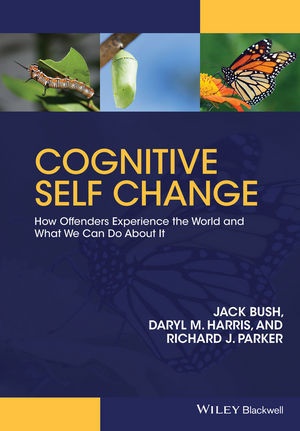
Informationen zum Autor Jack Bush has developed and delivered treatment programs for offenders since 1973. His primary focus has been on the processes and strategies of Cognitive Self Change, which he has adapted to high-risk offenders, violent offenders, substance abusers, female offenders, and domestic abusers. He is co-author of the program, Thinking For A Change , published by The National Institute of Corrections (Washington D.C.). Daryl M. Harris is a Chartered and Registered Clinical Psychologist working with the Gwent Forensic Rehabilitation Service. He is also director of Positive Approaches to Crime and Exclusion (PACE) Ltd. This organisation has supported the implementation of Cognitive Self Change in several jurisdictions, written and supported the implementation of accredited interventions, and undertaken research into instrumental and gang violence. He has also worked with probation staff in Wales to develop an award winning approach to working with difficult to engage offenders. Richard Parker is the Program Manager for designing and implementing sex offender, violent offender and general offender programs in Juvenile Justice NSW. Prior to this he was the Principal Psychologist, Offender Intervention Programs in ACT Corrective Services. He is currently investigating the role of moral emotions in the onset and maintenance of child sexual offending. Klappentext This book draws on the latest literature to highlight a fundamental challenge in offender rehabilitation; it questions the ability of contemporary approaches to address this challenge, and proposes an alternative strategy of criminal justice that integrates control, opportunity, and autonomy.* Provides an up to date review of the links between cognition and criminal behavior, as well as treatment and rehabilitation* Engages directly with the antisocial underpinnings of criminal behavior, a major impediment to treatment and rehabilitation* Outlines a clear strategy for communicating with offenders which is firmly rooted in the "What Works" literature, is evidence-based, and provides a way of engaging even the most antisocial of offenders by presenting them with meaningful opportunities to change* Offers hands-on instructions based upon the real-life tactics and presentation of the high-risk offender In neuem Browserfenster anzeigen... In neuem Browserfenster anzeigen... This book draws on the latest literature to highlight a fundamental challenge in offender rehabilitation; it questions the ability of contemporary approaches to address this challenge, and proposes an alternative strategy of criminal justice that integrates control, opportunity, and autonomy.* Provides an up to date review of the links between cognition and criminal behavior, as well as treatment and rehabilitation* Engages directly with the antisocial underpinnings of criminal behavior, a major impediment to treatment and rehabilitation* Outlines a clear strategy for communicating with offenders which is firmly rooted in the "What Works" literature, is evidence-based, and provides a way of engaging even the most antisocial of offenders by presenting them with meaningful opportunities to change* Offers hands-on instructions based upon the real-life tactics and presentation of the high-risk offender Inhaltsverzeichnis Preface ix Acknowledgements xi Introduction 1 Understanding Offending Behavior 1 Hard¿Core 5 Cognitive Self Change 9 A Human Connection 12 Phenomenology and Self¿reports:...
Table des matières
Preface ix
Acknowledgements xi
Introduction 1
Understanding Offending Behavior 1
Hard?-Core 5
Cognitive Self Change 9
A Human Connection 12
Phenomenology and Self?]reports: Some Preliminary Comments about Method 14
Summary of Chapters 16
1 The Idea of Criminal Thinking 25
Ellis, Beck, and Antisocial Schemas 33
Psychopathology or Irresponsibility 39
An Alternative Point of View 44
2 Offenders Speak their Minds 48
Seven Male Offenders 49
Three Young Women 58
Three Violent Mental Health Patients 62
Two Problematic Groups 64
Three British Gang Members 72
Conclusions and Interpretations 75
3 Cognitive-Emotional-Motivational Structure 78
The Idea of Conscious Agency: a Likely Story 79
Will and Volition, Self and Self?]interest 82
The Model 85
Basic Outlaw Logic: Learning the Rewards of Criminal Thinking 89
Variations of Criminal Thinking 92
Conclusions and Implications 94
4 Supportive Authority and the Strategy of Choices 97
The Problem of Engagement 97
Conditions of Communication and Engagement 99
Supportive Authority 102
Rethinking Correctional Treatment 109
The Strategy of Choices 109
Final Comments 115
5 Cognitive Self Change 118
Four Basic Steps 121
Collaboration and the Strategy of Choices 139
Brief Notes on Program Delivery: Group Size, Duration and Intensity, Facilitator Qualifications and Training 141
6 Extended Applications of Supportive Authority 145
Why Offenders Need Help 145
Not Either/Or: Some Promising Examples 146
The System as the Intervention: Some Recent Examples 152
Supportive Authority, Revisited 157
An Idealistic Proposal (with modest expectations) 159
7 How We Know: Some Observations about Evidence 162
Introduction 162
Cognitive Self Change 164
The Significance of Subjectivity 165
Science and Subjectivity 169
Bibliography 175
Index 183