

Fr. 276.00
Girolamo Cirrincione, Cirrincione Girolamo, P Diana, Patrizia Diana, Patrizia Cirrincione Diana, Diana Patrizia
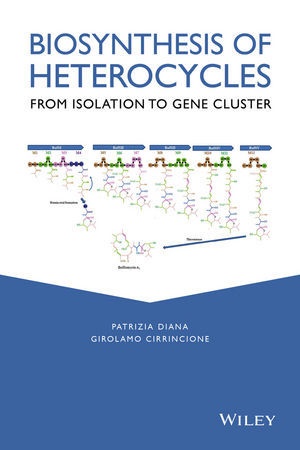
Biosynthesis of Heterocycles - From Isolation to Gene Cluster
Englisch · Fester Einband
Versand in der Regel in 1 bis 3 Wochen (kurzfristig nicht lieferbar)
Beschreibung
Informationen zum Autor Patrizia Diana is full Professor of Medicinal Chemistry at the University of Palermo. She is currently coordinator of the Medicinal and Biological Section of the Department of Science and Technology: Chemical, Biological, and Pharmaceutical (STEBICEF); and is a member of the Italian Chemical Society and International Society of Heterocyclic Chemistry. Girolamo Cirrincione is full Professor of Medicinal Chemistry at the University of Palermo. He is a member of the Drug Discovery Committee of the Pharmacology and Molecular Mechanisms (PAMM)Group of the European Organization for Research and Treatment of Cancer; the Italian Chemical Society, where he is currently serving as President of the Medicinal Chemistry Division; and the International Society of Heterocyclic Chemistry, where he served as vice president for 2004-05 Klappentext This book describes biosynthetic methods to synthesize heterocyclic compounds, offering a guide for the development of new drugs based on natural products. The authors explain the role of natural products in chemistry and their formation along with important analytical methods and techniques for working with heterocycles.* Covers methods and techniques: isotopic labelling, enzymes and mutants, and pathway identification* Provides a thorough resource of information specifically on heterocyclic natural products and their practical biosynthetic relevance* Explains the role of natural products in chemistry and their formation* Discusses gene cluster identification and the use of biogenetic engineering in pharmaceutical application Zusammenfassung This book describes biosynthetic methods to synthesize heterocyclic compounds, offering a guide for the development of new drugs based on natural products. The authors explain the role of natural products in chemistry and their formation along with important analytical methods and techniques for working with heterocycles. Inhaltsverzeichnis PREFACE xiii ACKNOWLEDGMENTS xv 1 Introduction 1 1.1 Natural Products: Primary and Secondary Metabolites 4 1.2 Common Reactions in Secondary Metabolites 6 1.2.1 Alkylations 6 1.2.2 Wagner-Meerwein Rearrangements 16 1.2.3 Aldol and Claisen Reactions 17 1.2.4 Schiff Base Formation and Mannich Reactions 23 1.2.5 Transaminations 25 1.2.6 Decarboxylations 26 1.2.7 Oxidation and Reduction Reactions 31 1.2.8 Dehalogenation/Halogenation Reactions 39 1.2.9 Glycosylation Reactions 46 References 48 2 Techniques for Biosynthesis 51 2.1 Isotopic Labeling 52 2.1.1 Stable Isotopes 52 2.1.2 Radioactive Isotopes 61 2.2 Gene Coding for Enzymes 62 2.3 Combinatorial Biosynthesis 63 References 70 3 Three-Membered Heterocyclic Rings and Their Fused Derivatives 73 3.1 Aziridines and Azirines 73 3.1.1 Azicemicins 73 3.1.2 Miraziridine 74 3.1.3 Maduropeptin 75 3.1.4 Azinomycins 79 3.1.5 Ficellomycin 87 3.1.6 Mitomycins 89 3.1.7 Azirinomycin and Related Azirines 101 3.2 Oxiranes and Oxirenes 104 3.2.1 Fosfomycin 104 3.2.2 AK HC and AF toxins 111 3.2.3 Cerulenin 117 3.2.4 Polyhydroxyalkanoates 118 3.2.5 Epoxyrollins 118 3.2.6 Asperlactone Aspyrone Asperline 121 3.2.7 Tajixanthone 129 3.2.8 Cyclomarin 133 3.2.9 Cyclopenin 139 3.2.10 Ovalicin and Fumagillin 141 3.2.11 Methylenomycin A 143 3.2.12 Antibiotic LL-C10037 147 3.2.13 Manumycins 151 3.2.14 Scopolamine 164 3.2.15 Iridoid Glucosides 169 3.2.16 Cordiaquinone 172 3.2.17 Cyclizidine and Indolizomycin 172 3.2.18 Enediyne Antibiotics 175 3.2.19 Macrolides 195 3.2.20 Epothilones 225 3.2.21 Pimaricin 233 3.2.22 Hypothe...
Inhaltsverzeichnis
PREFACE xiii
ACKNOWLEDGMENTS xv
1 Introduction 1
1.1 Natural Products: Primary and Secondary Metabolites 4
1.2 Common Reactions in Secondary Metabolites 6
1.2.1 Alkylations 6
1.2.2 Wagner-Meerwein Rearrangements 16
1.2.3 Aldol and Claisen Reactions 17
1.2.4 Schiff Base Formation and Mannich Reactions 23
1.2.5 Transaminations 25
1.2.6 Decarboxylations 26
1.2.7 Oxidation and Reduction Reactions 31
1.2.8 Dehalogenation/Halogenation Reactions 39
1.2.9 Glycosylation Reactions 46
References 48
2 Techniques for Biosynthesis 51
2.1 Isotopic Labeling 52
2.1.1 Stable Isotopes 52
2.1.2 Radioactive Isotopes 61
2.2 Gene Coding for Enzymes 62
2.3 Combinatorial Biosynthesis 63
References 70
3 Three-Membered Heterocyclic Rings and Their Fused Derivatives 73
3.1 Aziridines and Azirines 73
3.1.1 Azicemicins 73
3.1.2 Miraziridine 74
3.1.3 Maduropeptin 75
3.1.4 Azinomycins 79
3.1.5 Ficellomycin 87
3.1.6 Mitomycins 89
3.1.7 Azirinomycin and Related Azirines 101
3.2 Oxiranes and Oxirenes 104
3.2.1 Fosfomycin 104
3.2.2 AK HC and AF toxins 111
3.2.3 Cerulenin 117
3.2.4 Polyhydroxyalkanoates 118
3.2.5 Epoxyrollins 118
3.2.6 Asperlactone Aspyrone Asperline 121
3.2.7 Tajixanthone 129
3.2.8 Cyclomarin 133
3.2.9 Cyclopenin 139
3.2.10 Ovalicin and Fumagillin 141
3.2.11 Methylenomycin A 143
3.2.12 Antibiotic LL-C10037 147
3.2.13 Manumycins 151
3.2.14 Scopolamine 164
3.2.15 Iridoid Glucosides 169
3.2.16 Cordiaquinone 172
3.2.17 Cyclizidine and Indolizomycin 172
3.2.18 Enediyne Antibiotics 175
3.2.19 Macrolides 195
3.2.20 Epothilones 225
3.2.21 Pimaricin 233
3.2.22 Hypothemycin 240
3.2.23 Radicicol and Monocillin I 243
3.2.24 Trichothecenes 248
3.2.25 Sporolides A and B 255
References 258
4 Four-Membered Heterocyclic Rings and Their Fused Derivatives 277
4.1 Azetidine and Azetines 277
4.1.1 Azetidine-2-carboxylic acid 277
4.1.2 Polyoxins 280
4.1.3 Mugineic Acids 288
4.1.4 Tabtoxin and Tabtoxinine-ß-lactam 293
4.1.5 Nocardicins 296
4.1.6 Thienamycin 303
4.1.7 Clavulanic Acid and Clavams 311
4.1.8 Penicillins and Cephalosporins 319
4.2 Oxetanes 341
4.2.1 Oxetanocins 341
4.2.2 Salinosporamides 342
4.2.3 Taxol 352
4.3 Dithiethanes 363
4.3.1 Tropodithietic acid and Thiotropocin 363
References 367
5 Five-Membered Heterocyclic Rings and Their Fused Derivatives 379
5.1 Pyrroles (Including Tetrapyrroles) 379
5.1.1 2-Acetyl-1-pyrroline 379
5.1.2 Pyrrolnitrin 380
5.1.3 Broussonetines 385
5.1.4 Prodigiosin and Undecylprodigiosin 386
5.1.5 Anatoxin-a and Homoanatoxin-a 402
5.1.6 Nostopeptolides A 407
5.1.7 Pyrrolizidine Alkaloids 410
5.1.8 Toyocamycin and Sangivamycin 416
5.1.9 Tetrapyrroles 420
5.2 Indoles 428
5.2.1 Indole-3-acetic acid and Glucobrassicin 428
5.2.2 Camalexin 439
5.2.3 Cyclomarazines 444
5.2.4 Rebeccamycin and Staurosporine 445
5.2.5 Paxilline 455
5.3 Furans 460
5.3.1 F
Produktdetails
| Autoren | Girolamo Cirrincione, Cirrincione Girolamo, P Diana, Patrizia Diana, Patrizia Cirrincione Diana, Diana Patrizia |
| Verlag | Wiley, John and Sons Ltd |
| Sprache | Englisch |
| Produktform | Fester Einband |
| Erschienen | 07.04.2015 |
| EAN | 9781118028674 |
| ISBN | 978-1-118-02867-4 |
| Seiten | 784 |
| Themen |
Naturwissenschaften, Medizin, Informatik, Technik
> Chemie
> Organische Chemie
Chemie, Biochemie, BIOSYNTHESE, chemistry, Natural Products, Naturstoffchemie, Pharmaceutical & Medicinal Chemistry, Pharmazeutische u. Medizinische Chemie, Biochemie u. Chemische Biologie, Biochemistry (Chemical Biology), Heterocyclische Verbindungen |
Kundenrezensionen
Zu diesem Artikel wurden noch keine Rezensionen verfasst. Schreibe die erste Bewertung und sei anderen Benutzern bei der Kaufentscheidung behilflich.
Schreibe eine Rezension
Top oder Flop? Schreibe deine eigene Rezension.