

Rupert Haigh
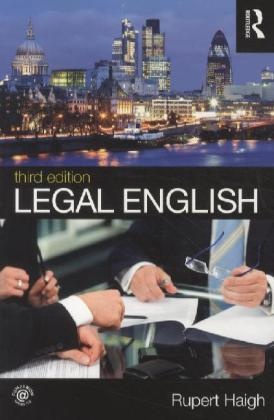
Legal English - 3rd ed
Englisch · Taschenbuch
Beschreibung
English is the dominant language of international business relations, and a good working knowledge of the language is essential for today's legal or business professional. Written with the needs of both practitioners and students in mind, Legal English provides a comprehensive and highly practical approach to its subject-matter and addresses the key aspects of the use of English in commercial legal contexts. This third edition builds upon the success of its predecessors, but also introduces an important innovation. Instead of being a traditional paper textbook, this new edition combines and integrates both online and traditional print elements.
Inhaltsverzeichnis
Preface * 1 Introduction to Legal English * 1.1 The development of modern English * 1.2 Sources of legal English * 1.3 Different registers of English * 1.4 What makes English difficult? * 1.5 What makes legal language difficult? * 1.6 The importance of legal English * 1.6.1 Overview * 1.6.2 Countries in which English & the common law system are relevant * 1.6.3 English in international law * 1.6.4 The distinctiveness of legal English * 2 Grammar for Legal Writing * 2.1 Articles * 2.2 Prepositions * 2.2.1 Overview * 2.2.2 List of prepositions with examples of usage * 2.2.3 Choice of preposition * 2.3 Pronouns * 2.4 Adjectives * 2.4.1 Common adjective endings * 2.4.2 Uncomparable adjectives * 2.5 Adverbs * 2.6 Collective nouns * 2.7 Uncountable nouns * 2.7.1 Overview * 2.7.2 Table of uncountable nouns * 2.7.3 Nouns which are both countable and uncountable * 2.8 Past tenses * 2.8.1 Past-perfect tense * 2.8.2 Simple past * 2.8.3 Past continuous * 2.8.4 Example of different tenses in practice * 2.9 Verb forms * 2.9.1 The conditional form * 2.9.2 The subjunctive form * 2.10 Phrasal verbs * 2.10.1 Overview * 2.10.2 List of adverbs and prepositions used to form phrasal verbs * 2.11 Negatives * 2.12 Relative pronouns * 2.12.1 Who or whom? * 2.12.2 Which or that? * 2.12.3 Who, whom, which or that? * 3 Punctuation for Legal Writing * 3.1 General points * 3.2 Punctuation marks * 3.2.1 Full stop / period (.) * 3.2.2 Comma (,) * 3.2.3 Colon (:) * 3.2.4 Semi-colon (;) * 3.2.5 Parentheses ( ) * 3.2.6 Square brackets [ ] * 3.2.7 Dashes (-- and --) * 3.2.8 Hyphen (-) * 3.2.9 Apostrophe (') * 3.2.10 Quotation marks (' ' & " ") * 3.2.11 Question mark (?) * 3.2.12 Exclamation mark (!) * 3.2.13 Forward slash (/) * 3.2.14 Capital letters * 4 Sentence Structure * 4.1 Basic structure * 4.2 More complex sentences * 4.3 Linking clauses * 4.4 Subject-verb agreement * 4.5 When is a sentence not a sentence? * 5 Legal Writing Standards: Dates, Numbers, Citations & Headings * 5.1 Dates * 5.2 Numbers * 5.3 Citations * 5.3.1 References to statutes * 5.3.2 References to cases * 5.3.3 Footnotes in academic texts * 5.3.4 Standard bibliographical abbreviations * 5.4 Headings * 6 Terminology & Linguistic Peculiarities * 6.1 Terms of art * 6.2 Foreign terminology * 6.3 Doublets and triplets * 6.4 Here-, there- and where- words * 6.4.1 Construction * 6.4.2 Usage * 6.4.3 Examples * 6.5 Whatsoever, wheresoever and howsoever * 6.6 Hence, whence and thence * 6.7 -er, -or and -ee names * 6.8 Unfamiliar pronouns * 6.9 Deeming * 6.10 Abbreviations * 7 Elements of Good Style: Clarity, Consistency, Effectiveness * 7.1 General considerations * 7.2 Clarity * 7.2.1 Planning * 7.2.2 Words * 7.2.3 Sentences * 7.2.4 Paragraphs * 7.2.5 Vigour * 7.2.6 Precision * 7.2.7 Discourse markers * 7.2.8 Presentation * 7.2.9 Clarity summary * 7.3 Consistency * 7.3.1 Synonyms * 7.3.2 Defined terms * 7.4 Effectiveness * 7.4.1 Effectiveness checklist * 7.4.2 Beware of adjectives * 7.5 Examples of bad style & analysis * 7.5.1 Example 1: waiver * 7.5.2 Example 2: settlement * 7.5.3 Example 3: exclusion clause * 7.5.4 Example 4: offer of settlement * 7.5.5 Example 5: personal injury * 8 What to Avoid * 8.1 Ambiguity * 8.2 Sexist language * 8.2.1 Personal pronouns * 8.2.2 Terminology * 8.3 Constantly litigated words * 8.4 False word pairs * 8.5 Problem words and phrases * 8.5.1 Only * 8.5.2 Fewer or less? * 8.5.3 Can or may? * 8.5.4 Imply or infer? * 8.5.5 Also * 8.5.6 Specially or especially? * 8.5.7 Save * 8.5.8 Client or customer? * 8.5.9 In accordance with / according to * 8.6 False collocations * 8.6.1 What's a collocation? * 8.6.2 Legally fixed collocations * 8.6.3 A short list of legally relevant collocations * 9 British & American English * 9.1 Differences in language use conventions * 9.2 Vocabulary * 9.2.1 Ordinary words and phrases * 9.2.2 Business and legal terminology * 9.3 Differences related to cultural values * 10 Contracts: Structure & Interpretation * 10.1 Structure of contracts * 10.1.1 The names and addresses of the parties * 10.1.2 Recital * 10.1.3 Definitions * 10.1.4 Conditions precedent * 10.1.5 Agreements * 10.1.6 Representations and warranties * 10.1.7 Boilerplate clauses * 10.1.8 Schedules * 10.1.9 Signature section * 10.1.10 Appendices * 10.2 Principles of interpretation * 10.2.1 The textual approach * 10.2.2 Specific rules of interpretation * 10.2.3 Golden rules of interpretation * 11 Contract Clauses: Types & Specimen Clauses * 11.1 Overview * 11.2 Definitions * 11.3 Main commercial provisions * 11.4 Secondary commercial provisions * 11.5 Boilerplate clauses * 12 Drafting Legal Documents: Language & Structure * 12.1 Operative language * 12.1.1 Conditions * 12.1.2 Obligations * 12.1.3 Authorisations * 12.1.4 Limitations * 12.1.5 Operative language table * 12.2 Troubleshooting issues * 12.2.1 Separate obligations from definitions * 12.2.2 Differentiate conditions and promises * 12.2.3 Avoid use of 'and/or' * 12.2.4 Use a clear numbering system * 12.2.5 Avoid excessive cross-referencing * 12.3 Drafting exemption clauses * 12.4 Structuring a clause * 12.5 Layout and design * 12.6 Checklist * 13 Correspondence & Memoranda * 13.1 Letter-writing conventions * 13.1.1 Beginning a letter * 13.1.2 Ending a letter * 13.1.3 Reference table (letter endings) * 13.1.4 Abbreviations used in letters * 13.2 Letter-writing style * 13.2.1 Planning * 13.2.2 Structure * 13.2.3 Tone * 13.3 Emails * 13.3.1 Introduction to emails * 13.4.2 Email writing style * 13.4.3 Email abbreviations * 13.5 Language for letters and emails * 13.6 Checklist * 13.7 Memoranda * 13.7.1 General points * 13.7.2 Layout * 13.7.3 Content * 14 Aspects of Spoken English * 14.1 Spoken and written English compared * 14.2 Body language * 14.3 Tone of voice * 14.4 Emphasis * 14.5 Techniques * 14.5.1 Humour * 14.5.2 Implying * 14.5.3 Rhetorical questions * 14.5.4 Open questions * 14.5.5 Narrow and closed questions * 14.5.6 Simple or conditional forms? * 14.5.7 Choice of terminology * 14.5.8 Diplomatic language * 14.5.9 Metaphors and similes * 15 Meeting, Greeting & Getting Down to Business * 15.1 The opening phase * 15.1.1 Key considerations * 15.1.2 Useful phrases * 15.2 Establishing a basis for communication * 15.2.1 Key considerations * 15.2.2 Topics and suggested phrases * 15.3 Getting down to business * 16 Interviewing and Advising * 16.1 Overview * 16.2 Preparation * 16.3 Conduct of the interview * 16.3.1 Overview * 16.3.2 Listening * 16.3.3 Feedback * 16.3.4 Body language * 16.3.5 Identifying the client's aims * 16.3.6 Perceived irrelevance * 16.4 Language * 16.4.1 Jargon * 16.4.2 Opening * 16.4.3 Listening and questioning * 16.4.4 Advising * 16.4.5 Concluding * 16.5 Checklist * 17 Dealing with Difficult People: Ten-Point Guide * 17.1 Empathise * 17.2 Avoid defensiveness * 17.3 Seek more information * 17.4 Anger management * 17.5 Don't be judgmental * 17.6 Avoid unrealistic promises * 17.7 Use human language * 17.8 Set a realistic timetable for action * 17.9 Deal with perceived irrelevance * 17.10 Avoid echoing the client * 18 Court Advocacy * 18.1 Examination-in-chief * 18.1.1 General points * 18.1.2 Guidelines for the advocate * 18.2 Cross-examination * 18.2.1 General * 18.2.2 Guidelines for the advocate * 18.3 Re-examination * 18.4 General points * 18.5 Structure of a civil trial * 18.6 Modes of address in court * 19 Negotiation * 19.1 Negotiation styles & strategies * 19.1.1 Adversarial/cooperative * 19.1.2 Problem-solving * 19.1.3 Negotiation strategies compared * 19.2 Differences in negotiation language between USA & UK * 19.3 The qualities of a good negotiator * 19.4 Preparation: five-step plan * 19.5 The negotiation process * 19.5.1 Negotiation stages * 19.5.2 Conduct of the negotiation * 19.6 Negotiation ploys * 19.7 Suggested language * 19.7.1 Opening * 19.7.2 Exploring positions * 19.7.3 Persuading and making offers * 19.7.4 Narrowing differences * 19.7.5 Closing * 19.8 Killer lines for negotiations * 19.8.1 Avoiding impasse / sketching hypothesis * 19.8.2 Rejecting an offer but keeping the door open * 19.8.3 Responding to the question 'is that your best offer?' * 19.8.4 Playing for time * 19.8.5 Pressuring for a decision * 19.9 Checklist * 20 Chairing a Formal Meeting * 20.1 The role of the chair * 20.2 Structure and language * 20.3 Suggested language * 21 Making a Presentation * 21.1 Preparation * 21.2 Structure * 21.2.1 Beginning * 21.2.2 Middle * 21.2.3 End * 21.3 Content * 21.4 Language * 21.5 What to avoid * 21.6 Suggested language * 21.6.1 Beginning * 21.6.2 Middle * 21.6.3 End * 21.7 Tips for Powerpoint presentations * 21.7.1 Consider your target audience * 21.7.2 Design * 21.7.3 Fonts * 21.7.4 Colours * 21.7.5 Avoid clutter * 21.7.6 Hook and take home message * 21.7.7 Images * 21.7.8 Animations & media * 21.7.9 Practice * 21.7.10 Things to check and prepare * 21.8 Presentation checklist * 22 Telephoning * 22.1 Considerations * 22.2 Suggested language * 22.3 Leaving a message on an answering machine * 22.4 Making people speak more slowly * Glossaries * Preface * 1 Introduction to Legal English * 1.1 The development of modern English * 1.2 Sources of legal English * 1.3 Different registers of English * 1.4 What makes English difficult? * 1.5 What makes legal language difficult? * 1.6 The importance of legal English * 1.6.1 Overview * 1.6.2 Countries in which English & the common law system are relevant * 1.6.3 English in international law * 1.6.4 The distinctiveness of legal English * 2 Grammar for Legal Writing * 2.1 Articles * 2.2 Prepositions * 2.2.1 Overview * 2.2.2 List of prepositions with examples of usage * 2.2.3 Choice of preposition * 2.3 Pronouns * 2.4 Adjectives * 2.4.1 Common adjective endings * 2.4.2 Uncomparable adjectives * 2.5 Adverbs * 2.6 Collective nouns * 2.7 Uncountable nouns * 2.7.1 Overview * 2.7.2 Table of uncountable nouns * 2.7.3 Nouns which are both countable and uncountable * 2.8 Past tenses * 2.8.1 Past-perfect tense * 2.8.2 Simple past * 2.8.3 Past continuous * 2.8.4 Example of different tenses in practice * 2.9 Verb forms * 2.9.1 The conditional form * 2.9.2 The subjunctive form * 2.10 Phrasal verbs * 2.10.1 Overview * 2.10.2 List of adverbs and prepositions used to form phrasal verbs * 2.11 Negatives * 2.12 Relative pronouns * 2.12.1 Who or whom? * 2.12.2 Which or that? * 2.12.3 Who, whom, which or that? * 3 Punctuation for Legal Writing * 3.1 General points * 3.2 Punctuation marks * 3.2.1 Full stop / period (.) * 3.2.2 Comma (,) * 3.2.3 Colon (:) * 3.2.4 Semi-colon (;) * 3.2.5 Parentheses ( ) * 3.2.6 Square brackets [ ] * 3.2.7 Dashes (-- and --) * 3.2.8 Hyphen (-) * 3.2.9 Apostrophe (') * 3.2.10 Quotation marks (' ' & " ") * 3.2.11 Question mark (?) * 3.2.12 Exclamation mark (!) * 3.2.13 Forward slash (/) * 3.2.14 Capital letters * 4 Sentence Structure * 4.1 Basic structure * 4.2 More complex sentences * 4.3 Linking clauses * 4.4 Subject-verb agreement * 4.5 When is a sentence not a sentence? * 5 Legal Writing Standards: Dates, Numbers, Citations & Headings * 5.1 Dates * 5.2 Numbers * 5.3 Citations * 5.3.1 References to statutes * 5.3.2 References to cases * 5.3.3 Footnotes in academic texts * 5.3.4 Standard bibliographical abbreviations * 5.4 Headings * 6 Terminology & Linguistic Peculiarities * 6.1 Terms of art * 6.2 Foreign terminology * 6.3 Doublets and triplets * 6.4 Here-, there- and where- words * 6.4.1 Construction * 6.4.2 Usage * 6.4.3 Examples * 6.5 Whatsoever, wheresoever and howsoever * 6.6 Hence, whence and thence * 6.7 -er, -or and -ee names * 6.8 Unfamiliar pronouns * 6.9 Deeming * 6.10 Abbreviations * 7 Elements of Good Style: Clarity, Consistency, Effectiveness * 7.1 General considerations * 7.2 Clarity * 7.2.1 Planning * 7.2.2 Words * 7.2.3 Sentences * 7.2.4 Paragraphs * 7.2.5 Vigour * 7.2.6 Precision * 7.2.7 Discourse markers * 7.2.8 Presentation * 7.2.9 Clarity summary * 7.3 Consistency * 7.3.1 Synonyms * 7.3.2 Defined terms * 7.4 Effectiveness * 7.4.1 Effectiveness checklist * 7.4.2 Beware of adjectives * 7.5 Examples of bad style & analysis * 7.5.1 Example 1: waiver * 7.5.2 Example 2: settlement * 7.5.3 Example 3: exclusion clause * 7.5.4 Example 4: offer of settlement * 7.5.5 Example 5: personal injury * 8 What to Avoid * 8.1 Ambiguity * 8.2 Sexist language * 8.2.1 Personal pronouns * 8.2.2 Terminology * 8.3 Constantly litigated words * 8.4 False word pairs * 8.5 Problem words and phrases * 8.5.1 Only * 8.5.2 Fewer or less? * 8.5.3 Can or may? * 8.5.4 Imply or infer? * 8.5.5 Also * 8.5.6 Specially or especially? * 8.5.7 Save * 8.5.8 Client or customer? * 8.5.9 In accordance with / according to * 8.6 False collocations * 8.6.1 What's a collocation? * 8.6.2 Legally fixed collocations * 8.6.3 A short list of legally relevant collocations * 9 British & American English * 9.1 Differences in language use conventions * 9.2 Vocabulary * 9.2.1 Ordinary words and phrases * 9.2.2 Business and legal terminology * 9.3 Differences related to cultural values * 10 Contracts: Structure & Interpretation * 10.1 Structure of contracts * 10.1.1 The names and addresses of the parties * 10.1.2 Recital * 10.1.3 Definitions * 10.1.4 Conditions precedent * 10.1.5 Agreements * 10.1.6 Representations and warranties * 10.1.7 Boilerplate clauses * 10.1.8 Schedules * 10.1.9 Signature section * 10.1.10 Appendices * 10.2 Principles of interpretation * 10.2.1 The textual approach * 10.2.2 Specific rules of interpretation * 10.2.3 Golden rules of interpretation * 11 Contract Clauses: Types & Specimen Clauses * 11.1 Overview * 11.2 Definitions * 11.3 Main commercial provisions * 11.4 Secondary commercial provisions * 11.5 Boilerplate clauses * 12 Drafting Legal Documents: Language & Structure * 12.1 Operative language * 12.1.1 Conditions * 12.1.2 Obligations * 12.1.3 Authorisations * 12.1.4 Limitations * 12.1.5 Operative language table * 12.2 Troubleshooting issues * 12.2.1 Separate obligations from definitions * 12.2.2 Differentiate conditions and promises * 12.2.3 Avoid use of 'and/or' * 12.2.4 Use a clear numbering system * 12.2.5 Avoid excessive cross-referencing * 12.3 Drafting exemption clauses * 12.4 Structuring a clause * 12.5 Layout and design * 12.6 Checklist * 13 Correspondence & Memoranda * 13.1 Letter-writing conventions * 13.1.1 Beginning a letter * 13.1.2 Ending a letter * 13.1.3 Reference table (letter endings) * 13.1.4 Abbreviations used in letters * 13.2 Letter-writing style * 13.2.1 Planning * 13.2.2 Structure * 13.2.3 Tone * 13.3 Emails * 13.3.1 Introduction to emails * 13.4.2 Email writing style * 13.4.3 Email abbreviations * 13.5 Language for letters and emails * 13.6 Checklist * 13.7 Memoranda * 13.7.1 General points * 13.7.2 Layout * 13.7.3 Content * 14 Aspects of Spoken English * 14.1 Spoken and written English compared * 14.2 Body language * 14.3 Tone of voice * 14.4 Emphasis * 14.5 Techniques * 14.5.1 Humour * 14.5.2 Implying * 14.5.3 Rhetorical questions * 14.5.4 Open questions * 14.5.5 Narrow and closed questions * 14.5.6 Simple or conditional forms? * 14.5.7 Choice of terminology * 14.5.8 Diplomatic language * 14.5.9 Metaphors and similes * 15 Meeting, Greeting & Getting Down to Business * 15.1 The opening phase * 15.1.1 Key considerations * 15.1.2 Useful phrases * 15.2 Establishing a basis for communication * 15.2.1 Key considerations * 15.2.2 Topics and suggested phrases * 15.3 Getting down to business * 16 Interviewing and Advising * 16.1 Overview * 16.2 Preparation * 16.3 Conduct of the interview * 16.3.1 Overview * 16.3.2 Listening * 16.3.3 Feedback * 16.3.4 Body language * 16.3.5 Identifying the client's aims * 16.3.6 Perceived irrelevance * 16.4 Language * 16.4.1 Jargon * 16.4.2 Opening * 16.4.3 Listening and questioning * 16.4.4 Advising * 16.4.5 Concluding * 16.5 Checklist * 17 Dealing with Difficult People: Ten-Point Guide * 17.1 Empathise * 17.2 Avoid defensiveness * 17.3 Seek more information * 17.4 Anger management * 17.5 Don't be judgmental * 17.6 Avoid unrealistic promises * 17.7 Use human language * 17.8 Set a realistic timetable for action * 17.9 Deal with perceived irrelevance * 17.10 Avoid echoing the client * 18 Court Advocacy * 18.1 Examination-in-chief * 18.1.1 General points * 18.1.2 Guidelines for the advocate * 18.2 Cross-examination * 18.2.1 General * 18.2.2 Guidelines for the advocate * 18.3 Re-examination * 18.4 General points * 18.5 Structure of a civil trial * 18.6 Modes of address in court * 19 Negotiation * 19.1 Negotiation styles & strategies * 19.1.1 Adversarial/cooperative * 19.1.2 Problem-solving * 19.1.3 Negotiation strategies compared * 19.2 Differences in negotiation language between USA & UK * 19.3 The qualities of a good negotiator * 19.4 Preparation: five-step plan * 19.5 The negotiation process * 19.5.1 Negotiation stages * 19.5.2 Conduct of the negotiation * 19.6 Negotiation ploys * 19.7 Suggested language * 19.7.1 Opening * 19.7.2 Exploring positions * 19.7.3 Persuading and making offers * 19.7.4 Narrowing differences * 19.7.5 Closing * 19.8 Killer lines for negotiations * 19.8.1 Avoiding impasse / sketching hypothesis * 19.8.2 Rejecting an offer but keeping the door open * 19.8.3 Responding to the question 'is that your best offer?' * 19.8.4 Playing for time * 19.8.5 Pressuring for a decision * 19.9 Checklist * 20 Chairing a Formal Meeting * 20.1 The role of the chair * 20.2 Structure and language * 20.3 Suggested language * 21 Making a Presentation * 21.1 Preparation * 21.2 Structure * 21.2.1 Beginning * 21.2.2 Middle * 21.2.3 End * 21.3 Content * 21.4 Language * 21.5 What to avoid * 21.6 Suggested language * 21.6.1 Beginning * 21.6.2 Middle * 21.6.3 End * 21.7 Tips for Powerpoint presentations * 21.7.1 Consider your target audience * 21.7.2 Design * 21.7.3 Fonts * 21.7.4 Colours * 21.7.5 Avoid clutter * 21.7.6 Hook and take home message * 21.7.7 Images * 21.7.8 Animations & media * 21.7.9 Practice * 21.7.10 Things to check and prepare * 21.8 Presentation checklist * 22 Telephoning * 22.1 Considerations * 22.2 Suggested language * 22.3 Leaving a message on an answering machine * 22.4 Making people speak more slowly * Glossaries * Easily Confused Words * Business Abbreviations * Commonly Hyphenated Words and Terms * Phrasal Verbs Used in Legal English * Obscure Words Used in Business Contracts * Obscure Phrases Used in Business Contracts * Foreign Terms Used in Law * Legal Terminology * About the Author * Easily Confused Words * Business Abbreviations * Commonly Hyphenated Words and Terms * Phrasal Verbs Used in Legal English * Obscure Words Used in Business Contracts * Obscure Phrases Used in Business Contracts * Foreign Terms Used in Law * Legal Terminology * About the Author *
Über den Autor / die Autorin
Rupert Haigh graduated from Cambridge University in 1992 and qualified as a solicitor of the Supreme Court of England and Wales in 1997. He also holds an LLM in Public International Law from Helsinki University and a TEFL (Teaching English as a Foreign Language) certificate. After completing his legal training, Rupert worked for several years as a practising solicitor in England, specializing mainly in litigation work, before moving to Finland in 2000 since when he has been continuously involved in training legal professionals in Finland and across Europe.
Produktdetails
| Autoren | Rupert Haigh |
| Verlag | Routledge Academic |
| Sprache | Englisch |
| Produktform | Taschenbuch |
| Erschienen | 17.02.2012 |
| EAN | 9780415694353 |
| ISBN | 978-0-415-69435-3 |
| Abmessung | 158 mm x 235 mm x 20 mm |
| Thema |
Sozialwissenschaften, Recht,Wirtschaft
> Recht
|
Kundenrezensionen
Zu diesem Artikel wurden noch keine Rezensionen verfasst. Schreibe die erste Bewertung und sei anderen Benutzern bei der Kaufentscheidung behilflich.
Schreibe eine Rezension
Top oder Flop? Schreibe deine eigene Rezension.