

Condividi
Fr. 230.00
Roderic Lawrence, Roderick Lawrence, Roderick (University of Geneva) Werna Lawrence, Roderick J. Lawrence, Roderick J. Werna Lawrence, Roderick Werna Lawrence...
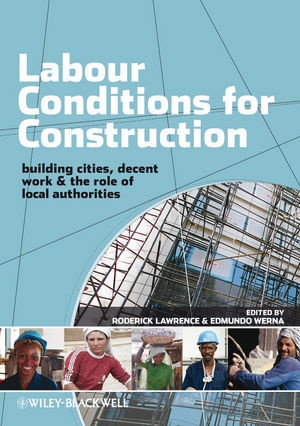
Labour Conditions for Construction - Building Cities, Decent Work and the Role of Local Authorities
Inglese · Copertina rigida
Spedizione di solito entro 3 a 5 settimane
Descrizione
Informationen zum Autor Dr. Edmundo Werna, Construction Sector, International Labour Office, Geneva Klappentext This authoritative guide promotes safe, healthy and non-exploitative working conditions for the construction industry. It combines theoretical analysis and case-studies from around the world, offering recommendations for best practice.The book results from a project funded by the Geneva International Academic Network, with staff from the International Labour Office and the University of Geneva. It presents and discusses the challenges and potential of local authorities to promote decent work in construction.Existing literature on decent work focuses mainly on the roles and responsibilities of actors in the private sector but the contribution of the public sector should not be ignored. Local authorities play a crucial role in economic development through a range of policies and programmes in the construction sector and related services.Labour Conditions for Construction: decent work, building cities & the role of local authorities includes a methodology that combines quantitative and qualitative information. It defines and validates a set of criteria to evaluate the capacity of local authorities, combining criteria about decent work, the construction sector and the policies and programmes of the local authority in each case study city.The book fills an important gap in focussing on the role of local authorities in creating and promoting decent work and will be of interest to managers and policy-makers in construction, health and safety and labour relations as well as to researchers and students in construction management. Zusammenfassung This book, from the ILO (International Labour Office) - the champion of good working conditions - analyses the roles of key players in promoting decent work in the construction industry worldwide. It combines theoretical analysis and case-studies, with recommendations to both practitioners and academics. Inhaltsverzeichnis Contributors. Foreword by Elisabeth Gateau. Foreword by José de Filippi Jr. Preface. Terms and Abbreviations. Dedication. Acknowledgements. Introduction. 1 Conceptual and Methodological Issues (Roderick Lawrence and Mariana Paredes Gil). 1.1 What is decent work? 1.1.1 Origins of the concept. 1.2 Conceptual issues. 1.2.1 Interrelations between the four key components of decent work. 1.2.2 Contradictions and conflicts between components of decent work. 1.2.3 Universality of the decent work concept. 1.3 Understanding the interrelationships between employment, construction and local authorities. 1.4 Criteria for defining indicators of decent work. 1.4.1 Criteria for the construction sector. 1.4.2 Criteria for local authorities. 1.5 Research methodology. 1.5.1 Case studies in local authorities. 1.5.2 Methodology for case studies. Notes. 2 Measuring Decent Work (Mariana Paredes Gil). 2.1 Review of proposals to measure decent work. 2.2 Indicators of the employment dimension. 2.2.1 Employment opportunities. 2.2.2 Remuneration of work. 2.2.3 Working conditions. 2.3 Indicators of the social security dimension. 2.4 Indicators of the workers' rights dimension. 2.4.1 Forced labour. 2.4.2 Child labour. 2.4.3 Inequality at work. 2.4.4 Freedom of association. 2.5 Indicators of the social dialogue dimension. 2.6 Synthesis. Notes. 3 Local Authorities and the Construction Industry (Mariana Paredes Gil and Edmundo Werna). 3.1 Decent work in urban areas. 3.1.1 Employment dimension. 3.1.2 Social protection. 3.1.3 Workers' rights. 3.1.4 Social dialogue.<...
Sommario
Contributors.
Foreword by Elisabeth Gateau.
Foreword by José de Filippi Jr.
Preface.
Terms and Abbreviations.
Dedication.
Acknowledgements.
Introduction.
1 Conceptual and Methodological Issues (Roderick Lawrence and Mariana Paredes Gil).
1.1 What is decent work?
1.1.1 Origins of the concept.
1.2 Conceptual issues.
1.2.1 Interrelations between the four key components of decent work.
1.2.2 Contradictions and conflicts between components of decent work.
1.2.3 Universality of the decent work concept.
1.3 Understanding the interrelationships between employment, construction and local authorities.
1.4 Criteria for defining indicators of decent work.
1.4.1 Criteria for the construction sector.
1.4.2 Criteria for local authorities.
1.5 Research methodology.
1.5.1 Case studies in local authorities.
1.5.2 Methodology for case studies.
Notes.
2 Measuring Decent Work (Mariana Paredes Gil).
2.1 Review of proposals to measure decent work.
2.2 Indicators of the employment dimension.
2.2.1 Employment opportunities.
2.2.2 Remuneration of work.
2.2.3 Working conditions.
2.3 Indicators of the social security dimension.
2.4 Indicators of the workers' rights dimension.
2.4.1 Forced labour.
2.4.2 Child labour.
2.4.3 Inequality at work.
2.4.4 Freedom of association.
2.5 Indicators of the social dialogue dimension.
2.6 Synthesis.
Notes.
3 Local Authorities and the Construction Industry (Mariana Paredes Gil and Edmundo Werna).
3.1 Decent work in urban areas.
3.1.1 Employment dimension.
3.1.2 Social protection.
3.1.3 Workers' rights.
3.1.4 Social dialogue.
3.1.5 Cross-cutting analyses.
3.2 Local authorities.
3.2.1 Evolution of the role of cities in the global economy.
3.2.2 New roles for local authorities.
3.3 The construction sector.
3.3.1 The construction sector: definition and general characteristics.
3.3.2 Implications for decent work.
3.3.3 Recommendations for action.
3.4 Local authorities and decent work in the construction sector and related services.
3.5 Conclusion.
Note.
4 Bulawayo (Beacon Mbiba and Michael Ndubiwa).
4.1 Introduction.
4.2 National, regional and local context.
4.2.1 The national context.
4.2.2 Regional and local context.
4.3 Decent work indicators.
4.3.1 Indicators of employment.
4.3.2 Social security indicators.
4.3.3 Indicators of workers' rights.
4.3.4 Indicators of social dialogue.
4.3.5 Workers' rights and social dialogue in Zimbabwe.
4.3.6 Synthesis: decent work indicators in Bulawayo.
4.4 Decent work in place Bulawayo: initiatives and evidence.
4.4.1 Equality and the indigenization policy in the construction sector.
4.4.2 Managing centre local relations.
4.4.3 Realistic strategic planning and citizen participation.
4.4.4 The role of Bulawayo in promoting employment creation.
4.4.5 Bulawayo and the promotion of cooperatives.
4.5 Decent work: evidence, obstacles and potential.
4.5.1 Decent work and development in Zimbabwe.
4.5.2 Methodological and conceptual considerations.
4.5.3 Women's rights at work and health and safety in the construction sector.
Relazione
"In sum, Labour Conditions for Construction is easy to digest, an authoritative read and is an excellent text that is highly recommended for policy-makers, practitioners and researchers alike with an interest in the construction labour market from across the social science community." ( Construction Management and Economics , 1 August 2010)
"[An] excellent text ... relevant illustrations will be eagerly received and welcomed as a valuable contribution to the much needed information on employment creation as a tool for poverty alleviation. ... Deserves a wide and caring readership." ( RoSPA Occupational Safety & Health Journal , January 2010)
Dettagli sul prodotto
| Autori | Roderic Lawrence, Roderick Lawrence, Roderick (University of Geneva) Werna Lawrence, Roderick J. Lawrence, Roderick J. Werna Lawrence, Roderick Werna Lawrence, E Werna, Edmundo Werna, Edmundo (International Labour Office) Lawre Werna, Werna Edmundo |
| Con la collaborazione di | Roderick J. Lawrence (Editore), Edmundo Werna (Editore) |
| Editore | Wiley, John and Sons Ltd |
| Lingue | Inglese |
| Formato | Copertina rigida |
| Pubblicazione | 27.08.2009 |
| EAN | 9781405189439 |
| ISBN | 978-1-4051-8943-9 |
| Pagine | 312 |
| Categorie |
Scienze naturali, medicina, informatica, tecnica
> Tecnica
> Tecnica edile e ambientale
Scienze sociali, diritto, economia > Scienze politiche > Scienze politiche e cittadinanza attiva Baubetrieb, Bauingenieur- u. Bauwesen, Civil Engineering & Construction, Construction: Health & Safety, Gesundheits- u. Arbeitsschutz im Bauwesen |
Recensioni dei clienti
Per questo articolo non c'è ancora nessuna recensione. Scrivi la prima recensione e aiuta gli altri utenti a scegliere.
Scrivi una recensione
Top o flop? Scrivi la tua recensione.