

Condividi
Fr. 270.00
P Hull, Peter Hull, Peter (Consultant to the Food Industry Hull, Hull Peter
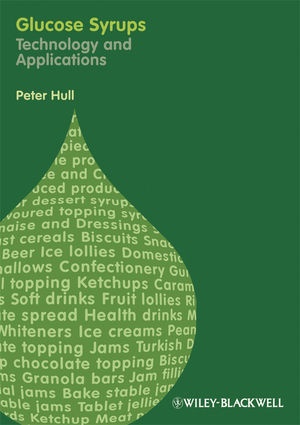
Glucose Syrups - Technology and Applications
Inglese · Copertina rigida
Spedizione di solito entro 1 a 3 settimane (non disponibile a breve termine)
Descrizione
Informationen zum Autor Peter Hull has worked in the glucose industry for over forty years, mainly in process development and customer applications. During this time he has worked with major companies in the UK, continental Europe, Russia and Australia. He has also acted as a syrup consultant to the food industry and is a member of the Institute of Food Science and Technology. Klappentext Glucose syrups (commonly known as corn syrups in North America) are derived from starch sources such as maize, wheat and potatoes. Offering alternative functional properties to sugar as well as economic benefits, glucose syrups are extremely versatile sweeteners, and are widely used in food manufacturing and other industries. They are a key ingredient in confectionery products, beer, soft drinks, sports drinks, jams, sauces and ice creams, as well as in pharmaceuticals and industrial fermentations.This book brings together all the relevant information on the manufacture and use of glucose syrups. Drawing on forty years' experience in the international glucose industry, the author provides a valuable reference for all those involved in the processing and buying of these syrups, and for scientists involved in the manufacture of a full range of food (and some non-food) products in which the syrups are ingredients. The emphasis is on practical information - recipes are included where relevant in the applications chapters, and appendices offer commonly-used calculations and useful data. Food technologists can use the book to make choices about the most suitable glucose syrup to use in a particular application, and also to adapt recipes in order to replace sugar (sucrose) or other ingredients. A glossary of terms reflecting the international terminology of the industry completes the book. Zusammenfassung Glucose syrups (commonly known as corn syrups in North America) are derived from starch sources such as maize, wheat and potatoes. Offering alternative functional properties to sugar as well as economic benefits, glucose syrups are extremely versatile sweeteners, and are widely used in food manufacturing and other industries. Inhaltsverzeichnis Preface A note on nomenclature Acknowledgements Chapter 1 History of glucose syrups 1.1 Historical developments 1.2 Analytical developments 1.3 Process developments Chapter 2 Fructose containing syrups 2.1 Introduction 2.2 Commercial development 2.3 Europe and the HFGS (isoglucose) production quota 2.4 Inulin Chapter 3 Glucose syrup manufacture 3.1 Introduction 3.2 Reducing sugars 3.3 Starch 3.4 Enzymes 3.5 The process 3.6 Acid hydrolysis 3.7 Acid enzyme hydrolysis 3.8 Paste Enzyme Enzyme hydrolysis (PEE) 3.9 Crystalline dextrose production 3.10 Total sugar production 3.11 Enzyme enzyme hydrolysis (E/E) 3.12 Isomerisation 3.13 Syrups for particular applications 3.14 Summary of typical sugar spectra produced by different processes Chapter 4 Explanation of glucose syrup specifications 4.1 Introduction 4.2 What specification details mean? 4.3 Dry products 4.4 Syrup problems and their possible causes 4.5 Bulk tank installation 4.6 Bulk tank design Chapter 5 Application properties of glucose syrups 5.1 Introduction 5.2 Summary of properties 5.3 Bodying agent 5.4 Browning reaction 5.5 Cohesiveness 5.6 Fermentability 5.7 Flavour enhancement 5.8 Flavour transfer medium 5.9 Foam stabilisers 5.10 Freezing point depression 5.11 Humectancy 5.12 Hygroscopicity 5.13 Nutritive solids 5.14 Osmotic pressure 5.15 Prevention of sucrose crystallisation 5.16 Prevention of coarse ice crystal fo...
Sommario
Chapter One. - History of Glucose Syrups
Chapter Two. - The Fructose Story.
Chapter Three. - Glucose Syrup Manufacture.
Chapter Four. - Explanation of Glucose Syrup Specifications.
Chapter Five. - Properties and Functional Uses of Glucose Syrups
Chapter Six. - Syrup Applications Overview.
Chapter Seven. - Trehalose.
Chapter Eight . - Sugar Alcohols - an overview.
Chapter Nine - Glucose syrups in baking and biscuit products.
Chapter Ten - Glucose syrups in brewing.
Chapter Eleven - Glucose syrups in confectionery.
Chapter Twelve - Glucose syrups in fermentations - an overview.
Chapter Thirteen - Glucose syrups in ice cream and frozen desserts.
Chapter Fourteen - Glucose syrups in jams.
Chapter Fifteen - Glucose syrups in tomato products and other types of dressings and sauces.
Chapter Sixteen - Glucose syrups in soft drinks.
Chapter Seventeen - Glucose syrups in health and sports drinks.
Chapter Eighteen - Carbohydrate metabolism and caloric values.
Chapter Nineteen - Caramel - the colour.
Glossary of terms.
Appendix.
* Simple analytical information.
* Introduction.
* The ingredient declaration panel.
* Does it contain glucose?
* What HPLC sugar analysis can tell.
* Simple calculations.
2.1.Introduction.
2.2. Adjusting syrup solids.
2.3. Altering glucose syrup spectra
2.4. How to calculate equivalent sweetness values.
2.5. Relationship between density, volume & weight of syrup.
2.6. How much syrup is required to obtain a given weight of syrup solids.
2.7. Brix, R.I. and R.I. Solids, % Solids and Baume
2.8. Recipe costings.
2.9. Colligative properties.
2.9.1. How to calculate boiling point elevation.
2.9.2. How to calculate freezing point depression.
2.9.3. How to calculate osmotic pressure.
3.0. Sugar Data.
3.1. Approximate % sugar spectra of different glucose syrups.
3.2. Theoretical molecular weights.
3.3. Sweetness values.
3.4. Approximate sugar spectra of domestic sweeteners.
3.5. Typical particle size of different grades of sucrose.
3.6. Melting Points.
3.7. Glass Transition temperatures - Tg values.
3.8. Solubility.
3.8.1. In water.
3.8.2. In 80 % alcohol.
* Tables.
4.1 Temperature conversion tables.
4.2. Viscosity of glucose syrups at different D.E. and different
temperatures.
4.3. Sieve specifications.
4.3.1. Table for ISO 3310 Series.
4.3.2. Table for American Standard AST E 11.
4.3.3. Nominal mesh aperture sizes (British Standard).
4.4. Maize starch Baume tables.
4.5. Sucrose Brix tables - % sucrose, Specific Gravity, Baume.
4.6. Sucrose Brix - R.I. tables.
4.7. Commercial glucose syrup tables.
Relazione
"A most readable and practical reference book for anyoneworking in the food and brewing industries ". (Chemistry & Industry , 27 September 2010)
"The applications are based on the author's 40 years ofexperience in the industry and contain detailed recipes for a widerange of products which require starch-derived sweeteners. Thepersonal experience of the author comes through with valuabledescriptions of the effect of different glucose syrups on taste,texture and shelf-life. It will form a valuable textbook tostudents of food technology and culinary arts, technologistsengaged in product development, new technologists to the industryand also prove useful to more experienced technologists wishing tounderstand more about glucose syrups as raw materials." ( FoodScience and Technology , 27 November 2012)
Dettagli sul prodotto
| Autori | P Hull, Peter Hull, Peter (Consultant to the Food Industry Hull, Hull Peter |
| Editore | Wiley, John and Sons Ltd |
| Lingue | Inglese |
| Formato | Copertina rigida |
| Pubblicazione | 26.02.2010 |
| EAN | 9781405175562 |
| ISBN | 978-1-4051-7556-2 |
| Pagine | 392 |
| Categorie |
Scienze naturali, medicina, informatica, tecnica
> Biologia
> Ecologia
Scienze sociali, diritto, economia > Economia > Singoli rami economici, branche Hospitality, Glukose, Zusatzstoffe, ingredients, Food Science & Technology, Lebensmitteltechnik, Lebensmittelforschung u. -technologie, Hotelgewerbe, Gastronomie u. Touristik, Professional Baking & Pastry, Bäckerei u. Konditorei |
Recensioni dei clienti
Per questo articolo non c'è ancora nessuna recensione. Scrivi la prima recensione e aiuta gli altri utenti a scegliere.
Scrivi una recensione
Top o flop? Scrivi la tua recensione.