

Condividi
Fr. 66.00
DREYFUS, Hubert Dreyfus, Hubert L. Wrathall Dreyfus, Mark A. Wrathall, A Wrathall, A Wrathall...
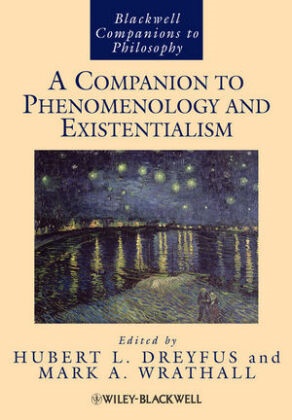
Companion to Phenomenology and Existentialism
Inglese · Tascabile
Spedizione di solito entro 3 a 5 settimane
Descrizione
Informationen zum Autor Hubert L. Dreyfus is Professor of Philosophy in the Graduate School at the University of California at Berkeley. His publications include On the Internet (2001), What Computers (Still) Can't Do (Third Edition, 1992), Being-in-the-World: A Commentary on Division I of Heidegger's Being and Time (1991), and Mind over Machine: The Power of Human Intuition and Expertise in the Era of the Computer (with Stuart Dreyfus, 1987). Mark A. Wrathall is Associate Professor of Philosophy at Brigham Young University. He is the editor of Religion after Metaphysics (2003), Heidegger Re-examined (with Hubert L. Dreyfus, 2002), Heidegger, Authenticity, and Modernity (with Jeff Malpas, 2000), Heidegger, Coping, and Cognitive Science (with Jeff Malpas, 2000), and Appropriating Heidegger (with James Falconer, 2000). Hubert L. Dreyfus and Mark A. Wrathall are also the joint editors of A Companion to Heidegger (Blackwell, 2005). Klappentext A Companion to Phenomenology and Existentialism is a complete guide to two of the dominant movements of philosophy in the twentieth century. Comprising a series of original essays written by leading scholars, it highlights the approaches, styles, and problems common to the broad range of philosophers included under the banners of phenomenology and existentialism.The volume features three types of entry: longer essays discussing each of the main schools of thought; shorter essays introducing prominent themes and concepts, such as temporality, death, and nihilism; and problem-oriented chapters discussing important phenomenological and existential approaches to the central questions that have preoccupied each of these traditions. The essays cover both mainstream and less usual topics, such as medicine, the emotions, artificial intelligence, and environmental philosophy. Zusammenfassung A Companion to Phenomenology and Existentialism is a complete guide to two of the dominant movements of philosophy in the twentieth century. Written by a team of leading scholars, including Dagfinn Follesdal, J.N. Inhaltsverzeichnis List of Illustrations viii Notes on Contributors ix Acknowledgments xiv 1 A Brief Introduction to Phenomenology and Existentialism 1 Mark A. Wrathall and Hubert L. Dreyfus Part I Phenomenology 7 Main Movements 8 2 Husserlian Phenomenology 9 Steven Crowell 3 Existential Phenomenology 31 Mark A. Wrathall 4 French Phenomenology 48 François-David Sebbah Central Concepts 68 5 Intentionality 69 J. N. Mohanty 6 Consciousness 78 Charles Siewert 7 The Lifeworld and Lived Experience 91 Martin Jay 8 Husserl's Reductions and the Role They Play in His Phenomenology 105 Dagfinn Føllesdal 9 Categorial Intuition 115 Dieter Lohmar Copyrighted Material 10 Temporality 127 John B. Brough and William Blattner Part II Existentialism 135 Main Movements 136 11 The Roots of Existentialism 137 Hubert L. Dreyfus 12 German Existence-Philosophy 162 Udo Tietz 13 Religious Existentialism 188 Clancy Martin 14 French Existentialism 206 Robert Wicks Central Concepts 228 15 The Concept of Authenticity 229 Taylor Carman 16 Affectivity 240 Béatrice Han-Pile 17 The Body 253 Piotr Hoffman 18 Freedom and Responsibility 263 Frederick A. Olafson 19 Absurdity 271 David Sherman 20 Death 280 David Couzens Hoy Part III Contemporary Issues in Phenomenology And Existentialism 289 21 Emotions in Phenomenology and Existentialism 291 Robert C. Solomo...
Sommario
Illustrations.
Notes on Contributors.
Acknowledgments.
1. A Brief Introduction to Phenomenology and Existentialism: Hubert L. Dreyfus (University of California, Berkeley) and Mark A. Wrathall (Brigham Young University).
Part I: Phenomonology:.
Main Movements.
2. Husserlian Phenomenology: Steven Crowell (Rice University).
3. Existential Phenomenology: Mark A. Wrathall (Brigham Young University).
4. French Phenomenology: François-David Sebbah (Université de Technologie de Compiègne).
Central Concepts.
5. Intentionality: J. N. Mohanty (Temple University).
6. Consciousness: Charles Siewart (University of California, Riverside).
7. The Lifeworld and Lived Experience: Martin Jay (University of California, Berkeley).
8. Reductions: Dagfinn Føllesdal (Stanford University).
9. Categorial Intuition: Dieter Lohmar (University of Cologne).
10. Temporality: John B. Brough (Georgetown University) and William Blattner (Georgetown University).
Part II: Existentialism:.
Main Movements.
11. The Roots of Existentialism: Hubert L. Dreyfus (University of California, Berkeley).
12. German Existence-Philosophy - Jaspers and Heidegger: Udo Tietz (Marburg).
13. Religious Existentialism: Clancy Martin (University of Missouri, Kansas City).
14. French Existentialism: Robert Wicks (University of Auckland, New Zealand).
Central Concepts.
15. Authenticity: Taylor Carman (Columbia University).
16. Affectivity: Béatrice Han-Pile (University of Essex, UK).
17. The Body: Piotr Hoffman (University of Nevada, Reno).
18. Freedom and Responsibility: Frederick A. Olafson (University of California, San Diego).
19. Absurdity: David Sherman (University of Montana, Missoula).
20. Death: David Couzens Hoy (University of California, Santa Cruz).
Part III. Contemporary Issues in Phenomenology and Existentialism:.
21. Emotions in Phenomenology and Existentialism: Robert C. Solomon (University of Texas, Austin).
22. Egological Structures of Consciousness: Lessons from Sartre for Analytical Philosophy of Mind: Manuel Bremer (University of Düsseldorf).
23. Phenomenology, Neuroscience, and Intersubjectivity: Matthew Ratcliffe (University of Durham, UK).
24. The Intrinsic Spatial Frame of Reference: Shaun Gallager (University of Central Florida).
25. Action, the Scientific World View, and Being-in-the-World: Craig Delancey (State University of New York, Oswego).
26. Phenomenology in Artificial Intelligence and Cognitive Science: Daniel Andler (University of California).
27. Phenomenological Currents in Twentieth-Century Psychology: Frederick J. Wertz (Fordham University).
28. Medicine: Fredrik Svenaeus (University of Linköping, Sweden).
29. Realism, Science, and the Deworlding of the World: Peter Eli Gordon (Harvard University).
30. Environmental Philosophy: Iain Thomson (University of New Mexico).
31. Ontology, Pragmatism, and Technology: Shunsuke Kadowaki (University of Tokyo, Komaba).
32. The Lived Body and the Dignity of Man: Andreas Brenner (University of Basel).
33. Sexuality: Ann V. Murphy (New South Wales, Sydney, Australia).
34. Feminism: Sara Heinämaa (University of Helsinki).
35. The Problem of the Good Life: Julian Young (University of Auckland, New Zealand).
36. The Search for Immediacy and the Problem of Political Life: Michael Allen Gillespie (Duke University).
37. History and Historicity: Charles Guignon (University of South Florida, Tampa).
38. Bubbles and Skull
Relazione
"The volume is thorough and will assist readers interested in both Continental thought and traditional Anglo-American topics." ( CHOICE , November 2009)
Dettagli sul prodotto
| Autori | DREYFUS, Hubert Dreyfus, Hubert L. Wrathall Dreyfus, Mark A. Wrathall |
| Con la collaborazione di | A Wrathall (Editore), A Wrathall (Editore), Hubert Dreyfus (Editore), Dreyfus Hubert L. (Editore), Huber L Dreyfus (Editore), Hubert L Dreyfus (Editore), Mark A. Wrathall (Editore), Wrathall Mark A. (Editore) |
| Editore | Blackwell Scientific Publishers Ltd |
| Lingue | Inglese |
| Formato | Tascabile |
| Pubblicazione | 31.03.2009 |
| EAN | 9781405191135 |
| ISBN | 978-1-4051-9113-5 |
| Dimensioni | 171 mm x 245 mm x 30 mm |
| Serie |
Blackwell Companions to Philosophy Blackwell Companions to Philos Blackwell Companions to Philosophy |
| Categorie |
Saggistica
> Filosofia, religione
> Filosofia: tematiche generali, opere di consultazione
Scienze umane, arte, musica > Religione / teologia Philosophie, Phenomenology, Phänomenologie, Existentialismus, Philosophy |
Recensioni dei clienti
Per questo articolo non c'è ancora nessuna recensione. Scrivi la prima recensione e aiuta gli altri utenti a scegliere.
Scrivi una recensione
Top o flop? Scrivi la tua recensione.