

Condividi
Fr. 70.80
John E. Carr, O. J. Sahler, John E. Carr, Olle J. Sahler
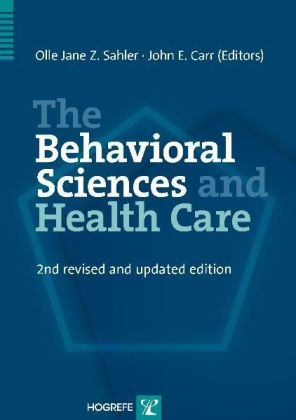
The Behavioral Sciences and Health Care
Inglese · Tascabile
Spedizione di solito entro 4 a 7 giorni lavorativi
Descrizione
A clearly structured, compact text on the behavioral sciences for medical and other students, including practical features such as annotated review questions and a practice exam.The brand new edition of this compact text presents succinct information about the wide variety of behavioral, social, and psychological sciences that comprise the behavioral sciences relevant to health and wellness.Based around but expanding on the Integrated Sciences Model, and integrating the Institute of Medicine s key themes for medical training, the new edition is organized in sections covering:- Biological Mediators of Behavior- Individual-Environment Interaction- Development Through the Life Cycle- Social and Cultural Determinants- Societal and Behavioral Health Challenges- The Health Care System, Policy, and Economics- Physician-Patient Interaction- Psychopathology.New chapters deal with- Stress, Adaptation, and Illness- Geriatric Health and Successful Aging- Palliative Care- Health Care Issues Facing Gay, Lesbian, Bisexual, and Transgender Individuals- Competency in Clinical Education- Health Literacy- Changing Risk Behaviors.Clear appendices review principles of epidemiology and biostatistics.Each chapter begins with guidance questions and ends with current recommended readings and review questions.A complete 300+ question-andanswer USMLE-type review section not only allows readers and students to check how well they have learned the material, but also highlights important points and adds additional specific information to supplement the text.The authors of this text are experienced teachers and researchers drawn primarily from the membership of the Association for the Behavioral Sciences and Medical Education.
Sommario
About the Editors; Contributors; Section I The Behavioral Sciences and Health; Introduction and How to Use this Book; 1 Evolving Models of Health Care; Section II Biological Mediators of Behavior; 2 Neuronal Structures and Functions; 3 Brain Structures and Their Functions; 4 Chronobiology and Sleep; 5 Predisposition; Section III Individual - Environmental Interaction; 6 Sensation; 7 Stress, Adaptation and Illness; 8 Learning Processes; 9 Cognition and Emotion; Section IV Development Through the Life Cycle; 10 Pregnancy and Infancy; 11 Toddlerhood and Preschool Years; 12 School Years; 13 Adult Years; 14 Selected Theories of Development; Section V The Individual and Social Groups; 15 Social Behavior and Groups; 16 Theories of Social Relations; 17 Culture and Ethnicity; 18 Health Care in Minority and Majority Populations; 19 The Family; Section VI Societal and Behavioral Health Challenges; 20 Obesity; 21 Substance Abuse; 22 Interpersonal Violence; 23 Poverty and Homelessness; 24 Suicide; 25 Geriatric Health and Successful Aging; 26 Human Sexuality and Sexual Disorders; 27 Health Care Issues Facing Gay, Lesbian, Bisexual, and Transgender Individuals; Section VII The Health Care System, Policy, and Economics; 28 The Health Care System; 29 Complementary and Integrative Medicine; 30 Palliative Care; 31 Competencies in Medical Education; 32 Ethical and Legal Issues in Patient Care; Section VIII The Physician-Patient Interaction; 33 Health Literacy; 34 The Physician Patient Relationship; 35 The Medical Encounter; 36 The Clinical Decision-Making Process; 37 Changing Risk Behavior; Section IX Psychopathology; 38 Introduction to Psychopathology; 39 Eating Disorders; 40 Adjustment Disorders and Somatoform Disorders; 41 Anxiety Disorders; 42 Major Mood Disorders; 43 Dissociative Disorders and Cognitive Disorders; 44 Schizophrenia and Other Psychotic Disorders; 45 Personality Disorders and Impulse Control Disorders; 46 Disorders of Infancy, Childhood, and Adolescence; 47 Principles of Psychopharmacology; Appendices; Appendix A: Epidemiology; Appendix B: Biostatistics; Review Questions - Answer Key; Practice USMLE Exam - Questions; Practice USMLE Exam - Answers; Subject Index.
Info autore
Olle Jane Z. Sahler, M.D. is currently Professor of Pediatrics, Psychiatry, Medical Humanities, and Oncology at the University of Rochester School of Medicine and Dentistry. She is a behavioral pediatrician with a special interest in the care of chronically and terminally ill children and their families. Her foundation- and federally-funded research over the years has focused on siblings and mothers of children with cancer. More recently, she has been funded by the National Center for Complementary and Alternative Medicine of the National Institutes of Health to study the effects of using music therapy in the management of patients undergoing bone marrow or stem cell transplantation on symptom control and immune reconstitution. She was the Director of the Pediatric Clerkship at the University of Rochester School of Medicine, the Director of the Department of Education at the American Academy of Pediatrics, as well as the founding president of the Council on Medical Student Education in Pediatrics. As President of the Association for the Behavioral Sciences and Medical Education (ABSAME) she began a project to develop a comprehensive curriculum guide for medical student and resident education in the behavioral sciences. John E. Carr, Ph.D. is Professor Emeritus in the Departments of Psychiatry and Behavioral Sciences and Psychology at the University of Washington where he has played a principal role in developing behavioral science curricula for the School of Medicine. He has written extensively about the need for an "Integrated Sciences Model" for the behavioral and biological sciences in medical education. He has served as a consultant to the World Health Organization on Behavioral Sciences in Health Care Training and recently co-coordinated a cooperative venture between the Association of Behavioral Sciences and Medical Education, the Association of Medical School Psychologists, and the International Union of Psychological Societies to develop behavioral science training modules for WHO. He holds Diplomates in Clinical and Health Psychology from the American Board of Professional Psychology. He is a Fellow of the American Psychological Association, Association of Psychological Science, Society of Behavioral Medicine, and the Academy of Behavioral Medicine Research. He has served on the National Board of Medical Examiners Behavioral Sciences Test Committee, and is a founding member and two-time Past President of the Association of Psychologists in Academic Health Centers.
Relazione
«Takes attempts to integrate basic and behavioral sciences to a new level Enables students to see the importance of all aspects of a patient s life and their influence on healthcare behaviors. Material is presented in a logical and concise manner that will appeal to medical students.»Patricia Lenehan in Annals of Behavioral Science and Medical Education
Dettagli sul prodotto
| Autori | John E. Carr, O. J. Sahler |
| Con la collaborazione di | John E. Carr (Editore), Olle J. Sahler (Editore) |
| Editore | Hogrefe-Verlag |
| Lingue | Inglese |
| Formato | Tascabile |
| Pubblicazione | 01.01.2007 |
| Pagine | 456 |
| Peso | 1055 g |
| Categoria |
Scienze umane, arte, musica
> Psicologia
> Psicologia applicata
|
Recensioni dei clienti
Per questo articolo non c'è ancora nessuna recensione. Scrivi la prima recensione e aiuta gli altri utenti a scegliere.
Scrivi una recensione
Top o flop? Scrivi la tua recensione.