Ulteriori informazioni
Info autore
Dr Juliet Bourke is a Professor of Practice in the School of Management and Governance in the Business School at the University of New South Wales. Formerly a partner in Human Capital at Deloitte Australia, Juliet currently sits on a number of boards and is the first independent Chair of the NSW Parliamentary Advisory Group on Bullying, Sexual Harassment and Serious Misconduct.
Juliet is a globally recognised expert in inclusive leadership, diversity, equity & inclusion and culture, and has consulted to business leaders in a wide variety of global organisations, including the United Nations. She is well regarded for her ability to blend theory and practice. Juliet has received a long list of awards including: 2023 & 2024 Top 101 Global Engagement Influencer (Inspiring Workplaces); 2021 & 2022 Top 100 Global HR Influencer (Engagedly Inc); 2019 Australia’s Top 100 Women of Influence (AFR); and the 2019 Deloitte Global Chairman’s Award. In 2022, Juliet’s PhD received the Brunel University London Dean’s prize for innovation and impact
Mustafa F. Özbilgin is a Professor of Organisational Behaviour at Brunel Business School, London. His research focuses on workplace equality, diversity and inclusion from comparative and relational perspectives. He has conducted field studies in the UK and internationally. Supported by international and national grants from the ESRC, EPSRC, EU Horizon2020, CIPD, ACE, ACCA, and British Academy. he studied changing policies and practices of workplace equality, diversity and inclusion. He is an engaged scholar, driven by values of workplace democracy, equality for all, and humanisation of work.
Riassunto
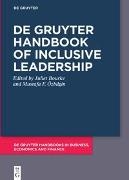
The De Gruyter Handbook of Inclusive Leadership emerges from an evolving understanding of equality, diversity and inclusion challenges within organisations and beyond. Inclusive leadership rests on the recognition that simply accepting diversity is insufficient; true leadership requires the active embrace of inclusive practices as to ensure that people feel a sense of belonging while also being valued for their uniqueness. In a dynamic, tech-infused and politically unstable geopolitical context, the concept of inclusive leadership has rapidly expanded to address new issues such as AI, robots, social movements, co-worker relationships, backlash and customer as well as bio diversity, and has looked more deeply at its nuanced expression in different global contexts.
This handbook explores these issues and more, representing the cutting edge of inclusive leadership theory and practice. Not only does it offer a comprehensive and extremely interesting exploration of inclusive leadership, integrating insights from scholars and practitioners around the globe, it also provides leaders and practitioners with helpful ideas about how to be a much more inclusive leader in the day-to-day.