Ulteriori informazioni
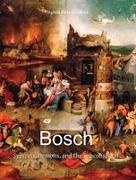
Hieronymus Bosch was painting frightful, yet vaguely likable monsters long before computer games were ever invented, often with a touch of humor. His works are assertive statements about the mental illness that befalls any man who abandons the teachings of Christ. With a life that spanned 1450 to 1516, Bosch experienced the thick of the highly charged Renaissance and its wars of religion. Medieval tradition and values were crumbling, paving the way to thrust man into a new universe where faith lost some of its power and much of its magic. Bosch set out to warn doubters of the perils awaiting all and any who lost their faith in God. His favorite allegories were hell, heaven and lust. He believed that everyone had to choose between one of two options: heaven or hell. Bosch brilliantly exploited the symbolism of a wide range of fruits and plants to lend sexual overtones to his themes, which author Virginia Pitts Rembert meticulously deciphers to provide readers new insights into this fascinating artist and his works.
Info autore
Virginia Pitts Rembert was born in Alabama in the USA. She has doctorates in art history and in archaeology, plus further degrees in art and fine arts education (Columbia University) as well as in art history (University of Wisconcin). Furthermore, she has taught at the University of Alabama, Birmingham, the University of Arkansas, Little Rock, and the University of Alabama, Tuscaloosa, at which she is currently Professor Emeritus. Virginia Pitts Rembert is the author of many books and articles, but is even better known for being at the forefront of art research into modern art and abstract art in Europe and America, particularly on the subject of Piet Mondrian, his influence, and his followers.