Ulteriori informazioni
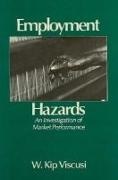
The safety of the work place is now a highly visible public issue. Many are calling for tighter regulation to reduce worker risk, while others feel government intervention is ineffective and costly. Here Kip Viscusi explores how well markets for hazardous jobs actually work. According to classical economics, other things being equal, a worker will demand more pay for a hazardous job than a safe one. However, this assumes that job related hazards are known, when often they are not. Using recent advances in the economics of information, Viscusi develops a theory of individual responses to job hazards under conditions of uncertainty.
His assumptions are that hazards are uncertain events and that learning about them is a process that takes place over time. He then employs this analysis to study the performance of job markets in matching persons and jobs and in compensating persons for exposure to hazards. Finally he tests his adaptive model of the decision to quit and finds substantial evidence that risks are indeed reflected in wage differentials and quit behavior.
Info autore
W. Kip Viscusi is George G. Allen Professor of Economics at Duke University and Associate Reporter on the American Law Institute tort liability reform project.
Riassunto
The safety of the workplace is now a highly visible public issue. Many want tighter regulation to reduce worker risk; others find government intervention ineffective and costly. Viscusi develops a theory of individual responses to job hazards under conditions of uncertainty in this exploration of how well markets for hazardous jobs actually work.