Ulteriori informazioni
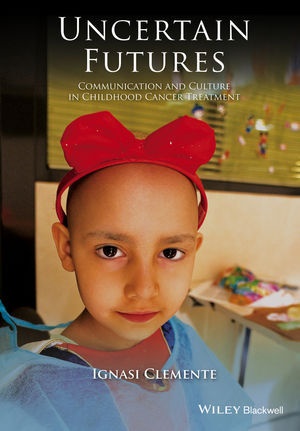
Informationen zum Autor Ignasi Clemente is Assistant Professor in the Department of Anthropology at Hunter College, CUNY, USA. His research interests include sociocultural and communicative aspects of pain and suffering, childhood studies, and embodied communication. His research on chronically ill children has been published in journals including Social Science and Medicine , Sociology of Health and Illness , and Communication and Medicine . Among others, he has contributed to the Oxford Textbook of Paediatric Pain (2013), the Handbook of Conversation Analysis (Wiley-Blackwell, 2013), Healthcare Settings: Policy, Participation and New Technologies (Wiley-Blackwell, 2010), and the Blackwell Guide to Research Methods in Bilingualism (Blackwell, 2008). Klappentext This book examines children and young people's attempts to participate in conversations about their own treatment throughout uncertain cancer trajectories, including the events leading up to diagnosis, treatment, remission, relapse, and cure or death.* Clearly and compellingly written, Clemente relies on a new multi-layered method to identify six cancer communication strategies* Illustrates that communication is central to how children, parents, and healthcare professionals constitute, influence, and make sense of the social worlds they inhabit--or that they want to inhabit* Provides ethnographic case studies of childhood cancer patients in Spain, using children's own words* Examines the challenges of how to talk to and how to encourage patients' involvement in treatment discussions* In his critique of the "telling" versus "not telling" debates, Clemente argues that communication should be adjusted to the children's own needs, and that children's own questions can indicate how much or little they want to be involved Zusammenfassung This book examines children and young people s attempts to participate in conversations about their own treatment throughout uncertain cancer trajectories, including the events leading up to diagnosis, treatment, remission, relapse, and cure or death. Inhaltsverzeichnis Series Preface ix Acknowledgments xii Preface xiv 1. Children: Contributions to Communication and Illness 1 Alternatives to Speaking 5 Disclosure as a Dynamic and Heterogeneous Process 7 Disclosure to Children with Cancer 10 Problematizing Participation 13 Uncertainty and the Practice of Optimism 21 Multiple Uncertainties 21 Hierarchically Organized Uncertainties 23 Variable Uncertainties 23 Practicing Hope and Optimism 25 Ethnography and Conversation Analysis 26 Plan of the Book 31 2. A Linguistic Anthropologist in a Pediatric Cancer Unit 33 Culture and Disclosure Practices in Catalonia 34 Fieldwork with Children 38 Contexts of Children's Questions 42 Investigating Avoidance 44 Multiple Ways of Talking about Cancer 47 3. Living and Dealing with Cancer 49 Focusing on Treatment 51 Guessing 55 Estar baixet (Having Low Blood Cell Counts) 56 Les llagues (Mouth Sores) 57 La febre (Fever and Infections) 58 Being Together 60 Acompanyar (Being at the Patient's Side) 61 Menjar (Eating) 63 Fer una visita (Visiting) 64 Talking Privately 67 Uncertainties of Treatment 71 4. Co?]constructing Uncertainty 74 Questions and Answers 76 Uncertainty and the Topic of Questions 79 Contingent Answers 80 Contingent Questions 86 Uncertainty and the Action of Questions 88 Answers that Lead to Subsequent Actions 90 Avoiding Answers and Avoiding Silence 93 Stepping into the Uncertain Future One Turn at a Time 100 5. Engaging in Communication at Catalonia Hospital 102 Learning the ...
Sommario
Series Preface ix
Acknowledgments xii
Preface xiv
1. Children: Contributions to Communication and Illness 1
Alternatives to Speaking 5
Disclosure as a Dynamic and Heterogeneous Process 7
Disclosure to Children with Cancer 10
Problematizing Participation 13
Uncertainty and the Practice of Optimism 21
Multiple Uncertainties 21
Hierarchically Organized Uncertainties 23
Variable Uncertainties 23
Practicing Hope and Optimism 25
Ethnography and Conversation Analysis 26
Plan of the Book 31
2. A Linguistic Anthropologist in a Pediatric Cancer Unit 33
Culture and Disclosure Practices in Catalonia 34
Fieldwork with Children 38
Contexts of Children's Questions 42
Investigating Avoidance 44
Multiple Ways of Talking about Cancer 47
3. Living and Dealing with Cancer 49
Focusing on Treatment 51
Guessing 55
Estar baixet (Having Low Blood Cell Counts) 56
Les llagues (Mouth Sores) 57
La febre (Fever and Infections) 58
Being Together 60
Acompanyar (Being at the Patient's Side) 61
Menjar (Eating) 63
Fer una visita (Visiting) 64
Talking Privately 67
Uncertainties of Treatment 71
4. Co?]constructing Uncertainty 74
Questions and Answers 76
Uncertainty and the Topic of Questions 79
Contingent Answers 80
Contingent Questions 86
Uncertainty and the Action of Questions 88
Answers that Lead to Subsequent Actions 90
Avoiding Answers and Avoiding Silence 93
Stepping into the Uncertain Future One Turn at a Time 100
5. Engaging in Communication at Catalonia Hospital 102
Learning the Diagnosis 103
L'entrevista (The Treatment Interview) 109
"And When Will I Be Completely Cured?" 111
Six Communication Strategies 127
6. Patient Pressure and Medical Authority 129
Everyday Life in Treatment 130
"How Many Chemos Do I Have Left?" 133
Seeking Answers Without Challenging Medical Authority 151
7. The Limits of Optimism at the End of Treatment 153
Remission 154
Relapse 159
Negotiating Death 161
"Is the Day of the Autotransplant Going to Be Delayed?" 168
Optimistic Collusion 178
8. Conclusion 180
Appendix A: Profiles of Patients 189
Children (ages 3-6) 189
Young people (ages 11-18) 190
Appendix B: Transcription Conventions 193
References 197
Index 214
Relazione
"Clemente opens our minds and hearts to the everyday lives of children with cancer, their parents and clinicians as they interact with one another, indeed as they carry on, in the face of numerous uncertainties."
Myra Bluebond-Langner, University College, London and Rutgers University
"Ignasi Clemente's book deserves to be read by all who are concerned with the state of health care communication, whether involving cancer or other serious illness, patients who are children or adults, and communications in hospitals, clinics or other medical settings."
Douglas Maynard, University of Wisconsin
"Uncertain Futures insightfully explores the delicate balance between silence and discussion, and sheds light on how the illness extends beyond the patient as parents rearrange their lives to love and care for their children in extremely difficult circumstances."
Marjorie Goodwin, University of California, Los Angeles