

Condividi
Fr. 185.00
A Parthiban, Anbanandam Parthiban, Parthiban Anbanandam, Anbanandam Parthiban
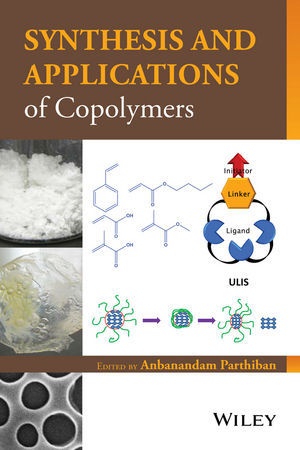
Synthesis and Applications of Copolymers
Inglese · Copertina rigida
Spedizione di solito entro 1 a 3 settimane (non disponibile a breve termine)
Descrizione
Informationen zum Autor Anbanadam Parthiban is a Research Scientist at the Institute of Chemical and Engineering Sciences under the Agency for Science, Technology and Research (A*STAR), Singapore. After receiving his Ph.D. in Chemistry from the Indian Institute of Technology (IIT), Madras Dr. Parthiban worked in a corporate R&D Centre developing thickeners and additives for lubricants. He has 40 journal publications and 9 patents and is an active reviewer of manuscripts for major polymer journals. He also evaluates proposals for government funded research agencies. Klappentext This book comprehensively covers fundamental aspects of polymerization, emphasizing the synthesis, applications, and advances of copolymers. It focuses on monomers and reaction conditions for newly formed polymeric materials that exhibit desired properties. Providing a broad scope of up-to-date discussion, the book helps readers better understand synthetic methodology and chemistry.Chapters begin with detailed discussion on synthetic techniques and trends in controlling chain length, functionality, composition, and arrangement as well as developments in copolymerzation. The following chapters focus on topics in polymer processing, from renewable processes and materials to the application of copolymers obtained by fixing carbon dioxide. Several popular applications and tools are covered, including stimuli responsive polymers, pharmaceutical polymers, nano-patterns, self-assembly, microporous materials and polymer-drug conjugates.Overall, the book introduces experimental advances in an expanding area that can lead to further research and multidisciplinary applications. Zusammenfassung All about copolymers, this book comprehensively covers aspects of polymerization, methodology, and applications. With up-to-date discussion, the chapters cover synthetic techniques, copolymerization, and special topics, like renewable processes and sustainable development as well as newly formed polymeric materials and advances in the field. Inhaltsverzeichnis Preface xii Contributors xv SECTION I SYNTHESIS OF COPOLYMERS 1 1 Trends in Synthetic Strategies for Making (CO)Polymers 3 Anbanandam Parthiban 1.1 Background and Introduction, 3 1.2 Significance of Control Over Arrangement of Monomers in Copolymers, 5 1.3 Chain-Growth Condensation Polymerization, 5 1.3.1 Sequential Self-Repetitive Reaction (SSRR), 6 1.3.2 Poly(phenylene Oxide)s by Chain-Growth Condensation Polymerization, 8 1.3.3 Hydroxybenzoic Acids as AA¿ Type Monomer in Nucleophilic Aliphatic Substitution Polymerization, 8 1.4 Sequence-Controlled Polymerization, 9 1.4.1 Sequence-Controlled Copolymers of N-Substituted Maleimides, 10 1.4.2 Alternating Copolymers by Ring-Opening Polymerization, 10 1.4.3 Selective Radical Addition Assisted by a Template, 11 1.4.4 Alternating AB-Type Sequence-Controlled Polymers, 11 1.4.5 Metal-Templated ABA Sequence Polymerization, 11 1.4.6 Sequence-Controlled Vinyl Copolymers, 12 1.4.7 Sequence-Regulated Polymerization Induced by Dual-Functional Template, 13 1.5 Processing of Thermoset Polymers: Dynamic Bond Forming Processes and Self-Healing Materials, 13 1.5.1 Plasticity of Networked Polymers Induced by Light, 14 1.5.2 Radically Exchangeable Covalent Bonds, 14 1.5.3 Self-Repairing Polyurethane Networks, 15 1.5.4 Temperature-Induced Self-Healing in Polymers, 15 1.5.5 Diels-Alder Chemistry at Room Temperature, 15 1.5.6 Trithiocarbonate-Centered Responsive Gels, 16 1.5.7 Shuffling of Trithiocarbonate Units Induced by Light, 16 1.5.8 Processable Organic Networks, 17 1.6 Miscellaneous Developments, 17 1.6.1 Atom Transfer Radical Polymerization (ATRP) Promoted by Unimolecular Ligand-Initiator Dual-Functional Systems (ULIS), 1...
Sommario
Preface xii
Contributors xv
SECTION I SYNTHESIS OF COPOLYMERS 1
1 Trends in Synthetic Strategies for Making (CO)Polymers 3
Anbanandam Parthiban
1.1 Background and Introduction, 3
1.2 Significance of Control Over Arrangement of Monomers in Copolymers, 5
1.3 Chain-Growth Condensation Polymerization, 5
1.3.1 Sequential Self-Repetitive Reaction (SSRR), 6
1.3.2 Poly(phenylene Oxide)s by Chain-Growth Condensation Polymerization, 8
1.3.3 Hydroxybenzoic Acids as AA' Type Monomer in Nucleophilic Aliphatic Substitution Polymerization, 8
1.4 Sequence-Controlled Polymerization, 9
1.4.1 Sequence-Controlled Copolymers of N-Substituted Maleimides, 10
1.4.2 Alternating Copolymers by Ring-Opening Polymerization, 10
1.4.3 Selective Radical Addition Assisted by a Template, 11
1.4.4 Alternating AB-Type Sequence-Controlled Polymers, 11
1.4.5 Metal-Templated ABA Sequence Polymerization, 11
1.4.6 Sequence-Controlled Vinyl Copolymers, 12
1.4.7 Sequence-Regulated Polymerization Induced by Dual-Functional Template, 13
1.5 Processing of Thermoset Polymers: Dynamic Bond Forming Processes and Self-Healing Materials, 13
1.5.1 Plasticity of Networked Polymers Induced by Light, 14
1.5.2 Radically Exchangeable Covalent Bonds, 14
1.5.3 Self-Repairing Polyurethane Networks, 15
1.5.4 Temperature-Induced Self-Healing in Polymers, 15
1.5.5 Diels-Alder Chemistry at Room Temperature, 15
1.5.6 Trithiocarbonate-Centered Responsive Gels, 16
1.5.7 Shuffling of Trithiocarbonate Units Induced by Light, 16
1.5.8 Processable Organic Networks, 17
1.6 Miscellaneous Developments, 17
1.6.1 Atom Transfer Radical Polymerization (ATRP) Promoted by Unimolecular Ligand-Initiator Dual-Functional Systems (ULIS), 17
1.6.2 Unsymmetrical Ion-Pair Comonomers and Polymers, 20
1.6.3 Imidazole-Derived Zwitterionic Polymers, 21
1.6.4 Post-Modification of Polymers Bearing Reactive Pendant Groups, 22
1.7 Conclusion, 23
References, 24
2 Functional Polyolefins from the Coordination Copolymerization of Vinyl Monomers 29
Fabio Di Lena and Jo?ao A. S. Bomfim
2.1 Molecular Aspects of Olefin Coordination to Metals, 29
2.2 Fundamentals of Homopolymerization of Alkenes, 30
2.3 Copolymerization of Ethene and other Alkenes, 34
2.4 Copolymerization of Alkenes and Carbon Monoxide, 35
2.5 Copolymerization of Alkenes and Polar Vinyl Monomers, 37
2.5.1 Migratory Insertion Polymerization, 37
2.5.2 Polymerization via a Dual Radical/Migratory Insertion Pathway, 40
2.5.3 Coordinative Group Transfer Polymerization, 41
2.6 Copolymerization of Polar Vinyl Monomers and Carbon Monoxide, 41
2.7 Why are Phosphine-Sulfonate Ligands so Special? 43
2.8 Telechelic and End-Capped Macromolecules, 44
2.9 On the Use of Chemoinformatics for a More Rapid Development of the Field, 44
2.10 Conclusion and Outlook, 45
References, 46
3 General Aspects of Copolymerization 54
Alex Van Herk
3.1 Copolymerization in Chain Reactions, 54
3.1.1 Derivation of the Copolymerization Equation, 55
3.1.2 Types of Copolymers, 57
3.1.3 Polymerization Rates in Copolymerizations, 59
3.2 Measuring Copolymerization Parameters, 60
3.3 Influence of Reaction Conditions, 63
3.4 Short-Chain Effects in Copolymerization, 63
3.5 Synthesis of Block Copolymers With Controlled Chain Architecture, 64
References, 66
&
Dettagli sul prodotto
| Autori | A Parthiban, Anbanandam Parthiban, Parthiban Anbanandam |
| Con la collaborazione di | Anbanandam Parthiban (Editore) |
| Editore | Wiley, John and Sons Ltd |
| Lingue | Inglese |
| Formato | Copertina rigida |
| Pubblicazione | 22.07.2014 |
| EAN | 9781118057469 |
| ISBN | 978-1-118-05746-9 |
| Pagine | 400 |
| Categorie |
Scienze naturali, medicina, informatica, tecnica
> Chimica
Materialverarbeitung, Materialwissenschaften, Chemical Engineering, chemische Verfahrenstechnik, Materials science, Allg. Chemische Verfahrenstechnik, Polymersynthese, Polymer Science & Technology, Polymer Synthesis, Polymerwissenschaft u. -technologie, Materials Processing, Copolymere |
Recensioni dei clienti
Per questo articolo non c'è ancora nessuna recensione. Scrivi la prima recensione e aiuta gli altri utenti a scegliere.
Scrivi una recensione
Top o flop? Scrivi la tua recensione.