

Condividi
Fr. 156.00
Mark D Fairchild, Mark D. Fairchild, Mark D. (Munsell Color Science Laborato Fairchild, MD Fairchild, Fairchild Mark D.
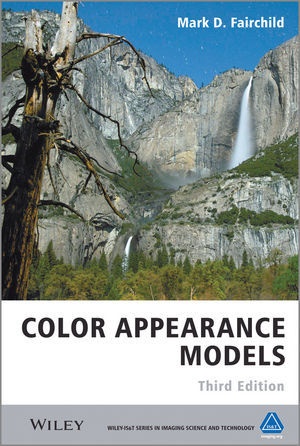
Color Appearance Models
Inglese · Copertina rigida
Spedizione di solito entro 1 a 3 settimane (non disponibile a breve termine)
Descrizione
Informationen zum Autor Mark D. Fairchild, Rochester Institute of Technology, USA Dr. Fairchild is Professor of Color Science and Imaging Science at RIT. He is an Associate Dean for Research & Graduate Education of RIT's College of Science, facilitating the growth and strengthening of the college's research activities and graduate programs. Until recently, he had been the Director of the Munsell Color Science Laboratory for the past 12 years. Klappentext The essential resource for readers needing to understand visual perception and for those trying to produce, reproduce and measure color appearance in various applications such as imaging, entertainment, materials, design, architecture and lighting.This book builds upon the success of previous editions, and will continue to serve the needs of those professionals working in the field to solve practical problems or looking for background for on-going research projects. It would also act as a good course text for senior undergraduates and postgraduates studying color science.The 3rd Edition of Color Appearance Models contains numerous new and expanded sections providing an updated review of color appearance and includes many of the most widely used models to date, ensuring its continued success as the comprehensive resource on color appearance models.Key features:* Presents the fundamental concepts and phenomena of color appearance (what objects look like in typical viewing situations) and practical techniques to measure, model and predict those appearances.* Includes the clear explanation of fundamental concepts that makes the implementation of mathematical models very easy to understand.* Explains many different types of models, and offers a clear context for the models, their use, and future directions in the field. Zusammenfassung Building upon the success of previous editions, this volume continues to serve the needs of professionals who need to understand visual perception as well as produce, reproduce, and measure color appearance in such applications as imaging, entertainment, materials, design, architecture, and lighting. Inhaltsverzeichnis Series Preface xiii Preface xv Acknowledgments xviii Introduction xix 1 Human Color Vision 1 1.1 Optics of the Eye 2 1.2 The Retina 7 1.3 Visual Signal Processing 14 1.4 Mechanisms of Color Vision 19 1.5 Spatial and Temporal Properties of Color Vision 27 1.6 Color Vision Deficiencies 32 1.7 Key Features for Color Appearance Modeling 36 2 Psychophysics 38 2.1 Psychophysics Defined 39 2.2 Historical Context 40 2.3 Hierarchy of Scales 43 2.4 Threshold Techniques 45 2.5 Matching Techniques 49 2.6 One-Dimensional Scaling 50 2.7 Multidimensional Scaling 52 2.8 Design of Psychophysical Experiments 54 2.9 Importance in Color Appearance Modeling 55 3 Colorimetry 56 3.1 Basic and Advanced Colorimetry 57 3.2 Why is Color? 57 3.3 Light Sources and Illuminants 59 3.4 Colored Materials 63 3.5 The Human Visual Response 68 3.6 Tristimulus Values and Color Matching Functions 70 3.7 Chromaticity Diagrams 77 3.8 Cie Color Spaces 79 3.9 Color Difference Specification 81 3.10 The Next Step 83 4 Color Appearance Terminology 85 4.1 Importance of Definitions 85 4.2 Color 86 4.3 Hue 88 4.4 Brightness and Lightness 88 4.5 Colorfulness and Chroma 90 4.6 Saturation 91 4.7 Unrelated and Related Colors 91 4.8 Definitions in Equations 92 4.9 Brightness-Colorfulness Vs Lightness-Chroma 94 5 Color Order Systems 97 5.1 Overview and Requirements 98 5.2 The Munsell Book of Color 99 5.3 The Swedish Ncs 104 5.4 The Colorcurve System 106 5.5 Other Color Order Systems 107 5.6 ...
Sommario
Series Preface xiii
Preface xv
Acknowledgments xviii
Introduction xix
1 Human Color Vision 1
1.1 Optics of the Eye 2
1.2 The Retina 7
1.3 Visual Signal Processing 14
1.4 Mechanisms of Color Vision 19
1.5 Spatial and Temporal Properties of Color Vision 27
1.6 Color Vision Deficiencies 32
1.7 Key Features for Color Appearance Modeling 36
2 Psychophysics 38
2.1 Psychophysics Defined 39
2.2 Historical Context 40
2.3 Hierarchy of Scales 43
2.4 Threshold Techniques 45
2.5 Matching Techniques 49
2.6 One-Dimensional Scaling 50
2.7 Multidimensional Scaling 52
2.8 Design of Psychophysical Experiments 54
2.9 Importance in Color Appearance Modeling 55
3 Colorimetry 56
3.1 Basic and Advanced Colorimetry 57
3.2 Why is Color? 57
3.3 Light Sources and Illuminants 59
3.4 Colored Materials 63
3.5 The Human Visual Response 68
3.6 Tristimulus Values and Color Matching Functions 70
3.7 Chromaticity Diagrams 77
3.8 Cie Color Spaces 79
3.9 Color Difference Specification 81
3.10 The Next Step 83
4 Color Appearance Terminology 85
4.1 Importance of Definitions 85
4.2 Color 86
4.3 Hue 88
4.4 Brightness and Lightness 88
4.5 Colorfulness and Chroma 90
4.6 Saturation 91
4.7 Unrelated and Related Colors 91
4.8 Definitions in Equations 92
4.9 Brightness-Colorfulness Vs Lightness-Chroma 94
5 Color Order Systems 97
5.1 Overview and Requirements 98
5.2 The Munsell Book of Color 99
5.3 The Swedish Ncs 104
5.4 The Colorcurve System 106
5.5 Other Color Order Systems 107
5.6 Uses of Color Order Systems 109
5.7 Color Naming Systems 112
6 Color Appearance Phenomena 115
6.1 What are Color Appearance Phenomena? 115
6.2 Simultaneous Contrast, Crispening, and Spreading 116
6.3 Bezold-Brücke Hue Shift (Hue Changes with Luminance) 120
6.4 Abney Effect (Hue Changes with Colorimetric Purity) 121
6.5 Helmholtz-Kohlrausch Effect (Brightness
Depends On Luminance and Chromaticity) 123
6.6 Hunt Effect (Colorfulness Increases
with Luminance) 125
6.7 Stevens Effect (Contrast Increases
with Luminance) 127
6.8 Helson-Judd Effect (Hue of Non-Selective Samples) 129
6.9 Bartleson-Breneman Equations (Image
Contrast Changes with Surround) 131
6.10 Discounting-the-Illuminant 132
6.11 Other Context, Structural, and
Psychological Effects 133
6.12 Color Constancy? 140
7 Viewing Conditions 142
7.1 Configuration of the Viewing Field 142
7.2 Colorimetric Specification of the Viewing Field 146
7.3 Modes of Viewing 149
7.4 Unrelated and Related Colors Revisited 154
8 Chromatic Adaptation 156
8.1 Light, Dark, and Chromatic Adaptation 157
8.2 Physiology 159
8.3 Sensory and Cognitive Mechanisms 170
8.4 Corresponding Colors Data 174
8.5 Models 177
8.6 Color Inconstancy Index 178
8.7 Computational Color Constancy 179
9 Chromatic Adaptation Models 181
9.1 Von Kries Model 182
9.2 Retinex Theory 186
9.3 Nayatani et al. Model 187
9.4 Guth's Model 190
9.5 Fairchild's 1990 Model 192
9.6
Dettagli sul prodotto
| Autori | Mark D Fairchild, Mark D. Fairchild, Mark D. (Munsell Color Science Laborato Fairchild, MD Fairchild, Fairchild Mark D. |
| Editore | Wiley, John and Sons Ltd |
| Lingue | Inglese |
| Formato | Copertina rigida |
| Pubblicazione | 09.08.2013 |
| EAN | 9781119967033 |
| ISBN | 978-1-119-96703-3 |
| Pagine | 480 |
| Serie |
Wiley-IS&T Series in Imaging Science and Technology Wiley-IS&T Series in Imaging S The Wiley-IS&T Series in Imaging Science and Technology |
| Categorie |
Scienze naturali, medicina, informatica, tecnica
> Tecnica
> Elettronica, elettrotecnica, telecomunicazioni
Farbe, Farbmanagement, Imaging systems & technology, Electrical & Electronics Engineering, Elektrotechnik u. Elektronik, Bildgebende Systeme u. Verfahren, Elektronische Displays, Electrical Engineering - Displays |
Recensioni dei clienti
Per questo articolo non c'è ancora nessuna recensione. Scrivi la prima recensione e aiuta gli altri utenti a scegliere.
Scrivi una recensione
Top o flop? Scrivi la tua recensione.