

Share
Fr. 155.00
Et al, David Jeffery, David W. Jeffery, Jeffery David W., Gavin Sacks, Gavin Jeffery Sacks...
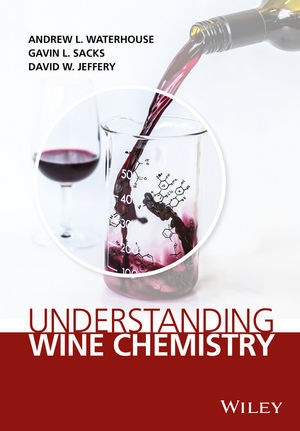
Understanding Wine Chemistry
English · Hardback
Shipping usually within 3 to 5 weeks
Description
Informationen zum Autor Professor Andrew L. Waterhouse, Department of Viticulture & Enology, University of California, Davis, USA.Andrew Waterhouse received his PhD in organic chemistry from UC Berkeley, and has been a wine chemist at the University of California, Davis since 1991. He teaches wine analysis, graduate level wine chemistry, and an online introductory wine course, and is Chair of the Viticulture and Enology graduate studies program. Former graduate students and postdocs are academics, industry scientists and winemakers. His research lab has reported key wine oxidation reactions and has developed new methods to analyse wine components including those using LC-MS with isotope filtering, as well as NMR techniques. The research has focused on wine phenolics, oak compounds and oxidation products. In addition his lab has also been addressing the metabolic products of phenolics. He publishes in numerous international journals in the fields of chemistry and agriculture, and serves as a chief editor at the Journal of the Science of Food and Agriculture. See: waterhouse.ucdavis.edu.Dr Gavin Sacks, Department of Food Science, Cornell University, USA.Gavin Sacks received his PhD in analytical chemistry from Cornell University, and following post-doctoral studies in nutritional sciences and biogeochemistry he began as a faculty in food science at Cornell in 2007. He has served as Director of Undergraduate Studies for Cornell's interdepartmental Viticulture and Enology undergraduate major, in which he also teaches courses in wine analysis and in wine flavor chemistry. His research interests include the development of both low-cost and state-of-the-art approaches to analysis of odorants and other organoleptically important compounds; and applying these tools to understanding the role of plant genetics, cultural practices, and post-harvest processing on sensory attributes of foods and beverages, particularly of wine.Dr David Jeffery, School of Agriculture, Food and Wine, University of Adelaide, USA.David Jeffery received his PhD in synthetic organic chemistry from Flinders University, and has been involved with wine chemistry for over a decade, initially as a researcher at The Australian Wine Research Institute before transitioning to The University of Adelaide in 2010. He teaches wine chemistry to undergraduate and Master level students, delivering topics associated with stabilization, clarification, distillation, wine aroma, polyphenols, and analytical methods. He also helped to develop and deliver a free online wine education course called Wine 101x, offered on the EdX platform. David's research areas extend to on many aspects of wine chemistry, with special interests in polyphenols and aroma compounds and their precursors. He utilizes his expertise in synthetic organic chemistry and natural product isolation, purification and characterization, along with experience in developing and applying analytical methods, to improve understanding of grape and wine chemistry, particularly in relation to chemical composition and quality. Klappentext Wine chemistry inspires and challenges with its complexity, and while this is intriguing, it can also be a barrier to further understanding. The topic is demystified in Understanding Wine Chemistry, which explains the important chemistry of wine at the level of university education, and provides an accessible reference text for scientists and scientifically trained winemakers alike.Understanding Wine Chemistry:* Summarizes the compounds found in wine, their basic chemical properties and their contribution to wine stability and sensory properties* Focuses on chemical and biochemical reaction mechanisms that are critical to wine production processes such as fermentation, aging, physiochemical separations and additions* Includes case studies showing how chemistry can be harnessed to enhance wine color, aroma, flavor, balance, stability and quality.This descript...
List of contents
Foreword xiii
Preface xv
Introduction xvii
The chemical diversity of wine xvii
What is wine? xvii
Chemical reactions in wine xx
Chemistry as a historical record xxi
The chemical senses and wine flavor xxi
References xxiv
Part A Wine Components and Their Reactions 1
1 Water and Ethanol 3
1.1 Introduction 3
1.2 Chemical and physical properties of water 3
1.3 Properties of ethanol and ethanol-water mixtures 4
1.4 Typical ethanol concentrations in wines 6
1.5 Sensory effects of ethanol 7
References 9
2 Carbohydrates 11
2.1 Introduction 11
2.2 Nomenclature, representation, and occurrence of sugars 11
2.3 Physical, chemical, and sensory properties of sugars 14
2.4 Polysaccharides 17
References 18
3 Acids 19
3.1 Introduction 19
3.2 Organic acids in wine 19
3.3 Organic acids, pH, and wine acidity 21
3.4 Acid adjustments 28
3.5 General roles of organic acids and pH in wine reactions 31
3.6 Sensory effects of acids 31
References 32
4 Minerals 34
4.1 Introduction 34
4.2 Origins of metals in wine 35
4.3 Reactions involving metals 35
4.4 Sensory effects of metals 37
4.5 Metals and wine authenticity 37
References 38
5 Amines, Amino Acids, and Proteins 40
5.1 Introduction 40
5.2 Chemistry of amines 40
5.3 Amino acids and related major nitrogenous compounds in wines 41
5.4 Nitrogenous compounds with health effects 44
5.5 Odor-active amines 45
References 48
6 Higher Alcohols 51
6.1 Introduction 51
6.2 Properties of higher alcohols 51
6.3 Origins and concentrations of higher alcohols 52
6.4 Six-carbon (C6) alcohols 53
6.5 Methanol 54
References 55
7 Esters 57
7.1 Introduction 57
7.2 Chemistry of esters 57
7.3 Esters in grapes 60
7.4 Esters formed during winemaking and storage 60
7.5 Sensory effects 65
References 66
8 Isoprenoids 68
8.1 Introduction 68
8.2 General chemical and sensory properties of isoprenoids 68
8.3 Monoterpenoids 69
8.4 Sesquiterpenoids 73
8.5 C13-Norisoprenoids 74
References 76
9 Aldehydes, Ketones, and Related Compounds 79
9.1 Introduction 79
9.2 Acetaldehyde 80
9.3 Short and medium chain aldehydes 80
9.4 Complex carbonyls 84
9.5 Carbonyl reactivity 85
References 86
10 Thiols and Related Sulfur Compounds 88
10.1 Introduction 88
10.2 Varietal sulfur aroma compounds - polyfunctional thiols 91
10.3 Fermentative sulfur aroma compounds 93
10.4 Other sulfur-containing aroma compounds 94
Chemical principles: nucleophiles and electrophiles 95
References 97
11 Introduction to Phenolics 99
11.1 Introduction 99
11.2 Non-flavonoids 102
11.3 Flavonoids 103
References 104
12 Volatile Phenols 105
12.1 Introduction 105
12.2 Structure and chemical properties 105
12.3 Concentrations in wine and sensory effects 107
12.4 Origins in wine and effects on volatile phenol profile 107
References 110
13 Non-flavonoid Phenolics 112
13.1 Introduction 112
13.2 Hydroxyc
Product details
| Authors | Et al, David Jeffery, David W. Jeffery, Jeffery David W., Gavin Sacks, Gavin Jeffery Sacks, Gavin L Sacks, Gavin L. Sacks, Gavin L. Jeffery Sacks, Sacks Gavin L., Andrew Waterhouse, Andrew L Waterhouse, Andrew L. Waterhouse, Andrew L. Sacks Waterhouse |
| Publisher | Wiley, John and Sons Ltd |
| Languages | English |
| Product format | Hardback |
| Released | 19.08.2016 |
| EAN | 9781118627808 |
| ISBN | 978-1-118-62780-8 |
| No. of pages | 480 |
| Subjects |
Natural sciences, medicine, IT, technology
> Biology
> Agriculture, horticulture; forestry, fishing, food
Chemie, Lebensmittelchemie, Analytische Chemie, Wein, chemistry, Analytical Chemistry, Food Science & Technology, Lebensmittelforschung u. -technologie, Fermentierte Nahrungsmittel u. Getränke, Fermented Foods & Beverages, Allg. Lebensmittelforschung u. -technologie |
Customer reviews
No reviews have been written for this item yet. Write the first review and be helpful to other users when they decide on a purchase.
Write a review
Thumbs up or thumbs down? Write your own review.