

Share
Fr. 240.00
Nativ Dudai, Dudai Nativ, Daphna Havkin Frenkel, Daphn Havkin-Frenkel, Daphna Havkin-Frenkel, Daphna Dudai Havkin-Frenkel
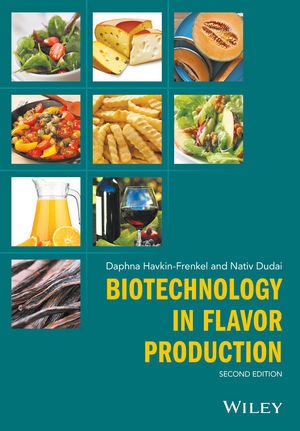
Biotechnology in Flavor Production
English · Hardback
Shipping usually within 3 to 5 weeks
Description
Informationen zum Autor Dr Daphna Havkin-Frenkel, Department of Plant Pathology and Biology, Rutgers University, New Brunswick, New Jersey and Director of Research and Development, Bakto Flavors LLC, New Jersey. Dr Nativ Dudai, Researcher, Newe Ya'ar Research Center, The Agricultural Research Organization of Israel, Ramat Yishay, Israel. Klappentext Throughout history, human beings have sought ways to enhance the flavor of the foods they eat. In the 21st century, biotechnology plays an important role in the flavor improvement of many types of foods. This book covers many of the biotechnological approaches currently being applied to flavor enhancement. The contribution of microbial metabolism to flavor development in fermented beverages and dairy products has been exploited for thousands of years, but the recent availability of whole genome sequences of the yeasts and bacteria involved in these processes is stimulating targeted approaches to flavor enhancement.Chapters discuss recent developments in the flavor modification of wine, beer, and dairy products through the manipulation of the microbial species involved. Biotechnological approaches to the production of specific flavor molecules in microbes and plant tissue cultures, and the challenges that have been encountered, are also covered, along with the metabolic engineering of food crops for flavor enhancement - also a current area of research. Biotechnology is also being applied to crop breeding through marker-assisted selection for important traits, including flavor, and the book looks at the application of the biotechnological approach to breeding for enhanced flavor in rice, apple, and basil. These techniques are subject to governmental regulation, and this is addressed in a dedicated chapter.This updated second edition features five brand new chapters, and the topics covered in the book will be of interest to those in the flavor and food industries as well as to academic researchers interested in flavors. Zusammenfassung Throughout history! human beings have sought ways to enhance the flavor of the foods they eat. In the 21st century! biotechnology plays an important role in the flavor improvement of many types of foods. This book covers many of the biotechnological approaches currently being applied to flavor enhancement. The contribution of microbial metabolism to flavor development in fermented beverages and dairy products has been exploited for thousands of years! but the recent availability of whole genome sequences of the yeasts and bacteria involved in these processes is stimulating targeted approaches to flavor enhancement.Chapters discuss recent developments in the flavor modification of wine! beer! and dairy products through the manipulation of the microbial species involved. Biotechnological approaches to the production of specific flavor molecules in microbes and plant tissue cultures! and the challenges that have been encountered! are also covered! along with the metabolic engineering of food crops for flavor enhancement - also a current area of research. Biotechnology is also being applied to crop breeding through marker-assisted selection for important traits! including flavor! and the book looks at the application of the biotechnological approach to breeding for enhanced flavor in rice! apple! and basil. These techniques are subject to governmental regulation! and this is addressed in a dedicated chapter.This updated second edition features five brand new chapters! and the topics covered in the book will be of interest to those in the flavor and food industries as well as to academic researchers interested in flavors. Inhaltsverzeichnis Contributors xi Preface xv Chapter 1 The flavor of citrus fruit 1 Ron Porat, Sophie Deterre, Pierre Giampaoli and Anne Plotto Introduction 1 Taste components of citrus fruit 3 Sugars 5 Acids 6 <...
List of contents
Contributors xi
Preface xv
Chapter 1 The flavor of citrus fruit 1
Ron Porat, Sophie Deterre, Pierre Giampaoli and Anne Plotto
Introduction 1
Taste components of citrus fruit 3
Sugars 5
Acids 6
Bitter compounds 6
Aroma compounds of citrus fruit 8
Terpene hydrocarbons 9
Aldehydes 10
Alcohols 11
Esters 11
Ketones 11
Other volatiles 12
Citrus genes involved in flavor production 12
The unique flavor of different citrus species 13
The flavor of oranges 14
The flavor of mandarins 14
The flavor of grapefruit 15
The flavor of lemons 16
Accumulation of off-flavors in fresh citrus fruit during postharvest storage 17
Flavor of citrus essential oils 19
Acknowledgments 24
References 24
Chapter 2 Aroma as a factor in the breeding process of fresh herbs - the case of basil 32
Nativ Dudai and Faith C. Belanger
The importance of selecting for aroma in breeding of aromatic plants 32
The importance of genetic factors regarding the essential oil composition in aromatic plants 32
Sweet basil and the Ocimum genus 34
Uses of sweet basil 34
The chemistry of the aroma factors of plants: the essential oil 36
Essential oil profiles of common commercial basil varieties 36
Comparison of chemical analysis methods 41
Variation of the volatile compound composition within the plant 43
Variation of aroma compounds within cultivars and the potential for selection 45
Biosynthetic pathways of basil aroma components 47
Inheritance of aroma compounds in basil 50
Interspecific hybridization among Ocimum species 52
Applications of biotechnology-based approaches to modification of basil aroma 53
References 54
Chapter 3 Novel yeast strains as tools for adjusting the flavor of fermented beverages to market specifications 62
Jan H. Swiegers, Sofie M.G. Saerens and Isak S. Pretorius
Introduction 62
Wine 63
Beer 63
Saké 64
Wine, beer, and saké yeasts 64
Wine yeasts 65
Beer yeasts 67
Saké yeasts 67
Acids 69
Non-volatile acids 69
Volatile acids 72
Alcohols 74
Ethanol 74
Glycerol 76
Higher alcohols 78
Esters 83
Carbonyl compounds 91
Acetaldehyde 91
Diacetyl 93
Volatile phenols 95
Sulfur compounds 98
Sulfides 98
Mercaptans 102
Thiols 102
Monoterpenoids 106
Conclusion 109
References 109
Chapter 4 Biotechnology of flavor formation in fermented dairy products 133
Balasubramanian Ganesan and Bart C. Weimer
Introduction 133
Biochemistry of dairy fermentations 135
Biotechnology and flavor 138
Flavor production from bacteria 147
Comparative genomics of flavor production 149
Expression and metabolite analysis 154
Predictive bioinformatics 155
Non-culturable lactococci 156
Translation of omics to biotechnology 156
Conclusion 158
References 158
Chapter 5 Biotechnological production of vanillin 165
Daphna Havkin-Frenkel and Faith C. Belanger
Introduction 165
Biosynthesis of vanillin 168
Natural occurrence of vanillin 168
Site of vanillin production in vanilla beans 168
Vanillin biosynthetic
Product details
| Authors | Nativ Dudai, Dudai Nativ, Daphna Havkin Frenkel, Daphn Havkin-Frenkel, Daphna Havkin-Frenkel, Daphna Dudai Havkin-Frenkel |
| Publisher | Wiley, John and Sons Ltd |
| Languages | English |
| Product format | Hardback |
| Released | 29.07.2016 |
| EAN | 9781118354063 |
| ISBN | 978-1-118-35406-3 |
| No. of pages | 336 |
| Subjects |
Guides
> Health
> Diet
Natural sciences, medicine, IT, technology > Chemistry Chemie, food biotechnology, biotechnology, chemistry, Food Science & Technology, Lebensmitteltechnik, Lebensmittelforschung u. -technologie, Lebensmittel / Biotechnologie, Biotechnologie i. d. Chemie |
Customer reviews
No reviews have been written for this item yet. Write the first review and be helpful to other users when they decide on a purchase.
Write a review
Thumbs up or thumbs down? Write your own review.