Read more
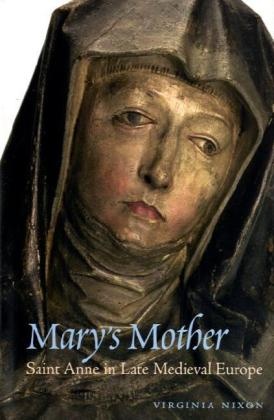
Saint Anne, the mother of Mary, is not a biblical figure. She first appears in a second-century apocryphal infancy gospel as part of the story of the savior's birth and maternal ancestry. Over the ensuing centuries, Anne's story circulated throughout eastern and western Christendom, but it was not until the late Middle Ages that a cult of Saint Anne gained a firm footing in Europe. Mary's Mother is about the remarkable rise of Anne as a figure of devotion among medieval Christians who found solace in her closeness to Jesus and Mary. Anne's popularity grew especially in German-speaking areas, so much so that by the late 1400s artists in Germany, Flanders, and Holland were busy producing all manner of sculptures, prints, and paintings of her. Anne's power derived from her physical connection to the Redeemer and his mother, a connection that artists emphasized in works that depicted her. In the most widely reproduced trope, known as Anna Selbdritt, Anne is depicted as a matronly woman presiding over Mary and Jesus, who both appear as children. Clerics played a crucial role in fostering Anne's growing popularity. They promoted her as having power to help in salvation, a matter of urgent concern to late medieval German Christians, Churches and convents (and rulers too) adopted her as a fund-raising device in an increasingly competitive ecclesiastical landscape. Churches, shrines, and altars were dedicated to her, lay brotherhoods adopted her as their patroness, and many families named their daughters for her. Anne's clerical promoters frequently used her as a model of sober domesticity of women, part of a broader attempt to channel the growing lay piety that the clergy perceived as apotential threat to their own power and incomes. And yet, as a gender model, she embodied conflicts between medieval and early modern ideas about sanctity and sexuality. Devotion to Anne gradually declined in the 1500s as medieval modes of religious practice and ideas about women'
About the author
Virginia Nixon teaches Art History in the Liberal Arts College of Concordia University, Montreal.
Summary
Today many Catholics know Saint Anne as the mother of the Blessed Virgin and the protector of women in labor, but few know how she came to be a figure of devotion. Mary's Mother brings her story to life for general readers as well as scholars and students of history, art history, religious studies, and women's studies.