

Share
Fr. 96.00
Richardson, M Richardson, Malcolm Richardson, Malcolm D Richardson, Malcolm D. Richardson, Malcolm D. (University Hospital of Sou Richardson...
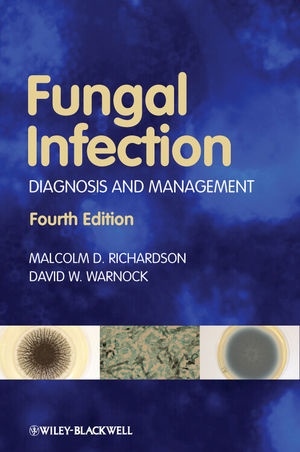
Fungal Infection - Diagnosis and Management
English · Paperback / Softback
Shipping usually within 1 to 3 weeks (not available at short notice)
Description
Informationen zum Autor Malcolm D. Richardson - University Hospital of South Manchester and Manchester Academic Health Science Centre, University of Manchester David W. Warnock - National Center for Emerging and Zoonotic Infectious Diseases, Centers for Disease Control and Prevention, Atlanta, Georgia Klappentext Fungal Infection: Diagnosis and Management, 4th Edition is a concise and up-to-date guide to the clinical manifestations, laboratory diagnosis and management of superficial, subcutaneous and systemic fungal infections.This highly acclaimed book has been extensively revised and updated throughout to ensure all drug and dosage recommendations are accurate and in agreement with current guidelines. A new chapter on infections caused by Pneumocystis jirovecii has been added. The book has been designed to enable rapid information retrieval and to help clinicians make informed decisions about diagnosis and patient management. Each chapter concludes with a list of recent key publications which have been carefully selected to facilitate efficient access to further information on specific aspects of fungal infections.Clinical microbiologists, infectious disease specialists, as well as dermatologists, hematologists and oncologists, can depend on this contemporary text for authoritative information and the background necessary to understand fungal infections. Zusammenfassung This book provides a succinct account of the clinical manifestations, laboratory diagnosis, and management of fungal infections. It covers problems encountered in both hospitals and general practice, and emphasizes clinical presentation, specimen collection, interpretation of laboratory findings, and choice of treatment regimen. Inhaltsverzeichnis Preface to the fourth edition xxvi Preface to the first edition xxviii Acknowledgements xxix 1 Introduction 1 2 Laboratory diagnosis of fungal infection 12 3 Antifungal drugs 32 4 Dermatophytosis 91 5 Superficial candidosis 121 6 Other cutaneous fungal infections 138 7 Mould infections of nails 151 8 Keratomycosis 156 9 Otomycosis 162 10 Aspergillosis 166 11 Invasive candidosis 201 12 Cryptococcosis 236 13 Mucormycosis 253 14 Pneumocystosis 264 15 Blastomycosis 277 16 Coccidioidomycosis 288 17 Histoplasmosis 304 18 Paracoccidioidomycosis 322 19 Chromoblastomycosis 332 20 Entomophthoromycosis 338 21 Mycetoma 344 22 Sporotrichosis 352 23 Hyalohyphomycosis 362 24 Penicillium marneffei infection 376 25 Phaeohyphomycosis 383 26 Other invasive yeast infections 396 27 Unusual fungal and pseudofungal infections 405 Select bibliography 419 Index 421 ...
List of contents
Preface to the fourth edition, xxvi
Preface to the first edition, xxviii
Acknowledgements, xxix
1 Introduction, 1
1.1 The nature of fungi, 1
1.2 Classification and nomenclature of fungi and fungal diseases, 3
1.3 Fungi as human pathogens, 5
1.4 The changing pattern of fungal infection, 7
1.5 New directions in diagnosis, 9
1.6 New directions in treatment and prevention, 10
2 Laboratory diagnosis of fungal infection, 12
2.1 Introduction, 12
2.2 Collection of specimens, 13
2.3 Specimens for serological tests, 18
2.4 Specimens for antifungal drug level determinations, 18
2.5 Transport of specimens, 18
2.6 Interpretation of laboratory test results, 18
2.7 Molecular diagnosis of fungal infection, 28
3 Antifungal drugs, 32
3.1 Introduction, 32
3.2 Allylamines, 32
3.4 Other allylamine compounds for topical administration, 35
3.5 Azoles, 35
3.6 Fluconazole, 40
3.7 Itraconazole, 44
3.8 Ketoconazole, 48
3.9 Posaconazole, 50
3.10 Voriconazole, 53
3.11 Other imidazole compounds for topical administration, 57
3.12 Echinocandins, 59
3.13 Anidulafungin, 60
3.14 Caspofungin, 61
3.15 Micafungin, 63
3.16 Polyenes, 65
3.17 Amphotericin B, 66
3.18 Other polyene compounds for topical administration, 76
3.19 Flucytosine, 76
3.20 Griseofulvin, 79
3.21 Other miscellaneous compounds for topical administration, 81
3.22 Prophylactic treatment for prevention of fungal infection, 82
3.23 Empirical treatment of suspected fungal infection in the neutropenic patient, 84
3.24 Pre-emptive antifungal treatment, 85
3.25 Combination antifungal treatment of invasive fungal infections, 85
3.26 Laboratory monitoring, 86
4 Dermatophytosis, 91
4.1 Introduction, 91
4.2 The causal organisms and their habitat, 92
4.3 Epidemiology, 93
4.4 Laboratory diagnosis of dermatophytosis, 94
4.5 Tinea capitis, 95
4.6 Tinea corporis, 102
4.7 Tinea cruris, 105
4.8 Tinea pedis, 107
4.9 Tinea manuum, 111
4.10 Tinea unguium, 113
5 Superficial candidosis, 121
5.1 Definition, 121
5.2 Geographical distribution, 121
5.3 The causal organisms and their habitat, 121
5.4 Epidemiology, 122
5.5 Clinical manifestations, 124
5.6 Essential investigations and their interpretation, 130
5.7 Management, 130
5.8 Prevention, 136
6 Other cutaneous fungal infections, 138
6.1 Pityriasis versicolor, 138
6.2 Other Malassezia infections, 142
6.3 Piedra, 143
6.4 White piedra, 144
6.5 Black piedra, 145
6.6 Tinea nigra, 147
6.7 Neoscytalidium infection, 148
6.8 Alternaria infection, 149
7 Mould infections of nails, 151
7.1 Definition, 151
7.2 Geographical distribution, 151
7.3 The causal organisms and their habitat, 151
7.4 Epidemiology, 152
7.5 Clinical manifestations, 152
7.6 Differential diagnosis, 153
7.7 Essential investigations and their interpretation, 153
7.8 Management, 154
7.9 Prevention, 155
8 Keratomycosis, 156
8.1 Definition, 156
8.2 Geographical distribution, 156
8.3 The causal organisms and their hab
Report
The third edition of this book has never been far away from my office phone and is now quite tatty, so I am delighted to review the new fourth edition, written by the same two experts. This book is an easy but detailed guide to fungal infections, ranging from those seen regularly by clinical microbiologists and infectious diseases specialists, such as Candida and Aspergillus, to exotic diseases seen only outside the UK such as Pythiosis. The emphasis of the book is on clinical presentation, specimen collection, interpretation of laboratory findings and management of the patient.
The new edition is a little larger than the previous one, but will still sit nicely on the desk. It has the same 27 chapters, most of which have been extensively revised and some new ones substituted. The chapters are based around clinical syndromes so, for example, there is quite a long chapter on dermatophyte infections and a shorter one on mycetoma. The chapter on antifungal drugs is much longer due to the addition of agents such as posaconazole and the newer echinocandins. New chapters have been added on Pneumocystosis, and 'Unusual fungi and Pseudofungal infections'. At the end of each chapter is a useful guide to further reading.
Each chapter has a set of standard headings: definition, geographical distribution, causal organisms and habitat, epidemiology, clinical manifestations, differential diagnosis, essential investigations and their interpretation, management, prevention. This, coupled with the detailed index, makes it easy to find the bit of information you need. In particular, I found the chapter on histoplasma most helpful when working on an online clinical interpretation scenario!
As the authors say in the introduction, there have been a number of significant developments in the diagnosis and management of fungal infections since the last edition. Patients are now more complex by nature of their illness or their medical management, and the potential for opportunistic infection in the immunosuppressed has increased. Although the book was published in 2012, the basics of fungal infection such as microscopy and culture do not change. The extended chapter on laboratory diagnosis covers new techniques in serology and molecular diagnosis. At the moment, there is a lack of rapid and cost-effective tests in this area; many of the assays being performed are not standardised and some more trials are needed. I hope this section will be the one that goes out of date first, as more rapid or molecular tests are added to the diagnostic setting.
I will keep this book on my desk as quick reference during a phone call, but also as a more detailed guide to managing patients with invasive fungal infections. I recommend it to anyone who deals with fungal infections, whether in the laboratory or out on the wards, and to trainees and students as well. ( Dr Fiona E. Donald , Consultant Medical Microbiologist, Nottingham University Hospitals, RCPATH Bulletin, October 2013 )
Product details
| Authors | Richardson, M Richardson, Malcolm Richardson, Malcolm D Richardson, Malcolm D. Richardson, Malcolm D. (University Hospital of Sou Richardson, Malcolm D. Warnock Richardson, Richardson Malcolm D., David W Warnock, David W. Warnock, Warnock David W. |
| Publisher | Wiley, John and Sons Ltd |
| Languages | English |
| Product format | Paperback / Softback |
| Released | 30.04.2012 |
| EAN | 9781405170567 |
| ISBN | 978-1-4051-7056-7 |
| No. of pages | 480 |
| Subjects |
Natural sciences, medicine, IT, technology
> Medicine
> Clinical medicine
Medizin, Infektionskrankheiten, Mykose, infectious disease, Infectious and contagious diseases, Medical Science |
Customer reviews
No reviews have been written for this item yet. Write the first review and be helpful to other users when they decide on a purchase.
Write a review
Thumbs up or thumbs down? Write your own review.