Read more
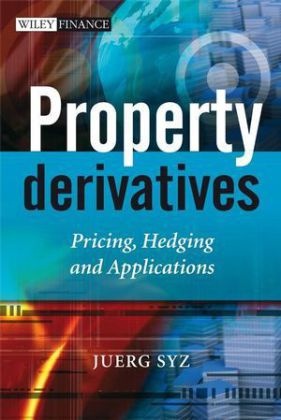
Property derivatives have the potential to revolutionize real estate - the last major asset class without a liquid derivatives market. The new instruments offer ease and flexibility in the management of property risk and return.
List of contents
Preface
PART I INTRODUCTION TO PROPERTY DERIVATIVES
1 A Finance View on the Real Estate Market
1.1 Real Estate is Different from Other Asset Classes
1.2 Limited Access to Real Estate Investments
1.3 New Instruments needed
2 Basic Derivative Instruments
2.1 Forwards, Futures and Swaps
2.2 Options
3 Rationales for Property Derivatives
3.1 Advantages and Disadvantages of Property Derivatives
3.2 Finding a Suitable Real Estate Investment
3.3 Usage of Property Derivatives
4 Hurdles for Property Derivatives
4.1 Creating a Benchmark
4.2 Education and Acceptance
4.3 Heterogeneity and Lack of Replicability
4.4 Regulation and Taxation
4.5 Building Liquidity
5 Experience in Property Derivatives
5.1 United Kingdom
5.2 United States
5.3 Other Countries and Future Expectations
6 Underlying Indices
6.1 Characteristics of Underlying Indices
6.2 Appraisal-Based Indices
6.3 Transaction-Based Indices
PART II PRICING, HEDGING AND RISK MANAGEMENT
7 Index Dynamics
7.1 Economic Dependencies and Cycles
7.2 Bubbles, Peaks and Downturns
7.3 Degree of Randomness
7.4 Dynamics of Appraisal-based Indices
7.5 Dynamics of Transaction-based Indices
7.6 Empirical Index Analysis
7.7 Distribution of Index Returns
8 Feedback Effects
8.1 Impact on Volatility
8.2 Impact on Risk Premium
8.3 Impact on Appraisal Practice
8.4 Impact on Transaction Volumes
9 The Property Premium Puzzle
9.1 No Replication - No Arbitrage
9.2 The Property Spread
10 Pricing Property Derivatives in Established Markets
10.1 Forward Property Prices
10.2 Pricing Options on Property Indices
11 Measuring and Managing Risk
11.1 Market Development and Liquidity
11.2 Early and Mature Stages
11.3 Property Value-at-Risk
12 Decomposing a Property Index
12.1 General Explanatory Factors
12.2 Tradable Explanatory Factors
12.3 Example: The Halifax HPI
13 Pricing and Hedging in Incomplete Markets
13.1 Hedging Analysis
13.2 Pricing without a Perfect Hedge
13.3 Example: Hedging a Trading Portfolio
13.4 Risk Transfer
PART III APPLICATIONS
14 Range of Applications
14.1 Professional Investers and Businesses
14.2 The Private Housing Market
15 Investing in Real Estate
15.1 Properties of Property
15.2 Property Derivatives and Indirect Investment Vehicles
15.3 Investing in Real Estate with Property Derivatives
16 Hedging Real Estate Exposure
16.1 Short Hedge
16.2 Long Hedge
16.3 Hedge Efficiency and Basis Risk
17 Management of Real Estate Portfolios
17.1 Tactical Asset Allocation
17.2 Generating Alpha
17.3 Sector and Country Swaps
18 Corporate Applications
18.1 Selling Buildings Synthetically
18.2 Acquisition Finance
19 Indexed Building Savings
19.1 Linking the Savings Plan to a House Price Index
19.2 Engineering a Suitable Saving Plan
20 Home Equity Insurance
20.1 Index-Linked Mortgages
20.2 Collateral Thinking
20.3 Is an Index-Hedge Appropriate?
Appendix
Bibliography
Index