

Share
Campbell-Platt, Geoffrey Campbell-Platt, Geoffrey Campbell-Platt
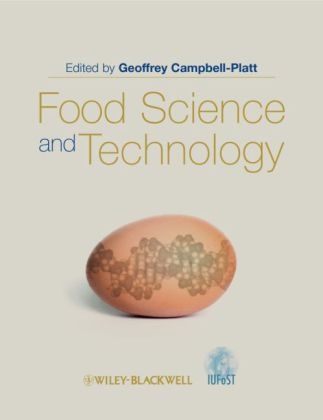
Textbook of Food Science and Technology
English · Hardback
Description
The study of food science and technology is the understanding and application of science to satisfy the needs of society for sustainable food quality, safety and security. This book covers the elements of the contemporary food science and technology course.
List of contents
List of contributors.
1 Introduction (Geoffrey Campbell-Platt).
1.1 Food science and technology course elements.
1.2 Evolution of the book.
1.3 Food safety assurance.
1.4 The International Union of Food Science and Technology (IUFoST).
1.5 The book.
2 Food chemistry (Richard A. Frazier).
2.1 Introduction.
2.2 Carbohydrates.
2.3 Proteins.
2.4 Lipids.
2.5 Minor components of foods.
2.6 Water in foods.
2.7 Physical chemistry of dispersed systems.
2.8 Chemical aspects of organoleptic properties.
3 Food analysis (Heinz-Dieter Isengard and Dietmar Breithaupt).
3.1 Macro analysis.
3.2 Instrumental methods.
4 Food biochemistry (Rickey Y. Yada and Brian C. Bryksa).
4.1 Introduction.
4.2 Carbohydrates.
4.3 Proteins.
4.4 Lipids.
4.5 Nucleic acids.
4.6 Enzymology.
4.7 Food processing and storage.
4.8 Summary.
5 Food biotechnology (Cherl-Ho Lee).
5.1 History of food biotechnology.
5.2 Traditional fermentation technology.
5.3 Enzyme technology.
5.4 Modern biotechnology.
5.5 Genetic engineering.
5.6 Tissue culture.
5.7 Future prospects.
6 Food microbiology (Tim Aldsworth, Christine E.R. Dodd and Will Waites).
6.1 Introduction.
6.2 Microorganisms important to the food industry.
6.3 Microscopic appearance of microorganisms.
6.4 Culturing microorganisms.
6.5 Microbial growth.
6.6 Methods of measuring growth.
6.7 Microbial biochemistry and metabolism.
6.8 Agents of foodborne illness.
6.9 Outbreaks.
6.10 An outbreak that wasn't!
6.11 Incidence of foodborne illness.
6.12 The Richmond Report on the microbiological safety of food.
6.13 Water-borne diseases.
6.14 Traditional and novel methods of microbial detection.
6.15 Microbiological sampling plans.
6.16 Hazard Analysis and Critical Control Points.
6.17 Hygienic factory design.
6.18 Microbial fermentation.
7 Numerical procedures (R. Paul Singh).
7.1 SI system of units.
7.2 Rules for using SI units.
7.3 Equation.
7.4 Graphs - linear and exponential plots.
7.5 Calculus.
8 Food physics (Keshavan Niranjan and Gustavo Fidel Gutiérrez-López).
8.1 Physical principles.
8.2 Material properties.
9 Food processing (Jianshe Chen and Andrew Rosenthal).
9.1 Fundamentals of fluid flow.
9.2 Principles of heat transfer.
9.3 Unit operations.
9.4 Food preservation.
9.5 Food processes and flowcharts.
10 Food engineering (R. Paul Singh).
10.1 Engineering aspects of hygienic design and operation.
10.2 Cleaning and sanitizing.
10.3 Process controls.
10.4 Storage vessels.
10.5 Handling solid foods in a processing plant.
10.6 Storage of fruits and vegetables.
10.7 Refrigerated transport of fruits and vegetables.
10.8 Water quality and wastewater treatment in food processing.
11 Food packaging (Gordon L. Robertson).
11.1 Requirements of packaging materials.11.2 Classification of packaging materials.
11.3 Permeability characteristics of plastic packaging.
11.4 Interactions between packaging materials and food.
11.5 Packaging systems.
11.6 Package closures and integrity.
11.7 Environmental impacts of packaging.
12 Nutrition (C.J.K. Henry and Lis Ahlström).
12.1 Introduction.
12.2 Human energy requirements.
12.3 Protein.
12.4 Carbohydrates.
12.5 Lipids and energy density.
12.6 Micronutrients - vitamins, minerals and trace minerals.
13 Sensory evaluation (Herbert Stone and Rebecca N. Bleibaum).
13.1 Introduction.
13.2 Background and definition.
13.3 Facilities.
13.4 Subjects.
13.5 Methods.
14 Statistical analysis (Herbert Stone and Rebecca N. Bleibaum).
14.1 Introduction.
14.2 Descriptive statistics.
14.3 Inferential statistics.
14.4 Correlation, regression, and multivariate statistics.
15 Quality assurance and legislation (David Jukes).
15.1 Introduction.
15.2 Fundamentals of food law.
15.3 Food quality management systems.
15.4 Statistical process control.
16 Regulatory toxicology (Gerald G. Moy).
16.1 Introduction.
16.2 Regulatory toxicology.
16.3 Chemical hazards in food.
16.4 Conclusions.
17 Food business ma
Report
"Overall, the chapters are clear and well written, and the whole book is excellently put together. It is certainly wide-reaching in its coverage and should give anyone who reads it a very good appreciation of the many factors that affect the production of food in an industrial society." ( Chemistry World, March 2010)
"The book finds the correct balance between academic knowledge and its application to the wider food industry, for example the consideration of cleaning and sanitizing within Food engineering. In addition to accuracy and detail, the chapters are all very readable. ... Highly recommended." ( Society for General Microbiology , February 2010)
"This text and reference covers the core components of food science and technology degree programs. It contains contributions from 30 industry experts, teachers, and researchers from around the world, and includes color and b&w photos, images, and illustrations." ( Book News , December 2009)
Product details
| Authors | Campbell-Platt, Geoffrey Campbell-Platt |
| Assisted by | Geoffrey Campbell-Platt (Editor) |
| Publisher | Blackwell Scientific Publishers Ltd |
| Languages | English |
| Product format | Hardback |
| Released | 01.01.2009 |
| EAN | 9780632064212 |
| ISBN | 978-0-632-06421-2 |
| Dimensions | 228 mm x 285 mm x 35 mm |
| Subject |
Natural sciences, medicine, IT, technology
|
Customer reviews
No reviews have been written for this item yet. Write the first review and be helpful to other users when they decide on a purchase.
Write a review
Thumbs up or thumbs down? Write your own review.