Read more
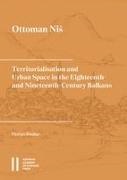
The city of Niš, now in Serbia, was part of the Ottoman Empire for about half a millennium. This study offers the first in-depth examination of the city's history during the last phase of Ottoman rule, from 1700 to 1878. It traces the development of a city located on one of the main routes across the Balkans, making it a frequent stop for travellers and merchants. Thanks to the fortress built in the eighteenth century, Niš became an important military stronghold near the new border with the Habsburg Monarchy. In the nineteenth century it became a showcase of urban renewal as part of the Ottoman modernisation policy.
Drawing on a wide range of sources, including city maps and census records, the study aims to reconstruct the growth of Niš and its population. It places a strong emphasis on the development of urban space, which the study understands as consisting of multiple overlapping territories. Special attention is paid to the evolution of urban life, which was characterised by different religious and ethnic communities. The study traces the strategies employed by the Ottoman authorities and local elites to govern this diverse population in different phases of the city's history. Overall, Niš emerges as a typical Ottoman city whose development was embedded in wider political, economic and social trends of the Ottoman Balkans.
List of contents
https://onix.oeaw.ac.at/Inhaltsverzeichnis/9783700195535_Inhaltsverzeichnis.pdf
About the author
is a Research Fellow at the Chair of Eastern and Southeastern European History at the University of Leipzig