Read more
Prepare to succeed on the CPAN
® and CAPA
® exams with this authoritative guide from ASPAN!
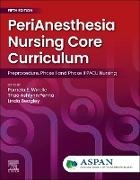
PeriAnesthesia Nursing Core Curriculum, 5th Edition, is a comprehensive reference that helps you care for patients before and after anesthesia in all types of settings. Coverage of the full scope of perianesthesia nursing makes it an ideal resource for both in-hospital and ambulatory care.
To keep you current, this edition also describes the latest advances in technology and emerging trends in patient care.
Written by the American Society of PeriAnesthesia Nurses and edited by perianesthesia nurse Pam Windle, this book will help you develop the skills and expertise you need to excel on your certification exam and in practice.
- Authoritative coverage includes ASPAN’s full scope of perianesthesia nursing for every practice setting, enabling you to demonstrate competency as a perianesthesia nurse and prepare for CPAN® and CAPA® certification.
- Easy-to-use outline format provides a quick review of the fundamentals and standards of practice for patient assessment and care.
- Six sections are organized by the required perianesthesia competencies for PACU nurses in these key areas: professional issues, preoperative assessment, patient care across the life span, perianesthesia, body systems, and education and discharge.
- Objectives at the beginning of each chapter help you focus on and learn key content.
- Boxes, tables, and illustrations highlight important information and make the book a valuable reference.
- Useful appendices cover the CPAN and CAPA certification programs and provide test-taking strategies, helping you to prepare for and pass your exam.
- Bibliography at the end of every chapter lists additional resources for research.
- NEW! Updated content reflects the latest advances in technology, emerging trends in care, and changes to the ASPAN Core Curriculum and in CPAN® and CAPA® testing.
- NEW! Updates of safety, regulatory, and healthcare policies cover these topics as they relate to perianesthesia nursing.
List of contents
SECTION ONE: Professional Competencies1. Evolution of Perianesthesia Care
2. Standards, Legal Issues, and Practice Settings
3. Safety, Quality Improvement, and Regulatory and Accrediting Agencies
4. Research and Evidence-Based Practice
SECTION TWO: Preoperative Assessment Competencies5. Preoperative Evaluation
6. Preexisting Medical Conditions
7. Transcultural Nursing and Alternative Therapies
8. The Developmentally and Physically Challenged Patient
SECTION THREE: Life Span Competencies9. The Pediatric Patient
10. The Adolescent Patient
11. The Adult Patient
12. The Geriatric Patient
SECTION FOUR: Perianesthesia Competencies13. Fluid, Electrolyte, and Acid-Base Balance
14. Anesthesia, Moderate Sedation/Analgesia
15. Thermoregulation
16. Postoperative Nausea and Vomiting
17. Pain and Comfort
SECTION FIVE: System Competencies18. Respiratory
19. Cardiovascular
20. Neurological
21. Endocrine
22. Gastrointestinal
23. General Surgery
24. Hematology
25. Renal/Genitourinary
26. Obstetrics and Gynecology
27. Ophthalmology
28. Oral/Maxillofacial/Dental
29. Orthopedics and Podiatry
30. Otorhinolaryngology
31. Peripheral Vascular Disease
32. Plastic and Reconstruction
33. Bariatrics
34. Trauma
35. Interventional Radiology and Special Procedures
36. Perianesthesia Complications
SECTION SIX: Education and Discharge Competencies37. Postoperative/Postprocedure Assessment
38. Discharge Criteria, Education, and Post-procedure Care