Read more
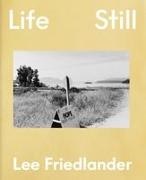
Lee Friedlander's latest monograph captures the irony and complexity of American life, past and present.How does the United States seem, at once, so small and big, quiet and loud, phony and true? In his first Aperture monograph,
Life Still, Lee Friedlander (born in Aberdeen, Washington, 1934) reimagines the presentation of his oeuvre at age ninety-one, bringing together rarely seen and unpublished images from the past sixty years alongside new work to stage a visual dialogue between past and present. Pulitzer Prize-winning writer Hua Hsu observes how these stubborn paradoxes of the American consciousness-- the irony, humor, and self-conflict--remain as vivid today as they always have been. By seeing contradictions in the commonplace, Friedlander presents us with a book of enduring riddles about American culture.
About the author
Lee Friedlander (born in Aberdeen, Washington, 1934) is a photographer celebrated for his keen ability to capture the intersections of public and private spaces, as well as the complexities of American life. Friedlander's work has been widely exhibited, including retrospectives at the Museum of Modern Art, New York; San Francisco Museum of Modern Art; and National Gallery of Art, Washington, DC. His photographs are also included in the permanent collections of the Metropolitan Museum of Art and Whitney Museum of American Art, New York; Los Angeles County Museum of Art; and Tate, London, among others. Friedlander is a recipient of a MacArthur Fellowship, three Guggenheim Fellowships, and the National Endowment for the Arts Fellowship. His numerous monographs include
Self-Portrait (1970),
The American Monument (1976), and
Sticks & Stones (2004). His work has been published in
Aperture,
The New Yorker,
The New York Times Magazine, and
Time.
Hua Hsu is a staff writer at
The New Yorker, professor of literature at Bard College, and author of
A Floating Chinaman: Fantasy and Failure Across the Pacific (2016) and
Stay True: A Memoir (2022), which was awarded the Pulitzer Prize in 2023.