Read more
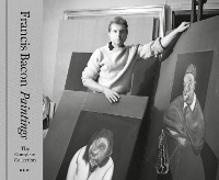
An accessible presentation of Bacon's entire oeuvre of paintings, punctuated by quotes from eminent artists such as Lucian Freud and Damien HirstQuarter-bound with cloth, this volume compiles the complete paintings of Francis Bacon, the dissident darling of the 20th-century art world. Over a career spanning more than five decades, Bacon produced almost 500 paintings, including his signature diptychs and triptychs.
Francis Bacon: Paintings charts his entire lifetime of radical artistry, from his early Surrealist experiments of the 1920s to the stark, elegiac works completed just before his death. It features over 700 high-quality reproductions that capture the vigor and detail of Bacon's paintings. In lieu of lengthy essays, brief expository texts accompany select works, indexing the emergence of key formal and thematic developments in his practice. Also interspersed throughout are quotes from Bacon as well as from eminent friends, critics and admirers, such as Lucian Freud, Roald Dahl and Damien Hirst. Read together, the quotes animate a critical dialogue on the artist's work and legacy. While Gilles Deleuze purported that Bacon was interested in "...a static or potential violence, a violence of reaction and expression," the artist himself asserted, "I never look for violence...but life is violent; so much more violent than anything I can do!"
Emerging from a turbulent inner life and the devastation of World War II, the Irish British painter
Francis Bacon (1909-92) created art that is both unsettling and hypnotic, repulsive and irresistible, earning him a reputation as a "master of the grotesque." Eschewing the abstraction preferred in the mid-century, Bacon instead developed a quasi-realist style that rendered the human figure as warped and anguished.
Laura Scalabrella Spada completed her PhD at University College London in the Department of History of Art in 2020. Her research focuses on early modern European art, with a particular emphasis on the body and its processes, boundaries and relations. She has published papers on the politics of corporeality and animation in early modern prints and currently works as an independent researcher.
About the author
Dr Laura Scalabrella Spada completed her PhD at University College London in the Department of History of Art in 2020. Her research focuses on early modern European art, with a particular emphasis on the body and its processes, boundaries and relations. She has published papers on politics of corporeality and animation in early modern prints and currently works as an independent researcher.