Read more
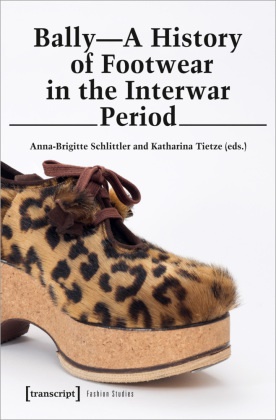
Carl Franz Bally founded a shoe factory in Switzerland in 1851. Within decades, the Bally name had achieved worldwide recognition for its high-quality footwear. The history of modern footwear can be traced through the lens of Bally's corporate evolution. This book brings together the results of research on such topics as the economic importance of fashion, Bally's fortunes in the US, the career of shoe design, the sourcing and use of materials, and the rise of strategic product display. The research focuses on the 1930s and 1940s: years of economic crisis and war, characterized by a wide diversity of designs and increasing variety in product range. Shortages also led to experiments with materials and technical innovations. Featuring numerous points of contact with adjacent fields of historical study, this publication marks a contribution to the history of fashion as the history of industrially manufactured products.
About the author
Anna-Brigitte Schlittler is an art historian and a lecturer at Zürich University of the Arts (ZHdK) and F+F Schule für Kunst und Design. She has studied art history, history, and philosophy at the University of Zürich. Her research focuses on the history and theory of fashion. Katharina Tietze is a professor of design at Zürich University of the Arts (ZHdK) and head of the Trends & Identity programme. She studied fashion design at Berlin University of the Arts. Her research focuses on fashion, everyday culture, and identity.
Summary
Carl Franz Bally founded a shoe factory in Switzerland in 1851. Within decades, the Bally name had achieved worldwide recognition for its high-quality footwear. The history of modern footwear can be traced through the lens of Bally's corporate evolution. This book brings together the results of research on such topics as the economic importance of fashion, Bally's fortunes in the US, the career of shoe design, the sourcing and use of materials, and the rise of strategic product display. The research focuses on the 1930s and 1940s: years of economic crisis and war, characterized by a wide diversity of designs and increasing variety in product range. Shortages also led to experiments with materials and technical innovations. Featuring numerous points of contact with adjacent fields of historical study, this publication marks a contribution to the history of fashion as the history of industrially manufactured products.
Additional text
»In providing us with this elegant looking, well-illustrated account, the editors have provided readers with an exemplar for fashion researchin which all facets of the life of an object are given their due.«
Report
»In providing us with this elegant looking, well-illustrated account, the editors have provided readers with an exemplar for fashion researchin which all facets of the life of an object are given their due.«
Peter McNeil, Fashion Theory, 25 (2021) 20121029