Read more
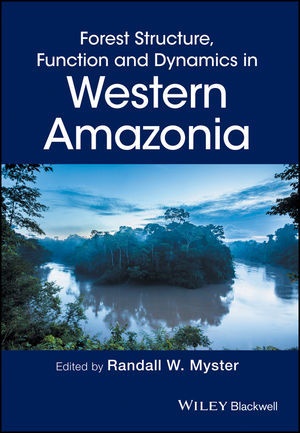
The Amazon basin contains the largest and most diverse tropical rainforest in the world. Besides the Andes and the Atlantic Ocean, the rainforest is bounded to the north by the Guiana crystalline shield and to the south by the Brazilian crystalline shield marked at their edges by cataracts in the rivers often dominated by grasslands. This book is motivated not just by the Amazon's scientific interest but also by its role in many ecostystem functions critical to life on Earth. Those ecosystems are characterized both by their complexity and their interactive, higher-order linkages among both abiotic and biotic components. Within Amazonia, the Western Amazon (west of 65o latitude) is the most pristine and, perhaps the most complex within the Amazon basin. This Western Amazon may be broadly divided into non-flooded forests (e.g., terra forme, white sand, palm) and forests flooded with white-water (generally referred to as varzea) and with black-water (generally referred to as igapo). Here, for the first time, is a book devoted entirely to Western Amazonia containing chapters by scientists on the forefront of their own areas of expertise. It should be a valuable resource for all future researchers and scholars who venture into it, as it continues to be one of the most beautiful, mysterious, remote and important ecosystems on Earth.
About the author
Randall Myster is a Professor at the Oklahoma State University, Oklahoma City. He is a well known tropical forest ecologist and has published more than 50 papers and edited two books previously.
Summary
The Amazon basin contains the largest and most diverse tropical rainforest in the world. Besides the Andes and the Atlantic Ocean, the rainforest is bounded to the north by the Guiana crystalline shield and to the south by the Brazilian crystalline shield marked at their edges by cataracts in the rivers often dominated by grasslands. This book is motivated not just by the Amazon's scientific interest but also by its role in many ecostystem functions critical to life on Earth. Those ecosystems are characterized both by their complexity and their interactive, higher-order linkages among both abiotic and biotic components. Within Amazonia, the Western Amazon (west of 65o latitude) is the most pristine and, perhaps the most complex within the Amazon basin. This Western Amazon may be broadly divided into non-flooded forests (e.g., terra forme, white sand, palm) and forests flooded with white-water (generally referred to as varzea) and with black-water (generally referred to as igapo). Here, for the first time, is a book devoted entirely to Western Amazonia containing chapters by scientists on the forefront of their own areas of expertise. It should be a valuable resource for all future researchers and scholars who venture into it, as it continues to be one of the most beautiful, mysterious, remote and important ecosystems on Earth.