

Share
Fr. 146.00
G Reid, Gavin Reid, Gavin (Heriot Watt University Reid
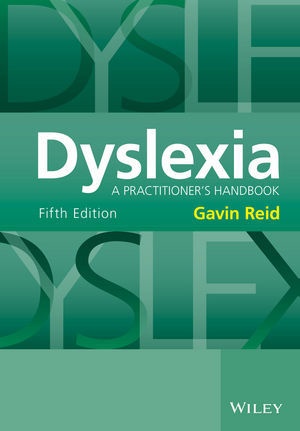
Dyslexia - A Practitioner''s Handbook
English · Hardback
Shipping usually within 1 to 3 weeks (not available at short notice)
Description
Informationen zum Autor Gavin Reid is an experienced teacher, psychologist and author, and the owner/director of Dr Gavin Reid Education Consultants Ltd. He was formerly Senior Lecturer in the Department of Educational Studies at the University of Edinburgh, UK, and Visiting Professor in the Department of Education and Counseling Psychology and Special Education at the University of British Columbia in Vancouver, Canada. He is a director of the Red Rose School in Lancashire, UK, and a director of Global Educational Consultancies (GEC) based in Cairo, Egypt. He is chair of the BDA accreditation board, an ambassador for the Helen Arkell Dyslexia Centre and a consultant to Institute for Child Education and Psychology Europe (ICEPE). He is the author and editor of 27 books, and has lectured to thousands of parents and professionals in 70 countries. His work has been recognized with several educational awards, many of his books are used as course texts throughout the UK and in other countries, and they have been translated into Italian, French, Polish and Croatian. Klappentext Now fully updated in its Fifth Edition, Gavin Reid's best-selling handbook remains an essential resource in the fields of education and literacy. As in previous editions, theoretical explanations and the latest research are linked with practical solutions for helping dyslexic individuals of all ages. The book focuses on inclusion and meeting the individual's need within the mainstream educational system, but also addresses options for specialized provision. Chapters cover the basics of dyslexia, assessment issues and approaches, needs identification, the acquisition of literacy, strategies for supporting learning, and more.The Fifth Edition contains new coverage of multilingualism, the use of technology, co-existing conditions (including dyspraxia, dyscalculia, and ADHD), and positive dyslexia. It also adopts a more international focus by assembling the latest policies and best practices from around the world, including Asia, the Middle East, Canada, Australia, and Europe. Filled with practical suggestions, learning summaries, and helpful activities for readers, this comprehensive and accessible explanation of the latest debates and developments in dyslexia continues to inform and support practitioners and trainees in the field. Zusammenfassung Newly updated, Gavin Reid s best-selling handbook remains an essential resource for those helping dyslexic individuals of all ages, from preschoolers to adults in the workplace. Inhaltsverzeichnis About the AuthorOther Books by Gavin ReidForewordPrefaceChapter 1 Defining DyslexiaDefining DyslexiaPurpose of DefinitionsHow Should We Define Dyslexia?DefinitionsBarriers to Implementing PolicyRose Review and DyslexiaEducation for Learners with DyslexiaDifferent Perspectives and AgendaChapter 2 Explaining Dyslexia: The Range of ResearchCausal Modelling FrameworkGenetic FactorsNeurobiological FactorsVisual and Temporal ProcessingMagnocellular Visual SystemProcedural TimingHemispheric SymmetryProcessing SpeedPhonological ProcessingPhonological Awareness and Multisensory ProgrammesMorphological ProcessingGlue EarCognitive SkillsMetacognitionEnvironmental FactorsAdditional Language LearningDyslexia in Different OrthographiesSelf-disclosure in AdultsChapter 3 Assessment: Issues and ConsiderationsThe ContextAssessment AimsDiscrepancy CriteriaListening ComprehensionComponential Model of ReadingCurriculum FocusWhy an Assessment?How--the Assessment ProcessEffect of an AssessmentAssessment--Points to ConsiderSome Other ConsiderationsAssessment and InclusionThe Bilingual LearnerChapter 4 Identifying NeedsThe ContextInformation ProcessingFactors that can Prompt ConcernLinking Assessment with Intervention and SupportKey aspects of an IEPThe OverlapAssessing PerformancesCriteria: Summary...
List of contents
About the Author
Other Books by Gavin Reid
Foreword
Preface
Chapter 1 Defining Dyslexia
Defining Dyslexia
Purpose of Definitions
How Should We Define Dyslexia?
Definitions
Barriers to Implementing Policy
Rose Review and Dyslexia
Education for Learners with Dyslexia
Different Perspectives and Agenda
Chapter 2 Explaining Dyslexia: The Range of Research
Causal Modelling Framework
Genetic Factors
Neurobiological Factors
Visual and Temporal Processing
Magnocellular Visual System
Procedural Timing
Hemispheric Symmetry
Processing Speed
Phonological Processing
Phonological Awareness and Multisensory Programmes
Morphological Processing
Glue Ear
Cognitive Skills
Metacognition
Environmental Factors
Additional Language Learning
Dyslexia in Different Orthographies
Self-disclosure in Adults
Chapter 3 Assessment: Issues and Considerations
The Context
Assessment Aims
Discrepancy Criteria
Listening Comprehension
Componential Model of Reading
Curriculum Focus
Why an Assessment?
How--the Assessment Process
Effect of an Assessment
Assessment--Points to Consider
Some Other Considerations
Assessment and Inclusion
The Bilingual Learner
Chapter 4 Identifying Needs
The Context
Information Processing
Factors that can Prompt Concern
Linking Assessment with Intervention and Support
Key aspects of an IEP
The Overlap
Assessing Performances
Criteria: Summary
Whose Responsibility
Early Identification
Models of Identification
Expert/Intervention--Attainment
Barriers to Learning
Whole-school Involvement
Chapter 5 Assessment: Approaches and Resources
The Use of Tests--Points to Ponder
Cognitive Measures
Assessment of Processing Skills
Comprehensive Test of Phonological Processing (CTOPP)
Woodcock Reading Mastery Tests
Gray Oral Reading Tests (Gort-4)
Standardised/Psychometric Criteria
Standardisation
Psychometric
Wechsler Individual Achievement Test (WIAT)
Comment
Phonological Representation and Assessment
Screening
Curriculum Assessment
Miscue Analysis
Assessment in Context
Assessment for Learning
Metacognitive Assessment
Multiple Intelligences Approaches
A Components Approach
Observational Assessment
Observational Framework
Systematic Observation
Summary
Chapter 6 Reading--Social, Cultural and Government Perspectives
The Social Context for Literacy
Literacy and Culture
Defining Literacy
Critical Literacy
Challenging Assumptions
Government Initiatives
Literacy Standards and International Comparisons
Pisa Study
Literacy Initiatives
Chapter 7 The Acquisition of Literacy
What is Reading?
Factors to Consider
Reading as a Process
Reading Skills
Reading Practice
Developing Reading Skills
Key Factors
The Development of Reading
S
Product details
| Authors | G Reid, Gavin Reid, Gavin (Heriot Watt University Reid |
| Publisher | Wiley, John and Sons Ltd |
| Languages | English |
| Product format | Hardback |
| Released | 18.03.2016 |
| EAN | 9781118980040 |
| ISBN | 978-1-118-98004-0 |
| No. of pages | 502 |
| Subjects |
Humanities, art, music
> Education
> Special education
Natural sciences, medicine, IT, technology > Medicine > Medical professions Legasthenie, Psychologie, Education, Bildungswesen, Psychology, Dyslexie, Entwicklungsstörungen, Developmental Disorders, Educational & School Psychology, Erziehungs- u. Schulpsychologie, Lesefähigkeit u. Dyslexie, Reading & Dyslexia |
Customer reviews
No reviews have been written for this item yet. Write the first review and be helpful to other users when they decide on a purchase.
Write a review
Thumbs up or thumbs down? Write your own review.