Read more
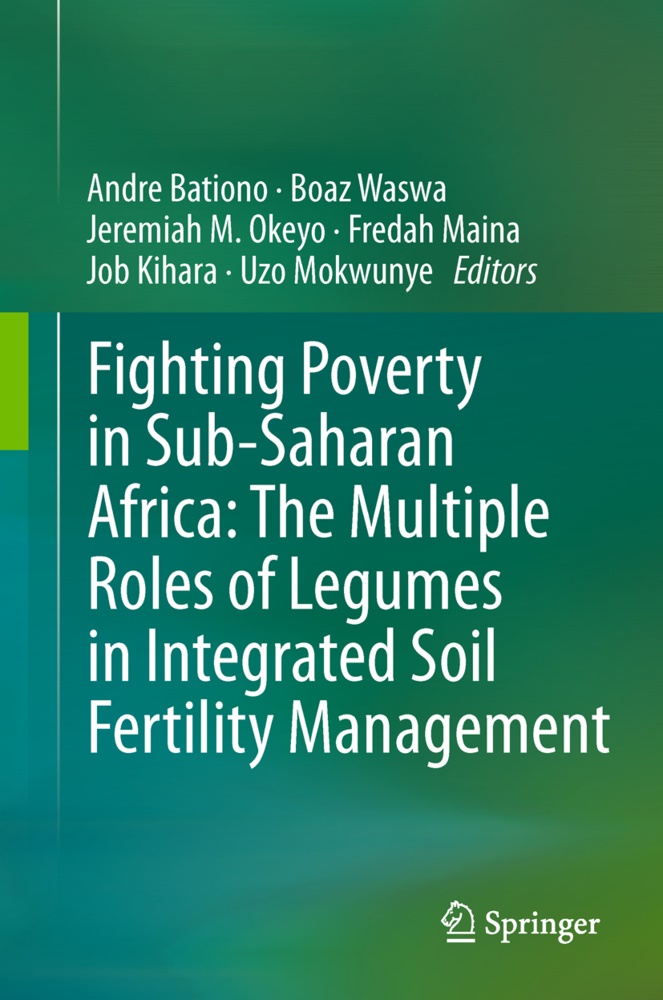
Legumes play an important role in the cropping systems of sub Saharan Africa (SSA). Legumes are an important source of nutrition to both humans and livestock by providing the much needed protein, minerals, fibre and vitamins. The sale of legumes seed, leaves and fibre generates income for the marginalized communities especially women. Cultivation of legumes is essential for the regeneration of nutrient-deficient soils. By biologically fixing nitrogen (BNF) in the soil, legumes provide a relatively low-cost method of replacing otherwise expensive inorganic nitrogen in the soil. This enhances soil fertility and boosts subsequent cereal crop yields. Production of legumes in SSA is however; hampered by a number of constraints among them low and declining soil fertility, low soil pH, high salinity, drought and flooding, poor access to improved germplasm, diseases, pests and weeds. Farmers need to learn how to overcome these constraints if the full benefits of legumes are to be gained. This book presents a synthesis of research work on legumes and draws attention to the importance of legumes in integrated soil fertility management (ISFM) and poverty alleviation in SSA.
List of contents
Preface.- Chapter 1: Agro-ecological distribution of legumes in farming systems and identification of biophysical niches for legumes growth, Nandwa SM (The late), Obanyi SN and Mafongoya PL.- Chapter 2: Socio- economic contribution of Legumes to Livelihoods in Sub-Saharan Africa; Odendo M, Bationo A and Kimani S.- Chapter 3: Inter And Intra-Specific Variation Of Legumes And Mechanisms To Access And Adapt To Less Available Soil Phosphorus And Rock Phosphate, Nandwa SM (The late), Bationo A, Obanyi SN, Rao IM, Sanginga N and Vanlauwe B.- Chapter 4: Legume based cropping systems and soil biodiversity dynamics; Karanja NK, Kimenju JM, Esilaba AO, Jefwa J and Ayuke F.- Chapter 5: Strategies to adapt, disseminate and scale out legume based technologies; Mugendi DN, Waswa BS, Mucheru MW and Kimetu JM.- Chapter 6: Comparative Analysis of the Current and Potential Role of Legumes in Integrated Soil Fertility Management in West and Central Africa; Bationo A, Kimetu J, Vanlauwe B, Bagayoko M, Koala S and Mokwunye AU.- Chapter 7: Comparative Analysis of the Current and Potential Role of Legumes in Integrated Soil Fertility Management in East Africa; Mugendi DN, Waswa BS, Mucheru M, Kimetu JM and Palm C.- Chapter 8: Comparative Analysis of the Current and Potential Role of Legumes in Integrated Soil Fertility Management in Southern Africa; Mapfumo P.- Chapter 9: Options for improving plant nutrition to increase common bean productivity in Africa; Jansa J, Bationo A, Frossard E and Rao IM.- Conclusion and the way forward.
Summary
Legumes play an important role in the cropping systems of sub Saharan Africa (SSA). Legumes are an important source of nutrition to both humans and livestock by providing the much needed protein, minerals, fibre and vitamins. The sale of legumes seed, leaves and fibre generates income for the marginalized communities especially women. Cultivation of legumes is essential for the regeneration of nutrient-deficient soils. By biologically fixing nitrogen (BNF) in the soil, legumes provide a relatively low-cost method of replacing otherwise expensive inorganic nitrogen in the soil. This enhances soil fertility and boosts subsequent cereal crop yields. Production of legumes in SSA is however; hampered by a number of constraints among them low and declining soil fertility, low soil pH, high salinity, drought and flooding, poor access to improved germplasm, diseases, pests and weeds. Farmers need to learn how to overcome these constraints if the full benefits of legumes are to be gained. This book presents a synthesis of research work on legumes and draws attention to the importance of legumes in integrated soil fertility management (ISFM) and poverty alleviation in SSA.