

Share
Fr. 195.00
Cameron Ghalambor, Cameron K Ghalambor, Cameron K. Ghalambor, Ghalambor Cameron K., Lb Martin, Lynn Martin...
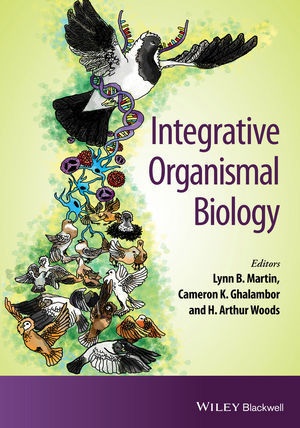
Integrative Organismal Biology
English · Paperback / Softback
Shipping usually within 1 to 3 weeks (not available at short notice)
Description
Informationen zum Autor Lynn B. Martin is Assistant Professor in the Department of Integrative Biology at the University of South Florida. Dr. Martin is on the editorial boards for Functional Ecology and Proceedings of the Royal Society of London B, and serves as an ad hoc reviewer for numerous journals including American Naturalist , General and Comparative Endocrinology , Evolutionary Ecology , and Science . Cameron K. Ghalambor is Associate Professor in the Department of Biology at Colorado State University. The author of numerous peer-reviewed publications, Dr. Ghalambor also provides reviews for a number of journals including Evolution and Nature , and has served as a grant reviewer for the National Science Foundation, Murdoch Trust, and Natural Environment Research Council, UK. Art Woods is Associate Professor in the Division of Biological Sciences at the University of Montana, Missoula. Dr. Woods serves as a reviewer for numerous journals including Journal of Experimental Biology , Physiological and Biochemical Zoology , Proceedings of the Royal Society of London B , Functional Ecology , and American Naturalist . In 2009 Dr. Woods received one of the National Science Foundation's prestigious CAREER awards in support of his research on leaf microclimates and plant-insect interactions. Klappentext Integrative Organismal Biology synthesizes current understandings of the causes and consequences of individual variation at the physiological, behavioral and organismal levels. Emphasizing key topics such as phenotypic plasticity and flexibility, and summarizing emerging areas such as ecological immunology, oxidative stress biology and others, Integrative Organismal Biology pulls together information from diverse disciplines to provide a synthetic view of the role of the individual in evolution.Beginning with the role of the individual in evolutionary and ecological processes, the book covers theory and mechanism from both classic and modern perspectives. Chapters explore concepts such as phenotypic plasticity, genetic and epigenetic variation, physiological and phenotypic variation, homeostasis, and gene and physiological regulatory networks. A concluding section interweaves these concepts through a series of case studies of life processes such as aging, reproduction, and immune defense. Written and edited by leaders in the field, Integrative Organismal Biology will be an important advanced textbook for students and researchers across a variety of subdisciplines of integrative biology. Zusammenfassung Integrative Organismal Biology synthesizes current understandings of the causes and consequences of individual variation at the physiological, behavioral and organismal levels. Inhaltsverzeichnis Acknowledgments xiii Notes on Contributors xv 1 Plasticity, Complexity, and the Individual 1 Cameron K. Ghalambor, Lynn B. Martin, and H. Arthur Woods Introduction 1 Bridging the Conceptual Divide 3 Integrative Organismal Biology: Progress to Date 4 Phenotypic Plasticity: The Link between Individuals, Environments, and Evolution 6 The Problem of Complexity 9 Embracing the Individual and the Union of Functional and Evolutionary Biology 11 Conclusion 14 References 15 2 The Ecological and Evolutionary Importance of Variation in Life History Reaction Norms 23 Daniel H. Nussey Introduction 23 The Reaction Norm Approach and Individual by Environment Interactions (I × E) 25 Why Do Reaction Norms Vary? 27 Causes and Consequences of Variation in Avian Phenological Plasticity 29 Integrating Field and Laboratory Studies of Life History Plasticity 32 The Challenges Ahead 34 References 35 3 Curve-thinking: Understanding Reaction Norms an...
List of contents
Acknowledgments xiii
Notes on Contributors xv
1 PLASTICITY, COMPLEXITY, AND THE INDIVIDUAL 1
Cameron K. Ghalambor, Lynn B. Martin, and H. Arthur Woods
Introduction 1
Bridging the Conceptual Divide 3
Integrative Organismal Biology: Progress to Date 4
Phenotypic Plasticity: The Link between Individuals, Environments, and Evolution 6
The Problem of Complexity 9
Embracing the Individual and the Union of Functional and Evolutionary Biology 11
Conclusion 14
References 15
2 THE ECOLOGICAL AND EVOLUTIONARY IMPORTANCE OF VARIATION IN LIFE HISTORY REACTION NORMS 23
Daniel H. Nussey
Introduction 23
The Reaction Norm Approach and Individual by Environment Interactions (I × E) 25
Why Do Reaction Norms Vary? 27
Causes and Consequences of Variation in Avian Phenological Plasticity 29
Integrating Field and Laboratory Studies of Life History Plasticity 32
The Challenges Ahead 34
References 35
3 CURVE-THINKING: UNDERSTANDING REACTION NORMS AND DEVELOPMENTAL TRAJECTORIES AS TRAITS 39
Joel Kingsolver, Sarah Diamond, and Richard Gomulkiewicz
Introduction 39
Characterizing Curves 41
Variation among Curves 42
Simplicity and Biological Hypotheses 48
Summary and Future Directions 51
Acknowledgments 52
References 52
4 PLASTICITY AND PERSONALITY 55
Kimberley J. Mathot and Niels J. Dingemanse
Animal Personality: Moving beyond Optimality and Embracing Individual Differences 55
Individual Differences in Behavioral Plasticity 58
Personality-Related Differences in Plasticity 60
Adaptive Explanations for Personality-Related Differences in Plasticity 61
Ecological and Evolutionary Implications of Personality and Plasticity 63
Genetic and Environmental Underpinnings 64
Designs to Study Personality-Related Differences in Plasticity 65
Conclusions and Future Directions 66
References 66
5 INDUCTION AND FUNCTION OF POLYPHENIC MORPHS: PROXIMATE REGULATORY MECHANISMS AND EVOLUTIONARY IMPLICATIONS 71
Anthony J. Zera and Jennifer A. Brisson
Introduction 71
Background on Endocrinology and Gene Regulation 74
Case Studies 77
Summary and Future Directions 83
Acknowledgments 85
References 85
6 EVOLUTIONARY SYSTEMS BIOLOGY: SHIFTING FOCUS TO THE CONTEXT-DEPENDENCY OF GENETIC EFFECTS 91
Mihaela Pavli¡cev and Günter P. Wagner
Introduction 91
Two Ends of the Spectrum in Evolutionary Biology 92
Context-Dependency in Population Genetics: Epistasis 94
Genetic Effects Structured by Development: Pleiotropy 95
What Are the Consequences of Context-Dependency? 95
Generalizing SPC Model: Interaction of Gene Effects, or Effects of Interactions? 100
Conclusion 103
References 104
7 THE ROLE OF ECOLOGICAL EPIGENETICS IN INTEGRATIVE BIOLOGY 109
Aaron W. Schrey, Joshua Banta, Holly J. Kilvitis, and Christina L. Richards
Introduction 109
Ecological Epigenetics 112
Case Study: Arabidopsis Thaliana 114
Conclusion 115
References 115
8 AN ELEPHANT IN THE FOG: UNIFYING CONCEPTS OF PHYSIOLOGICAL STASIS AND CHANGE 119
H. Arthur Woods and J. Keaton Wilson
Introduction 119
Elaborations of Stasis and Change 120
Axes of (Dis)similarity 124
Constructing a Conceptual Elephant 126
Unification Diffuses Concepts and Tools 127
Costs and Constraints 130
Conclusion 1
Product details
| Authors | Cameron Ghalambor, Cameron K Ghalambor, Cameron K. Ghalambor, Ghalambor Cameron K., Lb Martin, Lynn Martin, Lynn B Martin, Lynn B. Martin, Lynn B. Ghalambor Martin, Martin Lynn B., Art Woods, Arthur H. Woods, H Arthur Woods, H. Arthur Woods, Woods H. Arthur |
| Publisher | Wiley, John and Sons Ltd |
| Languages | English |
| Product format | Paperback / Softback |
| Released | 30.01.2015 |
| EAN | 9781118398784 |
| ISBN | 978-1-118-39878-4 |
| No. of pages | 352 |
| Subjects |
Natural sciences, medicine, IT, technology
> Biology
> General, dictionaries
Biologie, Evolutionsbiologie, Organismus, Life Sciences, Biowissenschaften, Evolutionary Biology, Ecology & Organismal Biology, Ökologie u. Biologie der Organismen, Ecological Genetics, Ökologische Genetik |
Customer reviews
No reviews have been written for this item yet. Write the first review and be helpful to other users when they decide on a purchase.
Write a review
Thumbs up or thumbs down? Write your own review.