Read more
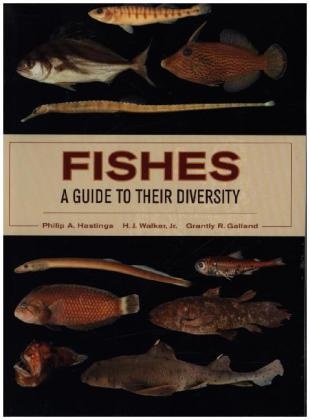
"This is a coursebook and reference guide for ichthyology courses that will also serve as a tool for ichthyologists, fisheries scientists, marine biologists, and vertebrate zoologists. It will cover the basic anatomy and diversity of all 62 orders of fishes, focusing on the distinguishing characteristics of approximately 180 of the most commonly encountered fish families. Each family will be diagnosed with easily observed characteristics and clear photos--many in color and from living specimens. This guide will be distinctive through the use of photographs of preserved specimens primarily from the Scripps Institution of Oceanography Marine Vertebrate Collection, supplemented by radiographs and additional illustrations of key characters. The goal is to give ichthyology students, fisheries scientists, marine biologists, vertebrate zoologists, and others with an interest or stake in the diversity of fishes a broad overview of the morphological diversity of fishes, arranged in a modern classification system.For students, it's a natural complement to primary ichthyology textbooks, which don't cover the breadth of morphological characteristics necessary to identify fish"--Provided by publisher.
About the author
Philip A. Hastings is Professor of Marine Biology and Curator of Marine Vertebrates at Scripps Institution of Oceanography, University of California, San Diego. His studies include the systematics and phylogeny of fishes, marine biogeography, ecology and behavioral evolution of fishes, and marine conservation biology.
H. J. Walker, Jr., is a Senior Museum Scientist at Scripps Institution of Oceanography, University of California, San Diego. His research and interests include the taxonomy, systematics, and zoogeography of marine fishes and the observation of these fishes in their natural environments.
Grantly R. Galland is a recent graduate of Scripps Institution of Oceanography, University of California, San Diego. He studies the ecology of fishes and works to implement successful conservation and policy strategies for protecting the marine environment.
Summary
There are more than 33,000 species of living fishes, accounting for more than half of the extant vertebrate diversity on Earth. This comprehensive reference showcases the basic anatomy and diversity of all 82 orders of fishes and more than 150 of the most commonly encountered families, focusing on their distinctive features.