

Share
Fr. 200.00
Markus Antonietti, Maria-Magdalena Titirici, Maria-Magdalena (Queen Mary Titirici, Maria-Magdalena Antonietti Titirici, MM Titirici, TITIRICI MARIA MAGDALENA ANTONIET...
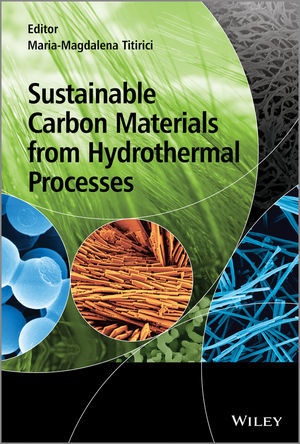
Sustainable Carbon Materials From Hydrothermal Processes
English · Hardback
Shipping usually within 1 to 3 weeks (not available at short notice)
Description
Informationen zum Autor Dr. Maria-Magdalena Titirici, Max-Planck Institute of Colloids and Interfaces, Germany Maria-Magdalena has been working in the field of hydrothermal carbonization (HTC) since 2005. Her laboratory at the Max-Planck Institute of Colloids and Interfaces has been driving the renewed interest in HTC for the production of high-tech carbonaceous materials. Since 2005 she has published more than 40 scientific papers on this topic, including 2 reviews, as well as a book chapter. Klappentext The production of low cost and environmentally friendly high performing carbon materials is crucial for a sustainable future. Sustainable Carbon Materials from Hydrothermal Processes describes a sustainable and alternative technique to produce carbon from biomass in water at low temperatures, a process known as Hydrothermal Carbonization (HTC).Sustainable Carbon Materials from Hydrothermal Processes presents an overview of this new and rapidly developing field, discussing various synthetic approaches, characterization of the final products, and modern fields of application for of sustainable carbon materials.Topics covered include:* Green carbon materials* Porous hydrothermal carbons* HTC for the production of valuable carbon hybrid materials* Functionalization of hydrothermal carbon materials* Characterization of HTC materials* Applications of HTC in modern nanotechnology: Energy storage, electrocatalysis in fuel cells, photocatalysis, gas storage, water purification, sensors, bioapplications* Environmental applications of HTC technology: Biochar production, carbon sequestration, and waste conversion* Scale-up in HTCSustainable Carbon Materials from Hydrothermal Processes will serve as a comprehensive guide for students and newcomers in the field, as well as providing a valuable source of information for researchers and investors looking for alternative technologies to convert biomass into useful products. Zusammenfassung This book will discuss hydrothermal carbonization (HTC) for the production of sustainable, versatile and functional carbonaceous materials. Inhaltsverzeichnis List of Contributors xi Preface xiii 1 Green Carbon 1 Maria-Magdalena Titirici 1.1 Introduction 1 1.2 Green Carbon Materials 3 1.2.1 CNTs and Graphitic Nanostructures 4 1.2.2 Graphene, Graphene Oxide, and Highly Reduced Graphene Oxide 11 1.2.3 Activated Carbons 14 1.2.4 Starbons 14 1.2.5 Use of Ionic Liquids in the Synthesis of Carbon Materials 19 1.2.6 HTC 27 1.3 Brief History of HTC 27 References 30 2 Porous Hydrothermal Carbons 37 Robin J. White, Tim-Patrick Fellinger, Shiori Kubo, Nicolas Brun, and Maria-Magdalena Titirici 2.1 Introduction 37 2.2 Templating - An Opportunity for Pore Morphology Control 39 2.2.1 Hard Templating in HTC 40 2.2.2 Soft Templating in HTC 42 2.2.3 Naturally Inspired Systems: Use of Natural Templates 49 2.3 Carbon Aerogels 50 2.3.1 Ovalbumin/Glucose-Derived HTC-Derived Carbogels 52 2.3.2 Borax-Mediated Formation of HTC-Derived Carbogels from Glucose 56 2.3.3 Carbogels from the Hydrothermal Treatment of Sugar and Phenolic Compounds 63 2.3.4 Emulsion-Templated "Carbo-HIPEs" from the Hydrothermal Treatment of Sugar Derivatives and Phenolic Compounds 65 2.4 Summary and Outlook 69 References 70 3 Porous Biomass-Derived Carbons: Activated Carbons 75 Dolores Lozano-Castello, Juan Pablo Marco-Lozar, Camillo Falco, Maria-Magdalena Titirici, and Diego Cazorla-Amoros 3.1 Introduction to Activated Carbons 75 3.2 Chemical Activation of Lignocellulosic Materials 77 3.2.1 H3PO4 Activation of Lignocellulosic Precursors 78 3.2.2 ZnCl2 Activation of Lignocellulosic Precursors 82 3.2.3 KOH and NaOH Activation of Lignocellulosic Precursors 84
List of contents
List of Contributors xi
Preface xiii
1 Green Carbon 1
Maria-Magdalena Titirici
1.1 Introduction 1
1.2 Green Carbon Materials 3
1.2.1 CNTs and Graphitic Nanostructures 4
1.2.2 Graphene, Graphene Oxide, and Highly Reduced Graphene Oxide 11
1.2.3 Activated Carbons 14
1.2.4 Starbons 14
1.2.5 Use of Ionic Liquids in the Synthesis of Carbon Materials 19
1.2.6 HTC 27
1.3 Brief History of HTC 27
References 30
2 Porous Hydrothermal Carbons 37
Robin J. White, Tim-Patrick Fellinger, Shiori Kubo, Nicolas Brun, and Maria-Magdalena Titirici
2.1 Introduction 37
2.2 Templating - An Opportunity for Pore Morphology Control 39
2.2.1 Hard Templating in HTC 40
2.2.2 Soft Templating in HTC 42
2.2.3 Naturally Inspired Systems: Use of Natural Templates 49
2.3 Carbon Aerogels 50
2.3.1 Ovalbumin/Glucose-Derived HTC-Derived Carbogels 52
2.3.2 Borax-Mediated Formation of HTC-Derived Carbogels from Glucose 56
2.3.3 Carbogels from the Hydrothermal Treatment of Sugar and Phenolic Compounds 63
2.3.4 Emulsion-Templated "Carbo-HIPEs" from the Hydrothermal
Treatment of Sugar Derivatives and Phenolic Compounds 65
2.4 Summary and Outlook 69
References 70
3 Porous Biomass-Derived Carbons: Activated Carbons 75
Dolores Lozano-Castello, Juan Pablo Marco-Lozar, Camillo Falco, Maria-Magdalena Titirici, and Diego Cazorla-Amoros
3.1 Introduction to Activated Carbons 75
3.2 Chemical Activation of Lignocellulosic Materials 77
3.2.1 H3PO4 Activation of Lignocellulosic Precursors 78
3.2.2 ZnCl2 Activation of Lignocellulosic Precursors 82
3.2.3 KOH and NaOH Activation of Lignocellulosic Precursors 84
3.3 Activated Carbons from Hydrothermally Carbonized Organic Materials and Biomass 86
3.3.1 Hydrochar Materials: Synthesis, Structural, and Chemical Properties 88
3.3.2 KOH Activation of Hydrochar Materials 89
3.4 Conclusions 95
Acknowledgments 95
References 96
4 Hydrothermally Synthesized Carbonaceous Nanocomposites 101
Bo Hu, Hai-Zhou Zhu, and Shu-Hong Yu
4.1 Introduction 101
4.2 HTC Synthesis of Unique Carbonaceous Nanomaterials 102
4.2.1 Carbonaceous Nanomaterials 102
4.2.2 Carbonaceous Nanocomposites 110
4.3 Conclusion and Outlook 121
Acknowledgments 121
References 121
5 Chemical Modification of Hydrothermal Carbonization Materials 125
Stephanie Wohlgemuth, Hiromitsu Urakami, Li Zhao, and Maria-Magdalena Titirici
5.1 Introduction 125
5.2 In Situ Doping of Hydrothermal Carbons 126
5.2.1 Nitrogen 126
5.2.2 Sulfur 130
5.2.3 Boron 132
5.2.4 Organic Monomers Sources 132
5.2.5 Properties of Heteroatom-Doped Carbon Materials 133
5.3 Postmodification of Carbonaceous Materials 139
5.3.1 Chemical Handles for Functionalization Present on HTC Materials 140
5.3.2 Perspectives on HTC Postmodification Strategies 143
References 145
6 Characterization of Hydrothermal Carbonization Materials 151
Niki Baccile, Jens Weber, Camillo Falco, and Maria-Magdalena Titirici
6.1 Introduction 151
6.2 Morphology of HTC Materials 152
6.2.1 Morphology of Glucose-Derived Hydrothermal Carbons 153
6.2.2 Morphology of Other Carbohydrate-Derived Hydrothermal Carbons 157
6.2.3 Morphology of Cellulose- and Biomass-Derived
Product details
| Authors | Markus Antonietti, Maria-Magdalena Titirici, Maria-Magdalena (Queen Mary Titirici, Maria-Magdalena Antonietti Titirici, MM Titirici, TITIRICI MARIA MAGDALENA ANTONIET, Titirici Maria-Magdalena |
| Assisted by | Maria- Titirici (Editor), Maria-M Titirici (Editor), Maria-Magdalena Titirici (Editor) |
| Publisher | Wiley, John and Sons Ltd |
| Languages | English |
| Product format | Hardback |
| Released | 09.08.2013 |
| EAN | 9781119975397 |
| ISBN | 978-1-119-97539-7 |
| No. of pages | 372 |
| Subjects |
Natural sciences, medicine, IT, technology
> Chemistry
> General, dictionaries
Chemie, Nanotechnologie, chemistry, Materialverarbeitung, Materialwissenschaften, Nanotechnology, Materials science, Nanomaterialien, Nanomaterials, Sustainable Chemistry & Green Chemistry, Nachhaltige u. Grüne Chemie, Materials Processing, Kohlenstoffnanomaterialien, Hydrothermale Entstehung |
Customer reviews
No reviews have been written for this item yet. Write the first review and be helpful to other users when they decide on a purchase.
Write a review
Thumbs up or thumbs down? Write your own review.