

Share
Fr. 196.00
J Grime, J Phili Grime, J Philip Grime, J. Ph. Grime, J. Philip Grime, J. Philip (University of Sheffield) Pierce Grime...
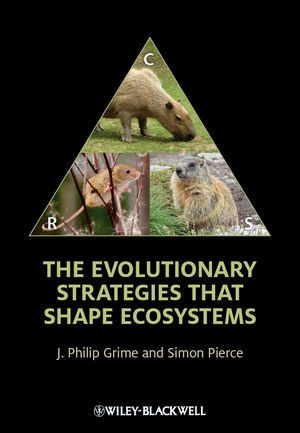
Evolutionary Strategies That Shape Ecosystems
English · Hardback
Shipping usually within 1 to 3 weeks (not available at short notice)
Description
Informationen zum Autor Philip Grime is a Professor Emeritus at the University of Sheffield where he currently maintains long-term experiments at the Buxton Climate Change Impacts Laboratory in North Derbyshire. As a pioneer of experimental approaches to communities and ecosystems Professor Grime is an elected member of the Dutch and British Royal Societies and was the inaugural recipient in 2011 of the Alexander von Humboldt Medal awarded by the International Association for Vegetation Science. Simon Pierce is a researcher and lecturer at the University of Milan, Italy, and at the time of writing taught plant physiological ecology at the University of Insubria, Varese, Italy. His research encompasses plant community ecology and ecophysiology, and the reproductive biology, cultivation and conservation of terrestrial orchids. During his career he has lived and worked in the Republic of Panama, as an Andrew W. Mellon research fellow at the Smithsonian Tropical Research Institute, for the University of Cambridge, UK. He holds a doctorate from the University of Durham, UK, and a degree from the University of Wales, Bangor. Klappentext THE EVOLUTIONARY STRATEGIES THAT SHAPE ECOSYSTEMS In 1837 a young Charles Darwin took his notebook, wrote "I think", and then sketched a rudimentary, stick-like tree. Each branch of Darwin's tree of life told a story of survival and adaptation - adaptation of animals and plants not just to the environment but also to life with other living things. However, more than 150 years since Darwin published his singular idea of natural selection, the science of ecology has yet to account for how contrasting evolutionary outcomes affect the ability of organisms to coexist in communities and to regulate ecosystem functioning. In this book Philip Grime and Simon Pierce explain how evidence from across the world is revealing that, beneath the wealth of apparently limitless and bewildering variation in detailed structure and functioning, the essential biology of all organisms is subject to the same set of basic interacting constraints on life-history and physiology. The inescapable resulting predicament during the evolution of every species is that, according to habitat, each must adopt a predictable compromise with regard to how they use the resources at their disposal in order to survive. The compromise involves the investment of resources in either the effort to acquire more resources, the tolerance of factors that reduce metabolic performance, or reproduction. This three-way trade-off is the irreducible core of the universal adaptive strategy theory which Grime and Pierce use to investigate how two environmental filters selecting, respectively, for convergence and divergence in organism function determine the identity of organisms in communities, and ultimately how different evolutionary strategies affect the functioning of ecosystems. This book refl ects an historic phase in which evolutionary processes are finally moving centre stage in the effort to unify ecological theory, and animal, plant and microbial ecology have begun to find a common theoretical framework. Companion website This book has a companion website www.wiley.com/go/grime/evolutionarystrategies with Figures and Tables from the book for downloading. Zusammenfassung In 1837 a young Charles Darwin took his notebook, wrote "I think" and then sketched a rudimentary, stick-like tree. Each branch of Darwin's tree of life told a story of survival and adaptation adaptation of animals and plants not just to the environment but also to life with other living things. Inhaltsverzeichnis Preface x Chapter Summaries xii Acknowledgements xviii Introduction 1 1 Evolution and Ecology: a Janus Perspective? 3 Evolutionary biology 3 Ecology 4 The emergence of a science of adaptive strategies 6 Preface x "In summary, The Evolutionary Strategies that ShapeEcosystemsis well-written and stimulating, and encourages itsreaders to think about how all the pieces of ecology might fittogether, from the scale of an individual organism to entireecosystems. It would make a valuable addition to the library of anyscientist interested in ecological and evolutionarystrategies." ( Austral Ecology , 1 October2013)List of contents
Chapter Summaries xii
Acknowledgements xviii
Introduction 1
1 Evolution and Ecology: a Janus Perspective? 3
Evolutionary biology 3
Ecology 4
The emergence of a science of adaptive strategies 6
Summary 7
2 Primary Strategies: the Ideas 8
MacArthur's 'blurred vision' 9
The mechanism of convergence; trade-offs 10
The theory of r- and K-selection 11
CSR Theory 12
Summary 23
3 Primary Adaptive Strategies in Plants 25
The search for adaptive strategies 26
Theoretical work 26
Measuring variation in plant traits: screening programmes 28
Screening of plant growth rates 29
The Integrated Screening Programme 29
Further trait screening 34
The application of CSR theory 34
Virtual plant strategies 36
Summary 38
4 Primary Adaptive Strategies in Organisms Other Than Plants 40
The architecture of the tree of life 41
r, K and beyond K 42
Empirical evidence for three primary strategies in animals 43
The universal three-way trade-off 44
Mammalia (mammals) 46
Aves (avian therapods) 53
Squamata (snakes and lizards) (with notes on other extant reptile clades) 56
Amphibia (amphibians) 60
Osteichthyes (bony fi shes) 61
Chondrichthyes (cartilaginous fi shes) 65
Insecta (insects) 68
Aracnida (spiders, scorpions, mites and ticks) 72
Crustacea (crustaceans) 74
Echinodermata (sea urchins, starfi sh, crinoids, sea cucumbers) 75
Mollusca (snails, clams, squids) 77
Annelida (segmented worms) 79
Cnidaria (corals, sea anemones, jellyfi sh, hydras, sea pens) 81
Eumycota (fungi) (including notes on lichens) 83
Archaea 84
Proteobacteria 86
Firmicutes 87
Cyanobacteria 88
Viruses 90
Extinct groups 94
Universal adaptive strategy theory - the evolution of CSR and beyond K theories 99
First steps towards a universal methodology 100
Summary 103
5 From Adaptive Strategies to Communities 105
Plant communities 106
Productive disturbed communities 107
Productive undisturbed communities 108
Unproductive relatively undisturbed communities 111
Plant community composition 111
The humped-back model 114
Origins 114
Formulation 115
Independent confi rmation and compatibility with new research 116
Species-pools, fi lters and community composition 121
Evidence for the action of twin fi lters 128
Additional mechanisms promoting diversity 132
Genetic diversity, intraspecifi c functional diversity and species diversity 132
Microbial communities 136
The effects of plant strategies on soil microbial communities 139
Facilitation in bacterial communities 141
Coexistence in marine surface waters 142
Novel techniques for investigating microbial adaptive strategies 142
Animal communities 144
Primary producers delimit animal diversity/productivity relationships 145
Twin fi lters and animal community assembly 150
Adaptive radiation and community assembly 154
Summary 160
6 From Strategies to Ecosystems 163
Back to Bayreuth 164
The Darwinian basis of ecosystem assembly 167
How do primary adaptive strategies drive ecosystem functioning? 168
The plant traiReport
"Certainly I have found this a useful way to think aboutconservation Management." ( British EcologicalSociety , 1 April 2013)
"The case studies range from microbes to animals, and evenpalaeontology is included in the mix, making the book a verycomprehensive resource for those interested in eco-evolutionarydynamics." ( Teaching Biology , 20 December2012)
"I recommend this book to people interested inevolutionary and ecological strategies in ecosystems, to those whothink about universal patterns in organism life history tactics andalso to those who love the challenge of linking ecology andevolution." ( Basic and Applied Ecology , 1November 2012)
"A significant contribution to the field and a must read forecologists. Summing Up: Highly recommended. Upper-division undergraduates and above." ( Choice , 1 October 2012)
Product details
| Authors | J Grime, J Phili Grime, J Philip Grime, J. Ph. Grime, J. Philip Grime, J. Philip (University of Sheffield) Pierce Grime, J. Philip Pierce Grime, J. Philip/ Pierce Grime, GRIME J PHILIP PIERCE SIMON, Grime J. Philip, Simon Pierce, Pierce Simon |
| Publisher | Wiley, John and Sons Ltd |
| Languages | English |
| Product format | Hardback |
| Released | 10.04.2012 |
| EAN | 9780470674819 |
| ISBN | 978-0-470-67481-9 |
| No. of pages | 264 |
| Subjects |
Natural sciences, medicine, IT, technology
> Biology
> Ecology
Ökologie, Evolution, Life Sciences, Biowissenschaften, Ecology & Organismal Biology, Ökologie u. Biologie der Organismen |
Customer reviews
No reviews have been written for this item yet. Write the first review and be helpful to other users when they decide on a purchase.
Write a review
Thumbs up or thumbs down? Write your own review.