Read more
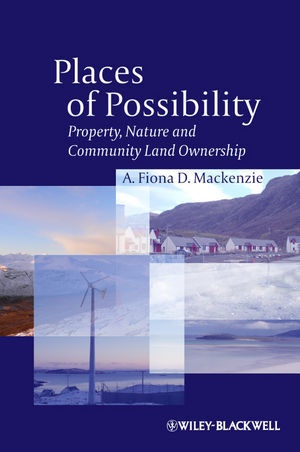
Informationen zum Autor A. Fiona D. Mackenzie is Professor Emeritus in the Department of Geography and Environmental Studies, Carleton University, Ottawa, Ontario, Canada and Honorary Professor, University of the Highlands and Islands. Professor Mackenzie has carried out in-depth qualitative research on the Isle of Harris, the Outer Hebrides, and is the author of Land, Ecology and Resistance in Kenya, 1880-1952 (1998). Klappentext Through original research conducted in the Outer Hebrides, Scotland, Places of Possibility shows how community land ownership can open up the political, social, environmental, and economic terrain to more socially just and sustainable possibilities than private ownership.* Reveals how community land ownership is more just and sustainable than private ownership* Features original theoretical insights into ideas of property and nature that disrupt the process of neoliberalisation* Based on original research conducted by the author in the Outer Hebrides, Scotland Zusammenfassung Places of Possibility reveals how community land ownership can lead to more socially just and sustainable possibilities than the privatization espoused by neoliberalism. Drawing on comprehensive qualitative research in the Outer Hebrides, Scotland, environmental geography specialist A. Fiona D. Inhaltsverzeichnis List of Maps viii List of Photographs ix List of Tables x Acknowledgements xi 1 Placing Possibility 1 2 Working Property 34 3 Working Nature 79 4 Working the Wind 127 5 Working Places 175 6 Conclusion - Working Possibilities 214 References 227 Index 248
List of contents
List of Maps viii
List of Photographs ix
List of Tables x
Acknowledgements xi
1 Placing Possibility 1
2 Working Property 34
3 Working Nature 79
4 Working the Wind 127
5 Working Places 175
6 Conclusion - Working Possibilities 214
References 227
Index 248
Report
"As Fiona Mackenzie demonstrates in her important new book, the Highlands and Hebrides have become, in recent years, the center of a sustained effort to construct an alternative, place-based and more generous politics to that of a neoliberal imaginary ... Mackenzie has written a book that is thrilling in its optimism and hopefulness. She convincingly explains in compelling detail the hopeful possibilities of the re-commoning in the Hebrides and Highlands. This is rarely the stuff of academic study but is at the heart of Places of Possibility 's profound ambitions and most important contribution: anticipating 'more socially, environmentally and economically generous postneoliberalisms'." ( Antipode , 1 September 2013)