

Share
Fr. 250.00
B Ambrose, B. Ambrose, Barbara A Ambrose, Barbara A. Ambrose, Barbara A. (EDT)/ Purugganan Ambrose, Barbara A. (The New York Botanical Garden Ambrose...
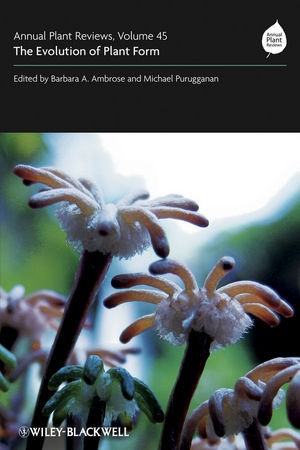
Annual Plant Reviews, the Evolution of Plant Form - The Evolution of Plant Form
English · Hardback
Shipping usually within 1 to 3 weeks (not available at short notice)
Description
Informationen zum Autor Barbara A. Ambrose is the Cullman Assistant Curator of Plant Genomics at The New York Botanical Garden, Bronx, New York, USA. Michael Purugganan is the Dorothy Schiff Professor of Genomics at the Department of Biology, Center for Genomics and Systems Biology, New York University, New York, USA, and at the Center for Genomics and Systems Biology, NYU Abu Dhabi Institute, New York University Abu Dhabi, Abu Dhabi, United Arab Emirates. Klappentext The Evolution of Plant Form is an exceptional new volume in Wiley-Blackwell's highly successful and well established Annual Plant Reviews.Written by recognised and respected researchers, this book delivers a comprehensive guide to the diverse range of scientific perspectives in land plant evolution, from morphological evolution to the studies of the mechanisms of evolutionary change and the tools with which they can be studied. This title distinguishes itself from others in plant evolution through its synthesis of these ideas, which then provides a framework for future studies and exciting new developments in thisfield.The first chapter explores the origins of the major morphological innovations in land plants and the following chapters provide an exciting, in depth analysis of the morphological evolutionof land plant groups including bryophytes, lycophytes, ferns, gymnosperms and angiosperms. The second half of the book focuses on evolutionary studies in land plants including genomics,adaptation, development and phenotypic plasticity. The final chapter provides a summary and perspective for future studies in the evolution of plant form.The Evolution of Plant Form provides essential information for plant scientists and evolutionary biologists. All libraries and research establishments, where biological and agricultural sciences arestudied and taught, will find this important work a vital addition to their shelves. "Overall I felt that this book will be a great first port of call for those interested in morphological evolution and it will be useful at all levels from undergraduate onwards. It will be particularly useful for molecular and developmental biologists wishing to move into a comparative approach." ( Annals of Botany , 1 July 2013) Zusammenfassung The Evolution of Plant Form is an exceptional new volume in Wiley-Blackwell's highly successful and well established Annual Plant Reviews.Written by recognised and respected researchers! this book delivers a comprehensive guide to the diverse range of scientific perspectives in land plant evolution! from morphological evolution to the studies of the mechanisms of evolutionary change and the tools with which they can be studied. This title distinguishes itself from others in plant evolution through its synthesis of these ideas! which then provides a framework for future studies and exciting new developments in thisfield.The first chapter explores the origins of the major morphological innovations in land plants and the following chapters provide an exciting! in depth analysis of the morphological evolutionof land plant groups including bryophytes! lycophytes! ferns! gymnosperms and angiosperms. The second half of the book focuses on evolutionary studies in land plants including genomics!adaptation! development and phenotypic plasticity. The final chapter provides a summary and perspective for future studies in the evolution of plant form.The Evolution of Plant Form provides essential information for plant scientists and evolutionary biologists. All libraries and research establishments! where biological and agricultural sciences arestudied and taught! will find this important work a vital addition to their shelves. Inhaltsverzeichnis List of Contributors xiii Preface xv Acknowledgments xvii 1 Phylogenetic Analyses and Morphological Innovations in Land Plants 1 James A. Doyle 1.1...
List of contents
List of Contributors xiii
Preface xv
Acknowledgments xvii
1 Phylogenetic Analyses and Morphological Innovations in Land Plants 1
James A. Doyle
1.1 Introduction 2
1.2 Basic innovations in cell structure and life cycle: aquatic streptophytes 4
1.3 Invasion of the land: "bryophytes" 9
1.4 Origin of vascular plants: the importance of fossils 11
1.5 Early innovations within vascular plants: leaves, roots, and heterospory 13
1.6 Innovations on the line to seed plants: "progymnosperms" and "seed ferns" 18
1.7 Innovations within seed plants, especially conifers 22
1.8 Origin of angiosperms and their innovations 26
1.9 Innovations within angiosperms: monocots and eudicots 33
Acknowledgments 36
References 36
2 The Evolution of Body Form in Bryophytes 51
Bernard Goffinet and William R. Buck
2.1 Fundamental Bauplan of bryophytes 53
2.1.1 The apical meristem is unicellular and growth is modular 53
2.1.2 The architecture of the gametophyte varies within bryophytes 54
2.1.3 Bryophytes differ consistently in their sporophytes 54
2.2 Phylogenetic relationships of bryophytes 55
2.3 Evolution of plant form in liverworts 61
2.3.1 The gametophyte 61
2.3.2 The sporophyte 64
2.3.3 Evolutionary trends 65
2.4 Evolution of plant form in mosses 67
2.4.1 The gametophyte 67
2.4.2 The sporophyte 73
2.4.3 Evolutionary trends 76
2.5 Evolution of plant form in hornworts 78
2.5.1 The gametophyte 78
2.5.2 The sporophyte 80
2.5.3 Evolutionary trends 80
2.6 The ancestral developmental toolbox of land plants 80
Acknowledgments 84
References 84
3 The Morphology and Development of Lycophytes 91
Barbara A. Ambrose
3.1 Introduction 91
3.2 Vasculature 96
3.3 Shoot apical meristems 96
3.4 Sporophyte architecture 99
3.5 Microphylls 101
3.6 Sporangia 103
3.7 Roots 105
3.8 Structural enigmas 106
3.8.1 Ligules 106
3.8.2 Rhizophores 108
3.9 Conclusions 109
Acknowledgments 110
References 110
4 Evolutionary Morphology of Ferns (Monilophytes) 115
Harald Schneider
4.1 Introduction 115
4.2 Context of evolutionary plant morphology 117
4.2.1 Perspective 1: rapid radiation versus stasis in the evolution of fern body plans 120
4.2.2 Perspective 2: key structures and organs of fern body plans 123
4.2.3 Perspective 3: genomics and evo-devo of ferns 132
Acknowledgments 134
References 134
5 Gymnosperms 141
Dennis Wm. Stevenson
5.1 Introduction 141
5.2 Architecture 142
5.3 Shoots 144
5.4 Leaves 147
5.5 Roots 150
5.6 Seeds 152
5.7 Seedlings 153
5.8 Embryology 154
References 159
6 Identifying Key Features in the Origin and Early Diversification of Angiosperms 163
Paula J. Rudall
6.1 Introduction: key features of flowering plants 163
6.2 Patterning of flowers and inflorescences 164
6.3 Eight extant lineages of flowering plants 167
6.4 Origin of the angiosperms: the phylogenetic framework 169
6.5 Resolving conflicting hypotheses of flower origin 170
6.6 Evolution of the perianth 174
6.7 Carpels, gynoecia, and organ fusion 174
6.8 Origins of flora
Report
"In summary, the very good introductory parts make the book more easily accessible for beginners, undergraduates, and teachers, while the up-to-date and in-depth discussions are highly useful for every scientist who is interested in the evolution of plant forms. Overall, I will finish with my congratulations to the authors for this extremely interesting, excellent, state-of-the-art, and well-prepared book." (Journal of Plant Physiology, 14 September 2013)
"Overall I felt that this book will be a great first port of call for those interested in morphological evolution and it will be useful at all levels from undergraduate onwards. It will be particularly useful for molecular and developmental biologists wishing to move into a comparative approach." (Annals of Botany, 1 July 2013)
Product details
| Authors | B Ambrose, B. Ambrose, Barbara A Ambrose, Barbara A. Ambrose, Barbara A. (EDT)/ Purugganan Ambrose, Barbara A. (The New York Botanical Garden Ambrose, Barbara A. Purugganan Ambrose, AMBROSE BARBARA PURUGGANAN MIC, Michael D. Purugganan |
| Assisted by | Barbara A. Ambrose (Editor), Ambrose Barbara A. (Editor), Michael D. Purugganan (Editor), Purugganan Michael D. (Editor) |
| Publisher | Wiley, John and Sons Ltd |
| Languages | English |
| Product format | Hardback |
| Released | 11.01.2013 |
| EAN | 9781444330014 |
| ISBN | 978-1-4443-3001-4 |
| No. of pages | 400 |
| Series |
Annual Plant Reviews Annual Plant Reviews |
| Subjects |
Natural sciences, medicine, IT, technology
> Biology
> Genetics, genetic engineering
Botanik, Life Sciences, Biowissenschaften, Plant Science, Plant Genetics, Molekulare Evolution, Molecular Evolution, Pflanzengenetik |
Customer reviews
No reviews have been written for this item yet. Write the first review and be helpful to other users when they decide on a purchase.
Write a review
Thumbs up or thumbs down? Write your own review.