Read more
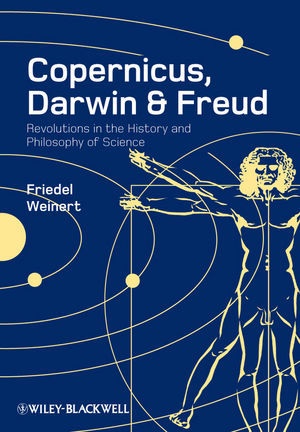
Informationen zum Autor Friedel Weinert is Professor of Philosophy at Bradford University and a former Visiting Research Fellow at Harvard University and Visiting Fellow at the Centre for the Philosophy of Natural and Social Science at the LSE in London. He holds a PhD in Philosophy, a BA in Sociology, and a BSc in Physics. Dr. Weinert is the editor of Laws of Nature (1995), the author of The Scientist as Philosopher (2004) and chief editor of the forthcoming Compendium of Quantum Physics: Concepts, Experiments, History and Philosophy . Klappentext Scientific ideas change the way we think about the world and our place in it. Nicolaus Copernicus developed a heliocentric view of the cosmos that displaced humans from the physical center of the universe. Charles Darwin developed an evolutionary theory that placed humans firmly within the organismic order of nature. It was Sigmund Freud who saw himself as completing this cycle of disparagement by destroying the belief that humans were 'masters in their own house'.Copernicus, Darwin and Freud: Revolutions in the History and Philosophy of Science deals with issues in the area of intersection between history and philosophy of natural and social science. Using Copernicanism, Darwinism and Freudianism as extended case studies, Friedel Weinert illustrates the profound connections between science and philosophy and shows how scientific theories invariably have philosophical consequences. Philosophical controversies surrounding ideas of human nature, realism and instrumentalism, models and theories, laws of nature and scientific method are all examined within the context of concrete problem situations in the history of science.Copernicus, Darwin and Freud is an engaging and versatile text suitable for a variety of courses in the history and philosophy of science or for individual study. Zusammenfassung Scientific ideas change the way we think about the world and our place in it. Nicolaus Copernicus developed a heliocentric view of the cosmos that displaced humans from the physical center of the universe. Charles Darwin developed an evolutionary theory that placed humans firmly within the organismic order of nature. Inhaltsverzeichnis Preface. Acknowledgments. Introduction. I. Nicolaus Copernicus: The Loss of Centrality. 1. Ptolemy and Copernicus. 2. A Clash of Two Worldviews. 3. The Heliocentric Worldview. 4. Copernicus was not a Scientific Revolutionary. 5. The Transition to Newton. 6. Some Philosophical Lessons. 7. Copernicus and Scientific Revolutions. 8. The Anthropic Principle: A Reversal of the Copernican Turn?. Reading List. Essay Questions. II. Charles Darwin: The Loss of Rational Design . 1. Darwin and Copernicus. 2. Views of Organic Life. 3. Fossil Discoveries. 4. Darwin's Revolution. 5. Philosophical Matters. 6. A Question of Method. Reading List. Essay Questions. III. Sigmund Freud: The Loss of Transparency . 1. Copernicus, Darwin and Freud. 2. Some Views of Humankind. 3. Scientism and the Freudian Model of Personality. 4. The Social Sciences beyond Freud. 5. Evolution and the Social Sciences. 6. Freud and Revolutions in Thought. Reading List. Essay Questions. Name Index. Subject Index ...
List of contents
General Introduction.
I. Nicolaus Copernicus: The Loss of Centrality.
I. 1 Ptolemy and Copernicus.
I. 2 A Clash of two Worldviews.
I. 3 The Heliocentric Worldview.
I. 4 Copernicus was not a Scientific Revolutionary.
I. 5 The Transition to Newton.
I. 6 Some Philosophical Lessons.
I. 7 Copernicus and Scientific Revolutions.
I. 8 The Anthropic Principle: A Reversal of the Copernican Turn?.
II. Charles Darwin: The Loss of Rational Design.
II. 1 Darwin and Copernicus.
II. 2 Views of Organic Life.
II. 3 Fossil Discoveries.
II. 4 Darwin's Revolution.
II. 5 Philosophical Matters.
II. 5.2 From Biology to the Philosophy of Mind.
II. 5. 3 The Loss of Rational Design.
II. 5.4 Intelligent Design.
II. 6 A Question of Method.
II. 6.1 Darwinian Inferences.
II. 6. 2 Philosophical Empiricism.
II. 6. 3 Some Principles of Elimination.
II. 6.4 Essential Features of Eliminative Inductivism.
II. 6.5 Falsifiability or Testability?.
II. 6.6 Explanation and Prediction.
II. 6.6 Some Models of Explanation - Functional Model, Causal Model, Structural Model.
II. 6. 7 A Brief Return to Realism.
II. 6. 8 Darwin and Scientific Revolutions.
II. 6. 8. 1 Philosophical Consequences.
III. Freud: The Loss of Transparency.
III. 1 Copernicus, Darwin and Freud.
III. 2 Some Views of Humankind.
III. 3 Scientism and the Freudian Model of Personality.
III. 4 The Social Sciences beyond Freud.
III. 5 Evolution and the Social Sciences.
III. 6 Freud and Revolutions in Thought.
Essay Questions
Report
"Whether used as a textbook or as a review of issues concerning scientific revolutions and theory change in their historical context, Copernicus, Darwin, and Freud may be strongly recommended." (The Journal of the International Society for the History of Philosophy of Science, 2011)
"Those seeking a more conventional approach to the history and philosophy of science may well find Weinert s book informative...there is much to be learned from Weinert s comparison of Copernicus, Darwin, and Freud." ( Science & Education , January 2011)"Weinert has provided an informative textbook that is written in a very accessible style. His examples invite the student to apply the philosophical concepts that are discussed." ( Metapsychology , May 2009)