

Share
Fr. 245.00
S Bottacchi, Stefano Bottacchi, Stefano (Italtel S.p.A Bottacchi, Bottacchi Stefano, Stefano Bottacchi
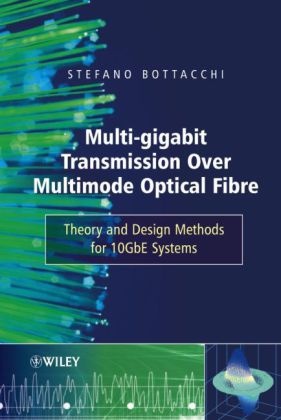
Multi-Gigabit Transmission Over Multimode Optical Fibre - Theory and Design Methods for 10gbe Systems
English · Hardback
Shipping usually within 1 to 3 weeks (not available at short notice)
Description
Informationen zum Autor Stefano Bottacchi received his Bsc in Electronic Engineering from Politecnico of Milano in 1983. Since then he has gained practical experience in the optical communications field by working in industry in companies such as GTE-SIEMENS Telecomunicazioni, Alcatel-Telettra, Cisco Photonic Italy and Infineon Technologies AG, Munich. He has given courses on Optical Fiber Transmission Tecnology for CEI, and authored Multigigabit Transmission over Multimode Optical Fiber. Theory and Design Methods for 10GbE Systems , which will be published in June 2006. Klappentext Faseroptik - von den physikalischen Grundlagen über einzelne Systeme bis zu Netzwerken! Dieser in sich geschlossene Band vermittelt Ihnen alles, was Sie über das Design faseroptischer Hochgeschwindigkeitssysteme, die mit mehreren Wellenlängen arbeiten, wissen müssen. Ausführlich erläutert wird die Signalweiterleitung in Einmodenfasern unter Berücksichtigung linear- und nichtlinear-optischer Effekte. Mit aktuellen Angaben zu Wellenleitertheorien und optoelektronischen Bauelementen. Zusammenfassung Fiber optic transmission is the technology of transmitting data through fiber optic cables. This book provides the reader with a self-contained treatment of all the theory and design criteria needed to design high-speed and multi-wavelength fiber optic communications systems. Volume I covers optical propagation theory. Inhaltsverzeichnis Preface. Book Organization. 1. Introductory Concepts. Components and Design Issues for a Multigigabit Link over Multimode Fiber. 1.1 Introduction. 1.2 Multimode Optical Fibers. 1.3 Semiconductor Laser Sources. 1.4 Offset Launch Conditions. 1.5 Optical Receivers. 1.6 Signal Compensation Techniques. 1.7 Conclusions and Recommendations. 1.8 Optical Fiber Transmission Standards. 2. Conductive Transmission Lines. A Simplified Attenuation Model. 2.1 Introduction. 2.2 The Attenuation Model. 2.3 Design Applications. 2.4 Impulse Response. 2.5 Conclusions. 3. Principles of Multimode Optical Fiber. Theory and Modeling Issues for Multigigabit Transmission Links. 3.1 Introduction. 3.2 The Graded Refractive Index. 3.3 Modal Theory of Graded Index Fiber. 3.4 Theory of the Modal Impulse Response. 3.5 Linear Propagation Regime. 3.6 The Optimum Refractive Index. 3.7 Physics of the Chromatic Dispersion. 3.8 Waveguide Dispersion. 3.9 Frequency Chirping. 3.10 Higher-Order Linear Dispersion. 3.11 The Gaussian Model. 4. Theory of Chromatic Response. Modeling Light Source Effect in Multigigabit Transmission Links. 4.1 Introduction and Outline. 4.2 Theory of Chromatic Impulse Response. 4.3 The Chromatic Impulse Response Model. 4.4 Moments of Chromatic Impulse Response. 4.5 Conclusions and Remarks. 5. Theory of Multimode Response. Application to Multigigabit Transmission Links. 5.1 Introduction and Outline. 5.2 Moments of Modal Impulse Response. 5.3 Theory of Multimode Impulse Response. 5.4 The Multimode Impulse Response Model. 5.5 Theory of Multimode Frequency Response. 5.6 Summary and Conclusions. 6. Gaussian Approximation and Applications. Link Bandwidth Calculations. 6.1 The Gaussian Model Approximation. 6.2 Comparing Engineering Solutions. 6.3 Comparison with Transmission Lines. 6.4 Conclusions and Remarks. 7. Multimode Fiber Selected Topics. Impairments and Methods for Multigigabit Transmission Links. 7.1 Impulse Response and Modal Bandwidth. 7.2 Modal Theory of the Step-Index Fiber. 7.3 Mode Power and Launch Conditions. 7.4 Co...
List of contents
Preface.
Book Organization.
1. Introductory Concepts.
Components and Design Issues for a Multigigabit Link over Multimode Fiber.
1.1 Introduction.
1.2 Multimode Optical Fibers.
1.3 Semiconductor Laser Sources.
1.4 Offset Launch Conditions.
1.5 Optical Receivers.
1.6 Signal Compensation Techniques.
1.7 Conclusions and Recommendations.
1.8 Optical Fiber Transmission Standards.
2. Conductive Transmission Lines.
A Simplified Attenuation Model.
2.1 Introduction.
2.2 The Attenuation Model.
2.3 Design Applications.
2.4 Impulse Response.
2.5 Conclusions.
3. Principles of Multimode Optical Fiber.
Theory and Modeling Issues for Multigigabit Transmission Links.
3.1 Introduction.
3.2 The Graded Refractive Index.
3.3 Modal Theory of Graded Index Fiber.
3.4 Theory of the Modal Impulse Response.
3.5 Linear Propagation Regime.
3.6 The Optimum Refractive Index.
3.7 Physics of the Chromatic Dispersion.
3.8 Waveguide Dispersion.
3.9 Frequency Chirping.
3.10 Higher-Order Linear Dispersion.
3.11 The Gaussian Model.
4. Theory of Chromatic Response.
Modeling Light Source Effect in Multigigabit Transmission Links.
4.1 Introduction and Outline.
4.2 Theory of Chromatic Impulse Response.
4.3 The Chromatic Impulse Response Model.
4.4 Moments of Chromatic Impulse Response.
4.5 Conclusions and Remarks.
5. Theory of Multimode Response.
Application to Multigigabit Transmission Links.
5.1 Introduction and Outline.
5.2 Moments of Modal Impulse Response.
5.3 Theory of Multimode Impulse Response.
5.4 The Multimode Impulse Response Model.
5.5 Theory of Multimode Frequency Response.
5.6 Summary and Conclusions.
6. Gaussian Approximation and Applications.
Link Bandwidth Calculations.
6.1 The Gaussian Model Approximation.
6.2 Comparing Engineering Solutions.
6.3 Comparison with Transmission Lines.
6.4 Conclusions and Remarks.
7. Multimode Fiber Selected Topics.
Impairments and Methods for Multigigabit Transmission Links.
7.1 Impulse Response and Modal Bandwidth.
7.2 Modal Theory of the Step-Index Fiber.
7.3 Mode Power and Launch Conditions.
7.4 Conclusions.
8. The Optical Link Model.
Modeling the Optical Channel Behavior for Multigigabit Transmission.
8.1 Introduction.
8.2 System Models and Assumptions.
8.3 The Optical Transmitter.
8.4 Intersymbol Interference.
8.5 The Optical Receiver.
8.6 Conclusions.
9. Principles of Electronic Dispersion Compensation.
Concepts and Limitations Applied to Multimode Fiber Transmission.
9.1 Introduction.
9.2 The Optical Decision Process.
9.3 Principles of Linear Equalization.
9.4 Conclusions.
10. Decision Feedback Equalization.
Expanding Multimode Fiber Capabilities.
10.1 Introduction.
10.2 Principles of Digital Equalization.
10.3 The Optical Power Penalty.
10.4 The Channel Metric.
10.5 DFE Architectures.
10.6 Conclusions.
11. Transmission Experiments.
Deploying Multigigabit Transmission Experiments over Multimode Fiber.
11.1 Introduction.
11.2 Measurement Outli
Product details
| Authors | S Bottacchi, Stefano Bottacchi, Stefano (Italtel S.p.A Bottacchi, Bottacchi Stefano, Stefano Bottacchi |
| Publisher | Wiley, John and Sons Ltd |
| Languages | English |
| Product format | Hardback |
| Released | 30.06.2006 |
| EAN | 9780471891758 |
| ISBN | 978-0-471-89175-8 |
| No. of pages | 670 |
| Subjects |
Natural sciences, medicine, IT, technology
> Technology
> Electronics, electrical engineering, communications engineering
Lichtwellenleiter, Photonik, Electrical & Electronics Engineering, Elektrotechnik u. Elektronik, Optische Nachrichtentechnik, Optical Communications |
Customer reviews
No reviews have been written for this item yet. Write the first review and be helpful to other users when they decide on a purchase.
Write a review
Thumbs up or thumbs down? Write your own review.