Mehr lesen
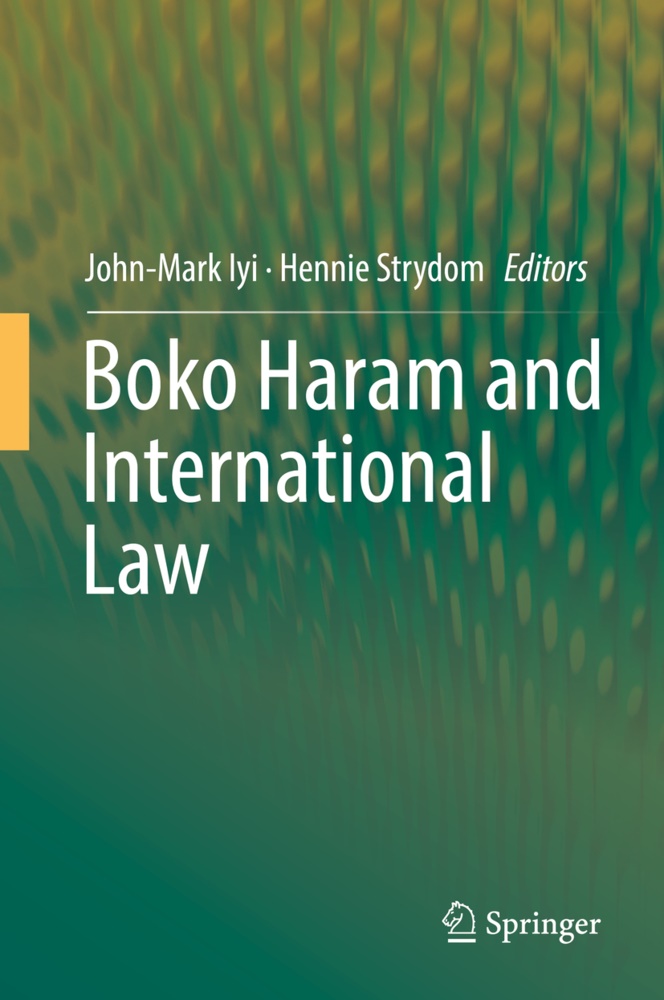
This book focuses on Boko Haram and terrorism in Nigeria, framing the conflict in an international law context. It analyses the nature of political violence and the dominant roles of a violent nation-state (in both colonial and post-colonial experiences) and the rise of terrorism in Nigeria. The book unearths embedded evidence of religious nepotism on the part of state officials using such state institutions as Islamic Preaching Boards to promote one Islamic sect over another in mainly Muslim Northern Nigeria. The book offers insights into this subtle sectarian divide and how this and other 'subterranean' elements have contributed to the rise of Boko Haram in Northern Nigeria beyond the dominant poverty-terrorism nexus narrative.
Furthermore, the book analyses the various components of Boko Haram's radical ideology, situates them in Islamic Jurisprudence, and examines the philosophy of the group (both in doctrine and practice) - their interpretation of the Koran and the waging of Jihad, and the extent to which they conform to the Islamic Sect Boko Haram claims to follow. The book then examines the basic doctrinal features and characteristics of Boko Haram - waging Jihad, prohibiting revealing dresses for women and mixing of genders, rejecting western values and institutions, denouncing scientific inquiry and democracy, hostage taking, sexual exploitation of captives and other aspects of jus ad bellum and jus in bello in Islamic jurisprudence and international law.
Finally, the book analyses the plight of vulnerable groups such as internally displaced persons, the atrocities committed against women and girls in the Boko Haram insurgency and the (in)ability of international law to enforce the protections offered to the victims. From the perspective of critical intellectual inquiry, the book also challenges a number of fundamental assumptions and encourages us to revisit our legal characterisation of certain concepts such as "gender-based crimes". It then goes further to analyse some legal grey areas in the Boko Haram insurgency such as the legal status of the Civilian Joint Task Force (CJTF) and the legal framework for holding members accountable for violations of international human rights and humanitarian law.
Overall, the book represents a valuable contribution to scholarship, deepens our understanding and delineates how international law could respond to the Boko Haram insurgency in Nigeria in particular and terrorism in Africa in general.
Über den Autor / die Autorin
John-Mark Iyi
is Associate Professor of Law in the School of Law, University of Venda. He holds a PhD in Law from the University of the Witwatersrand and he is a Fellow of the Centre for Maritime Law and Security in Africa. He researches in Public International Law, Jurisprudence, and International Peace and Security.
Hennie Strydom
is Professor in International Law and holds the National Research Foundation Chair in International Law at the University of Johannesburg, South Africa. He is also the President of the South African Branch of the International Law Association and his research focus includes United Nations Law, African Union Law, International Humanitarian Law, International Criminal Law, International Human Rights Law and International Environmental Law.
Zusammenfassung
This book focuses on Boko Haram and terrorism in Nigeria, framing the conflict in an international law context. It analyses the nature of political violence and the dominant roles of a violent nation-state (in both colonial and post-colonial experiences) and the rise of terrorism in Nigeria. The book unearths embedded evidence of religious nepotism on the part of state officials using such state institutions as Islamic Preaching Boards to promote one Islamic sect over another in mainly Muslim Northern Nigeria. The book offers insights into this subtle sectarian divide and how this and other ‘subterranean’ elements have contributed to the rise of Boko Haram in Northern Nigeria beyond the dominant poverty-terrorism nexus narrative.
Furthermore, the book analyses the various components of Boko Haram’s radical ideology, situates them in Islamic Jurisprudence, and examines the philosophy of the group (both in doctrine and practice) – their interpretation of the Koran and the waging of Jihad, and the extent to which they conform to the Islamic Sect Boko Haram claims to follow. The book then examines the basic doctrinal features and characteristics of Boko Haram – waging Jihad, prohibiting revealing dresses for women and mixing of genders, rejecting western values and institutions, denouncing scientific inquiry and democracy, hostage taking, sexual exploitation of captives and other aspects of jus ad bellum and jus in bello in Islamic jurisprudence and international law.
Finally, the book analyses the plight of vulnerable groups such as internally displaced persons, the atrocities committed against women and girls in the Boko Haram insurgency and the (in)ability of international law to enforce the protections offered to the victims. From the perspective of critical intellectual inquiry, the book also challenges a number of fundamental assumptions and encourages us to revisit our legal characterisation of certain concepts such as “gender-based crimes”. It then goes further to analyse some legal grey areas in the Boko Haram insurgency such as the legal status of the Civilian Joint Task Force (CJTF) and the legal framework for holding members accountable for violations of international human rights and humanitarian law.
Overall, the book represents a valuable contribution to scholarship, deepens our understanding and delineates how international law could respond to the Boko Haram insurgency in Nigeria in particular and terrorism in Africa in general.