Ulteriori informazioni
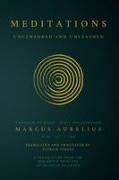
The Meditations you've been reading isn't the Meditations Marcus Aurelius wrote.
For centuries, translators have quietly softened, sanitized, and paraphrased the private notebooks of Rome's philosopher-emperor. Victorian propriety smoothed his blunt language into dignified prose. Modern paraphrase sacrificed precision for accessibility. The result is a Marcus Aurelius who sounds like a genteel essayist-not the exhausted emperor writing by lamplight on the Danubian frontier, holding his own mind together through raw Stoic discipline.
This translation goes back to the beginning.
Meditations: Uncensored and Unleashed is a fresh English translation grounded in Wilhelm Xylander's 1558 editio princeps-the first printed edition in both translated Latin and Marcus's Greek text, published directly from the now-lost Codex Palatinus before centuries of editorial "correction" reshaped what the emperor was allowed to say. Where every other English translation starts from modern critical editions and works forward, this translation starts with Xylander and works outward, using modern scholarship as a check rather than a foundation.
What emerges is a Marcus Aurelius most readers have never encountered. He describes the human body as "gore, and small bones, and a little woven network of nerves, veins, and arteries." He quotes vulgar comedy, names the erotic passions his adoptive father abandoned, and compresses an entire human life into "yesterday a drop of mucus, tomorrow pickled flesh or ashes." None of this is obscenity for its own sake. It is Stoic philosophy in practice: strip away the Impression, see the thing as it actually is, and irrational Desire loses its power.
This translation also restores the technical precision of Stoic philosophical vocabulary that most translations obscure. Marcus's psych¿ is not rendered as "soul"-a word carrying two millennia of Christian theological baggage incompatible with Stoic materialism. It remains Psyche: a material entity composed of refined fire and air, capable of dissolving entirely at death. His pneuma is not "spirit" but Pneuma. His daim¿n is not an "inner voice" but his Daimon. A systematic terminology framework distinguishes technical Stoic concepts from ordinary language throughout, allowing readers to track Marcus's philosophical vocabulary with precision no other English translation provides.
The translator's methodology is fully transparent. Extensive front matter explains the three-source approach (Xylander Greek as primary, Xylander Latin for reference, modern critical editions for validation), the rationale behind every major editorial decision, and a comprehensive glossary of Stoic terminology. Over 190 footnotes document textual variants, explain historical context, and identify where the Xylander text diverges from modern editions. Translated historical epistles from Xylander and Conrad Gessner are included as appendices, alongside a complete Works Cited section.
The result preserves Marcus's own voice: fragmented, abrupt, repetitive, and unflinchingly honest. Where he is crude, this translation is crude. Where his grammar is compressed and unusual, the compression is preserved rather than normalized into comfortable English prose. This is not a self-help book dressed in a toga. It is the private philosophical journal of a dying emperor who found in Stoicism not comfort, but clarity.
Includes all 12 Books (488 sections), translator's preface, introductory essays on methodology and translation philosophy, a detailed Stoic terminology glossary, translated historical epistles, and comprehensive scholarly apparatus.
For readers of philosophy, classics, ancient history, and Stoicism who want Marcus Aurelius as he actually was-not as later centuries wished he had been.