Ulteriori informazioni
Before the end of the Cold War religion seemed to occupy a well-defined place in the modern world picture. It was associated with tradition and allegedly had lost its relevance in the social and political spheres developing into an optional element in the private lives of modern citizens. Today, however, the classical secularisation hypothesis looks much less uncontroversial. Arguably, religion has never lost its relevance to individual and collective cultural agency. Specifically in Britain the religious encoding of cultural conflicts has enjoyed an unbroken tradition going back to the 16th and 17th centuries. The essays in the first section of this volume analyse examples from the 17th to the early 19th centuries showing the intimate connection of religion with the central trajectories of modernisation. The contributions to the second section focus on regional, popular, and elite cultural phenomena revealing deep imprints of the religious in contemporary society. The discussions of the religious in post-war and recent films in the third section suggest that religion has been highly visible as an issue since the middle of the 20th century, and that its presence in this medium has been strongly influenced by ideological as well as economic concerns. Altogether, the essays demonstrate that there has never been a clear-cut division between the religious and the secular. Instead, the fusion of religious and secular motives, encodings and trappings has continued to provide a powerful source of individual and collective social, cultural and political agency.
Riassunto
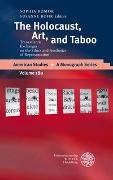
Representations of the Holocaust changed dramatically in the 1990s, when film, literature, and works of visual art attracted international attention by provoking scandals. Holocaust art turned to genres and styles that had traditionally been considered taboo. This change raises many questions: Why the widespread provocation? Why are representational rules being broken at the turn of the millennium - rules that have been respected and observed for decades? What should we make of art of this kind?
The contributors to this volume address these (and other) questions. They juxtapose conventional depictions of the Holocaust with recent works of art which reveal shifting paradigms in the fields of visual art, literature, film, pop culture, and aesthetic theory.