Ulteriori informazioni
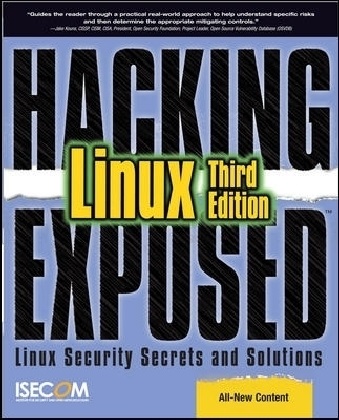
Informationen zum Autor ISECOM (the Institute for Security and Open Methodologies), (Barcelona, Spain & New York, NY) is an open, collaborative, security research community established in January 2001. In order to fulfill its mission focus to apply critical thinking and scientific methodology to all facets of security, ISECOM is chartered as a commercial-free and non-partisan organization. The ISECOM Board of Directors reflects many countries representing thousands of members and volunteers from around the world. In a world of increasing commercial and industrial misrepresentation of security, ISECOM enables logical and rational decision-making in all aspects of security, integrity, privacy, and safety. Klappentext Publisher's Note: Products purchased from Third Party sellers are not guaranteed by the publisher for quality, authenticity, or access to any online entitlements included with the product. The Latest Linux Security Solutions This authoritative guide will help you secure your Linux network--whether you use Linux as a desktop OS, for Internet services, for telecommunications, or for wireless services. Completely rewritten the ISECOM way, Hacking Exposed Linux, Third Edition provides the most up-to-date coverage available from a large team of topic-focused experts. The book is based on the latest ISECOM security research and shows you, in full detail, how to lock out intruders and defend your Linux systems against catastrophic attacks. Secure Linux by using attacks and countermeasures from the latest OSSTMM research Follow attack techniques of PSTN, ISDN, and PSDN over Linux Harden VoIP, Bluetooth, RF, RFID, and IR devices on Linux Block Linux signal jamming, cloning, and eavesdropping attacks Apply Trusted Computing and cryptography tools for your best defense Fix vulnerabilities in DNS, SMTP, and Web 2.0 services Prevent SPAM, Trojan, phishing, DoS, and DDoS exploits Find and repair errors in C code with static analysis and Hoare Logic Zusammenfassung Based on the Linux 2.6 kernel! this title reveals Linux attacks! countermeasures! and case studies. It helps to learn how to secure any version of Linux that you are running. Inhaltsverzeichnis Foreword Acknowledgments Introduction Part I: Security and Controls Chapter 1. Applying Security Chapter 2. Applying Interactive Controls Chapter 3. Applying Process Controls Part II: Hacking the System Chapter 4. Local Access Control Chapter 5. Data Networks Security Chapter 6. Unconventional Data Attack Vectors Chapter 7. Voice over IP Chapter 8. Wireless Networks Chapter 9. Input/Output Devices Chapter 10. RFID--Radio Frequency Identification Chapter 11. Emanation Attacks Chapter 12. Trusted Computing Part III: Hacking the Users Chapter 13. Web Application Hacking Chapter 14. Mail Services Chapter 15. Name Services Part IV: Care and Maintenance Chapter 16. Reliability: Static Analysis of C Code Chapter 17. Security Tweaks in the Linux Kernal Part V: Appendixes Appendix A. Management and Maintenance Appendix B. Linux Forensics and Data Recovery Appendix C. BSD Index...