Ulteriori informazioni
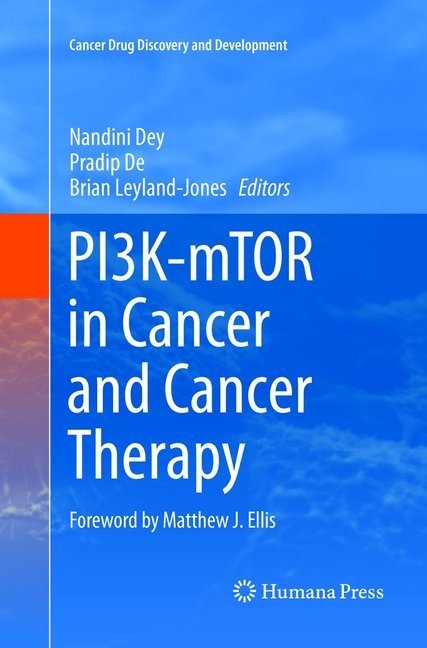
In the post human-genome project era, cancer specific genomic maps are redesigning tumor taxonomy by evolving from histopathology to molecular pathology. The success of a cancer drug today is fundamentally based on the success in identifying target genes that control beneficial pathways. The overwhelming power of genomics and proteomics has enlightened researchers about the fact that the PI3K-mTOR pathway is the most commonly up-regulated signal transduction pathway in various cancers, either by virtue of its activation downstream of many cell surface growth factor receptors or by virtue of its collateral and compensatory circuitry with RAS-MAPK pathway. Oncogenic signaling in the majority of solid tumors is sustained via the PI3K-AKT-mTOR pathway. Because of its prominent role in many cancer types, the PI3K-mTOR pathway has become a major therapeutic target. The volume includes two complementary parts which address the problem of etiology and disease progression and is intended to portray the very basic mechanisms of the PI3K-AKT-mTOR signaling pathway's involvement in various facets of the cancer, including stem cell renewal, cell metabolism, angiogenesis, genetic instability, and drug resistance. Significant progress has been made in recent years elucidating the molecular mechanism of cancer cell proliferation, angiogenesis, and drug-resistance in relation to the PI3K-mTOR pathway and this volume provides an in-depth overview of recent developments made in this area.
Info autore
Nandini Dey, M.S., Ph.D., is a Senior Scientist Head of Cancer Biology, Avera Cancer Institute Center for Precision Oncology. She is also Assistant Professor of the Department of Internal Medicine at The University of South Dakota Sanford School of Medicine. Dey has more than 20 years of experience in translational research and has authored or co-authored more than 80 publications.<
Pradip De, M.S., Ph.D., is a Senior Scientist Head of Translational Oncology, Avera Cancer Institute Center for Precision Oncology. He is also Assistant Professor of the Department of Internal Medicine at The University of South Dakota Sanford School of Medicine. De has more than 20 years of experience in translational research in academics and industry and has authored or co-authored more than 90 publications.
Brian Leyland-Jones, MB BS, Ph.D. is Vice President of Avera Cancer Institute Center for Precision Oncology. Dr. Leyland-Jones is a consulting professor at the Stanford University School of Medicine. He is an internationally renowned breast cancer expert with more than 35 years experience in patient care and research, has published over 170 papers and has received over 11,000 citations in his scientific career.
Riassunto
In the post human-genome project era, cancer specific genomic maps are redesigning tumor taxonomy by evolving from histopathology to molecular pathology. The success of a cancer drug today is fundamentally based on the success in identifying target genes that control beneficial pathways. The overwhelming power of genomics and proteomics has enlightened researchers about the fact that the PI3K-mTOR pathway is the most commonly up-regulated signal transduction pathway in various cancers, either by virtue of its activation downstream of many cell surface growth factor receptors or by virtue of its collateral and compensatory circuitry with RAS-MAPK pathway. Oncogenic signaling in the majority of solid tumors is sustained via the PI3K-AKT-mTOR pathway. Because of its prominent role in many cancer types, the PI3K-mTOR pathway has become a major therapeutic target. The volume includes two complementary parts which address the problem of etiology and disease progression and is intended to portray the very basic mechanisms of the PI3K-AKT-mTOR signaling pathway’s involvement in various facets of the cancer, including stem cell renewal, cell metabolism, angiogenesis, genetic instability, and drug resistance. Significant progress has been made in recent years elucidating the molecular mechanism of cancer cell proliferation, angiogenesis, and drug-resistance in relation to the PI3K-mTOR pathway and this volume provides an in-depth overview of recent developments made in this area.