Ulteriori informazioni
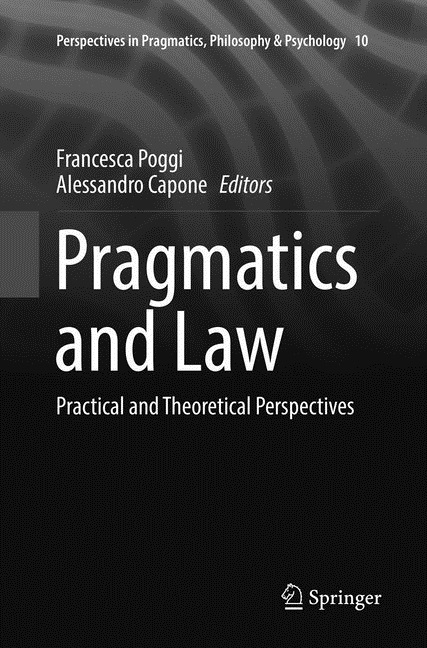
This volume is the second part of a project which hosts an interdisciplinary discussion about the relationship among law and language, legal practice and ordinary conversation, legal philosophy and the linguistics sciences. An international group of authors, from cognitive science, philosophy of language and philosophy of law question about how legal theory and pragmatics can enrich each other.
In particular, the first part is devoted to the analysis of how pragmatics can solve problems related to legal theory: What can pragmatics teach about the concept of law and its relationship with moral, and, in particular, about the eternal dispute between legal positivism and legal naturalism? What can pragmatics teach about the concept of law and/or legal disagreements?
The second part is focused on legal adjudication: it aims to construct a pragmatic apparatus appropriate to legal trial and/or to test the tenure of the traditional pragmatics tools in the field. The authors face questions such as: Which interesting pragmatic features emerge from legal adjudication? What pragmatic theories are better suited to account for the practice of judgment or its particular aspects (such as the testimony or the binding force of legal precedents)? Which pragmatic and socio-linguistic problems are highlighted by this practice?
Riassunto
This volume is the second part of a project which hosts an interdisciplinary discussion about the relationship among law and language, legal practice and ordinary conversation, legal philosophy and the linguistics sciences. An international group of authors, from cognitive science, philosophy of language and philosophy of law question about how legal theory and pragmatics can enrich each other.
In particular, the first part is devoted to the analysis of how pragmatics can solve problems related to legal theory: What can pragmatics teach about the concept of law and its relationship with moral, and, in particular, about the eternal dispute between legal positivism and legal naturalism? What can pragmatics teach about the concept of law and/or legal disagreements?
The second part is focused on legal adjudication: it aims to construct a pragmatic apparatus appropriate to legal trial and/or to test the tenure of the traditional pragmatics tools in the field. The authors face questions such as: Which interesting pragmatic features emerge from legal adjudication? What pragmatic theories are better suited to account for the practice of judgment or its particular aspects (such as the testimony or the binding force of legal precedents)? Which pragmatic and socio-linguistic problems are highlighted by this practice?
Testo aggiuntivo
“The contributions in the book discuss highly complex questions at the interface between the philosophy of law, philosophy of language, and pragmatics. … Overall, this is a well-edited book which will hopefully inspire future research. It represents an important contribution to the understanding of the pragmatic aspects of the relationship between language and law, and it is a valuable resource for scholars interested in legal theory, philosophy of law, philosophy of language, semantics, pragmatics, and legal linguistics.” (Lelija Socanac, The Linguist List, linguistlist.org, June, 2017)
Relazione
"The contributions in the book discuss highly complex questions at the interface between the philosophy of law, philosophy of language, and pragmatics. ... Overall, this is a well-edited book which will hopefully inspire future research. It represents an important contribution to the understanding of the pragmatic aspects of the relationship between language and law, and it is a valuable resource for scholars interested in legal theory, philosophy of law, philosophy of language, semantics, pragmatics, and legal linguistics." (Lelija Socanac, The Linguist List, linguistlist.org, June, 2017)