Ulteriori informazioni
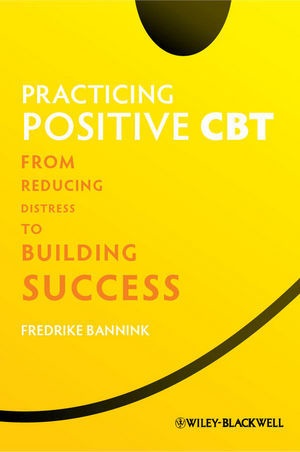
Informationen zum Autor Fredrike Bannink is a clinical psychologist and Master of Dispute Resolution based in Amsterdam. She is an internationally recognized cognitive behavioral therapist and trainer, and co-founder and Chair of the Solution-Focused CBT Section of the Dutch Association for Behavioural and Cognitive Therapy. Klappentext Practicing Positive CBT: From Reducing Distress to Building Success reveals a new therapeutic approach that combines traditional CBT with Positive Psychology and Solution-Focused Brief Therapy. By shifting the focus of therapy from what is wrong with clients to what it right with them and from what is not working to what is, Positive CBT creates a more optimistic process that empowers clients and therapists to flourish.* Increases client motivation and collaboration; allows therapeutic outcomes to be achieved in shorter timeframes and in a more cost-effective way* Covers theory and applications, and provides a wide range of stories, exercises and case studies* The author has a uniquely broad knowledge and experience as a therapist and trainer of CBT, PP, and SFBT "It was a refreshing read and highlighted the need for clinicians to regularly review their approach and push for positive psychological wellbeing for their clients and themselves beyond distress reducction." ( Behavioural & Cognitive Psychotherapy , 1 June 2013) Zusammenfassung Practicing Positive CBT: From Reducing Distress to Building Success reveals a new therapeutic approach that combines traditional CBT with Positive Psychology and Solution-Focused Brief Therapy. Inhaltsverzeichnis About the Author ix Foreword x Preface xii Story: The Hundredth Monkey xiv Acknowledgments xv PART I THEORY 1 1 What is CBT? 3 Introduction 3 CBT Techniques 4 Empirical Evidence 5 2 What is Positive CBT? 7 Introduction 7 Shortcomings of the Problem-Solving Paradigm 8 Story 2.1: How to Not Be Unhappy 10 Towards a Strengths and Solutions Paradigm 10 Notes on Learning Theory 16 Story 2.2: I Can Choose 16 Changing Role of the Therapist 16 Differences Between Traditional CBT and Positive CBT - An Overview 17 Story 2.3: Looking for Problems? 17 3 Possibilities of Positive CBT 19 Introduction 19 What is Positive in Traditional CBT? 20 Possibilities of Positive CBT 31 4 Two Positive Sources 34 Introduction 34 Source 1: Positive Psychology 35 Story 4.1: The Power of Positive Emotions 41 Source 2: Solution-Focused Brief Therapy 41 Story 4.2: Do Something Different for a Change 42 Story 4.3: Working from the Future Back 49 Short Comparison Between Positive Psychology and Solution-Focused Brief Therapy 50 Empirical Evidence 50 Neuroscience 51 Story 4.4: The Drip System 55 The Body 59 PART II APPLICATIONS 61 5 Enhancing the Therapeutic Alliance 63 Introduction 63 Building a Positive Alliance 64 Offering Acknowledgment 65 Story 5.1: Acknowledging the Problem 66 Enhancing Hope 66 Story 5.2: The Archer 69 Story 5.3: The Power of Hope 70 Reinforcing Strengths and "What Works" 70 Enhancing Cooperation 72 Story 5.4: Misery I Love You! 74 Story 5.5: Everybody, Somebody, Anybody, and Nobody 76 6 Assessment 77 Introduction 77 Case Conceptualization 77 Assessing Goals 79 Story 6.1: Top Performers 86 Assessing Problems, Complaints, and Constraints 87 Assessing Strengths and Resources 88 Assessing Progress, Motivation, Hope, and Confi dence 90 Story 6.2: At the Car Wash 92 Assessing Motivation to Change 93 Positive Self-monitoring 93 Positive Functi...
Relazione
"It was a refreshing read and highlighted the need for clinicians to regularly review their approach and push for positive psychological wellbeing for their clients and themselves beyond distress reducction." ( Behavioural & Cognitive Psychotherapy , 1 June 2013)