Read more
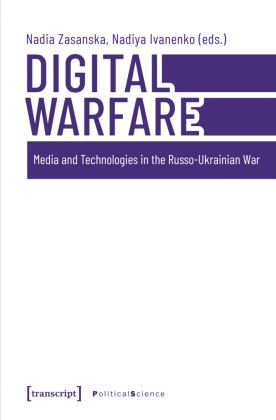
Digital media and technologies remain unpredictable when we approach them as actors in armed conflicts. Artificial intelligence, drones, information leaks, hacking, propaganda and fakes become part of war reality. The contributors to this volume prompt us to focus on the virtual fronts of the Russo-Ukrainian War, examining the agency of an individual, community and society in the digitalized war reality. This collection illustrates how digital spaces empower society to stay resilient, resist Russia's aggression and defend democratic values in times of adversity and severe trials.
About the author
Nadia Zasanska (Dr) is a research fellow at the Interdisciplinary Center for European Studies at the Europa-Universität Flensburg, Germany. Her interests involve digital religion, media studies, and religious studies.
Summary
Digital media and technologies remain unpredictable when we approach them as actors in armed conflicts. Artificial intelligence, drones, information leaks, hacking, propaganda and fakes become part of war reality. The contributors to this volume prompt us to focus on the virtual fronts of the Russo-Ukrainian War, examining the agency of an individual, community and society in the digitalized war reality. This collection illustrates how digital spaces empower society to stay resilient, resist Russia’s aggression and defend democratic values in times of adversity and severe trials.
Additional text
Besprochen in:
Forum RGOW, 10 (2025), Regula M. Zwahlen
Report
Besprochen in:
Forum RGOW, 10 (2025), Regula M. Zwahlen
20251010