Read more
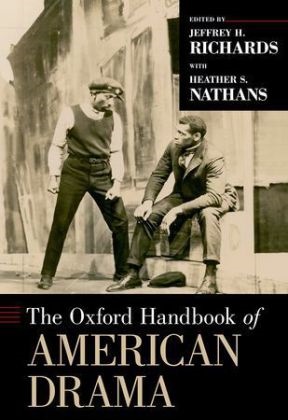
This ambitious collection of essays covers American drama in its entirety-from its inception in colonial America, through its many incarnations in the nineteenth century, to its zenith in the twentieth and early twenty-first centuries. Differentiating itself from other treatments of the genre, the handbook will not only highlight the major works of the twentieth century, but will also attend carefully to earlier works and contexts. The collection's first part will
explore the genre's eighteenth-century genesis. William Dunlap's complex, sympathetic portrait of British forces in Andre is counterbalanced by the biting anti-colonial political satire of the nation's first female playwright, Mercy Otis Warren, through an appraisal of her witty, subversive
skewering of British loyalists in The Group. The nineteenth century saw the form diversifying with offerings like the antebellum era's reform plays, the melodrama, and the musical-a flowering that was given a new center of action in the growth of Broadway. A full survey of the vexing tradition of minstrelsy and the struggles of Black Americans on the stage provides a transition into the twentieth century.
The new approaches to playwriting and performance pioneered by Eugene O'Neill, Susan Glaspell, and the Provincetown Players gave theater a new cachet early in the century through the possibilities offered by naturalism and expressionism. Overtly political content took the stage in the protest plays of Clifford Odets during the Great Depression though in general a more insular realism proved the dominant style, albeit one interrupted by recurring periods of experimentalism. Key moments and
artists who defined the later half of the twentieth-century are illuminated through in-depth essays on the scathing indictments of the American dream put forward by Arthur Miller, Tennessee Williams, and Edward Albee; the impact of the countercultural, mixed-race musical Hair; the complex nature of
David Mamet's social critique; the energy of experimental, off-Broadway theater; the importance of place and memory in August Wilson's works; and the acute anxiety over the AIDS crisis during the Regan eighties as presented in Angels in America. The volume will conclude with a consideration of what lies ahead for the nation's drama, focusing on the pivotal work of leading lights such as Sarah Ruhl and Suzan Lori-Parks.
About the author
Jeffrey H. Richards was Eminent Professor of Literature at Old Dominion University. He was the author of Drama Theater, and Identity in the American New Republic and the editor of Early Plays: Eugene O'Neill and Early American Drama (Penguin; 2001, 1997).
Heather S. Nathans is Professor of Theatre at the University of Maryland and the new President of the American Society for Theatre Research.
Summary
This ambitious collection of essays covers American drama in its entirety--from its inception in colonial America, through its many incarnations in the nineteenth century, to its zenith in the twentieth and early twenty-first centuries. Differentiating itself from other treatments of the genre, the handbook will not only highlight the major works of the twentieth century, but will also attend carefully to earlier works and contexts. The collection's first part will explore the genre's eighteenth-century genesis. William Dunlap's complex, sympathetic portrait of British forces in Andre is counterbalanced by the biting anti-colonial political satire of the nation's first female playwright, Mercy Otis Warren, through an appraisal of her witty, subversive skewering of British loyalists in The Group. The nineteenth century saw the form diversifying with offerings like the antebellum era's reform plays, the melodrama, and the musical-a flowering that was given a new center of action in the growth of Broadway. A full survey of the vexing tradition of minstrelsy and the struggles of Black Americans on the stage provides a transition into the twentieth century.
The new approaches to playwriting and performance pioneered by Eugene O'Neill, Susan Glaspell, and the Provincetown Players gave theater a new cachet early in the century through the possibilities offered by naturalism and expressionism. Overtly political content took the stage in the protest plays of Clifford Odets during the Great Depression though in general a more insular realism proved the dominant style, albeit one interrupted by recurring periods of experimentalism. Key moments and artists who defined the later half of the twentieth-century are illuminated through in-depth essays on the scathing indictments of the American dream put forward by Arthur Miller, Tennessee Williams, and Edward Albee; the impact of the countercultural, mixed-race musical Hair; the complex nature of David Mamet's social critique; the energy of experimental, off-Broadway theater; the importance of place and memory in August Wilson's works; and the acute anxiety over the AIDS crisis during the Regan eighties as presented in Angels in America. The volume will conclude with a consideration of what lies ahead for the nation's drama, focusing on the pivotal work of leading lights such as Sarah Ruhl and Suzan Lori-Parks.
Additional text
This reviewer would recommend this handbook for any graduate dramatic literature or theatre history course; each essay displays a firm grasp of the era or subject for which it was written. It is best used in conjunction with the reading of a play or the writing of a paper concerning a particular aspect of American dramatic literature rather than as a resource substituting the reading, viewing, or staging of a play.
Report
This reviewer would recommend this handbook for any graduate dramatic literature or theatre history course; each essay displays a firm grasp of the era or subject for which it was written. It is best used in conjunction with the reading of a play or the writing of a paper concerning a particular aspect of American dramatic literature rather than as a resource substituting the reading, viewing, or staging of a play. Rodney Donahue, Journal of American Culture