

Condividi
Fr. 47.90
S Carroll, Stephen Carroll, Stephen (University of Maryland) Flood Carroll, Stephen Flood Carroll, Stephen J Carroll, Stephen J. Carroll...
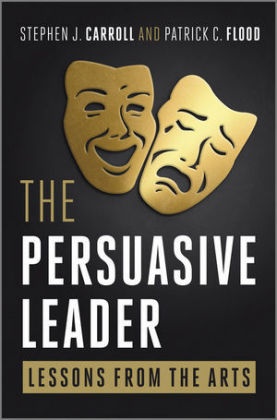
Persuasive Leader - Lessons From the Arts
Inglese · Copertina rigida
Spedizione di solito entro 1 a 3 settimane (non disponibile a breve termine)
Descrizione
Zusatztext '...this unique book is ideal for executives! organizational leaders! consultants! educators! and MBA students'. (Publicnet.co.uk! September 2010). Informationen zum Autor Stephen J. Carroll is a retired professor emeritus at the University of Maryland, who now works as a private consultant. During his career he has authored twelve books on psychology and organizational behaviour. He has served as a consultant to more than 30 industrial and government organizations and is a regular speaker at the University of Maryland and Syracuse University executive courses. He is best known for his books on performance assessment and leadership. He first developed the idea for this book in his courses for company executives where he found they responded particularly well to the case examples from the arts and from day to day life. Patrick C Flood is an Academic Fellow at Cambridge University. He has worked at the London Business School, University of Maryland, University of Limerick, Dublin City University and the London School of Economics. He is known primarily for his work on leadership teams and firm performance. His books include Effective Top Management Teams (2001, Blackwelll; Managing Strategy Implementation (with S.J.Carroll, Blackwell, 2000) (5000 copies sold over life) and Managing without Traditional Methods (Addison Wesley, 1996). He is currently external examiner at SAID business school and consults for the following companies: Pernod Ricard-Irish Distillers; Nypro-Clinton(US); Hewlett Packard (UK), Wang, Paul Partnership and VEC, Novartis, Nortel, ICL (UK), NHS(UK). Klappentext The communication aspect of leadership - to actively engage your followers and achieve understanding and motivation whilst making the message memorable - has never been more important. Using vivid lessons and examples from spheres outside business organization, The Persuasive Leader explores the leader's role as a communicator and teaches the fundamental principles of successful leadership.This book provides insights and principles about persuasive leadership from a broad range of human experiences. It draws on examples of persuasive leaders and persuasive leadership principles from the performing arts, the fine arts, literature, philosophical writings, and biography. The authors use their unconventional material to explore themes such as moral leadership, toxic leadership, learning from failures, 'distributed' leadership, leading for results and the leader as a mentor and counsellor. Zusammenfassung The communication aspect of leadership to actively engage your followers and achieve understanding and motivation whilst making the message memorable has never been more important. Inhaltsverzeichnis Foreword by Denise M. Rousseau xvi Preface xvii Acknowledgements xviii About the authors xix 1 Persuasive leadership in life and work 1 Beginning cases 2 What is leadership? 4 Persuasive leadership in a new world 5 A newer focus on emotions and logic 6 Leadership as a social role in all living groups 6 Leadership legacies 7 Leadership goals 8 Leadership sub-roles 9 Leadership in changing crcumstances 9 Leader agendas 10 Leadership and the arts 10 Parents as persuasive leaders 11 Leadership and strategies 11 Do leaders need charisma? 12 Persuasion as a key to all leadership efforts 13 Leaders as coherent wholes 13 Learning from examples 13 Types of persuasion settings 14 Types of Leadership 15 Leadership skills as identified in the arts and humanities 15 Do we need empirical studies of leadership? 16 Leaders and ethical behaviours 17 Leaders as examples of persuasive and moral principles 17 2 Usingaesthetics and the arts in persuasive ...
Sommario
Foreword (Denise M. Rousseau).
Preface.
Acknowledgements.
About the authors.
1 Persuasive leadership in life and work.
Beginning cases.
What is leadership?
Persuasive leadership in a new world.
A newer focus on emotions and logic.
Leadership as a social role in all living groups.
Leadership legacies.
Leadership goals.
Leadership sub-roles.
Leadership in changing crcumstances.
Leader agendas.
Leadership and the arts.
Parents as persuasive leaders.
Leadership and strategies.
Do leaders need charisma?
Persuasion as a key to all leadership efforts.
Leaders as coherent wholes.
Learning from examples.
Types of persuasion settings.
Types of Leadership.
Leadership skills as identified in the arts and humanities.
Do we need empirical studies of leadership?
Leaders and ethical behaviours.
Leaders as examples of persuasive and moral principles.
Summary.
End case.
Works cited.
2 Usingaesthetics and the arts in persuasive leadership.
Beginning cases.
Leaders using the arts.
What are the arts?
Practical use of the arts.
The aesthetic response.
Aesthetics and human evolution.
Unity among the arts.
Performance art.
Leader-managers as architects.
The orchestra conductor metaphor.
Music in aesthetics.
Humans as artists.
Theatrical principles in leadership 32
Fictional versus actual leaders.
Behaving like an artist.
3 Usingwords effectively in persuasive speech and writing.
Beginning cases.
Evolution of language.
Importance of word choice.
Power of words to evoke emotion.
Aesthetic versus non-aesthetic language.
Function of fictional stories.
Use of stories in persuasion.
Delivering words effectively.
Audience reactions to words.
Words reflect characteristics of the speaker.
Being open-minded in one's communications.
4 Persuasive leadership and rhetoric principles.
Beginning cases.
Persuasion principles from philosophy.
Persuasion in literature.
Henry V.
Julius Caesar.
Joshua Chamberlain.
Discussion of speeches.
5 Persuasive leadership-planningconsiderations.
Beginning cases.
Studying the prospective audience.
Building credibility.
Obtain endorsements by influential persons.
Build competence and coalitions.
Gather facts and arguments in favor of goals.
Plan for creating arousal/activation and more memorable messages.
Planning for message content.
Preparation.
Practice.
Choose optimum timing and setting.
Emotional appeals.
Use of dramatic principles in persuasion planning.
Creating an engaging character--yourself.
Learning acting skills.
Process of planning.
Using the arts in planning.
6 Audience characteristics.
Beginning cases.
Audience characteristics.
Audience to leader effects.
Use of participation.
Audience concerns.
Psychological needs of the audience.
Effect of cultural differences in audience responses.
Motivational propensities in an audience.
&nbs
Relazione
'...this unique book is ideal for executives, organizational leaders, consultants, educators, and MBA students'. (Publicnet.co.uk, September 2010).
Dettagli sul prodotto
| Autori | S Carroll, Stephen Carroll, Stephen (University of Maryland) Flood Carroll, Stephen Flood Carroll, Stephen J Carroll, Stephen J. Carroll, Carroll Stephen, Patrick Flood, Patrick C Flood, Patrick C. Flood, Patrick C. Carroll Flood, Flood Patrick C. |
| Editore | Wiley, John and Sons Ltd |
| Lingue | Inglese |
| Formato | Copertina rigida |
| Pubblicazione | 23.07.2010 |
| EAN | 9780470688281 |
| ISBN | 978-0-470-68828-1 |
| Pagine | 288 |
| Categorie |
Scienze sociali, diritto, economia
> Economia
> Management
Führung, Business & management, Wirtschaft u. Management, Management f. Führungskräfte, Management / Leadership |
Recensioni dei clienti
Per questo articolo non c'è ancora nessuna recensione. Scrivi la prima recensione e aiuta gli altri utenti a scegliere.
Scrivi una recensione
Top o flop? Scrivi la tua recensione.