Ulteriori informazioni
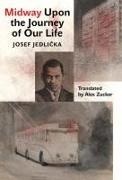
Written in the years 1954-57 and treating events from the Stalinist era of Czechoslovakia's postwar Communist regime, Midway upon the Journey of Our Life flew in the face of the reigning aesthetic of socialist realism, an anti-heroic novella informed by the literary theory of Viktor Shklovsky and constructed from episodes and lyrical sketches of the author and his neighbors' everyday life in industrial north Bohemia, set against a backdrop of historical and cultural upheaval. Jedlicka, like many if not most intellectuals of his generation, was a member of the Communist Party when it came to power in February 1948, but by fall he had resigned, and shortly after, as a result, he was expelled from his studies in ethnography and esthetics at Charles University in Prague. In 1952 he and his wife had a son, and when she was offered a position as a doctor in the border town of Litvinov in 1953, the family moved. Jedlicka worked odd jobs as a laborer and tutor, with occasional freelance assignments for radio, TV and magazines, while writing Midway at night. The title of the book comes from the opening line of Inferno from Dante's Divine Comedy. For Jedlicka, Litvinov was hell.
Meditative and speculative reflections here alternate and overlap with fragmentary accounts of Jedlicka's own biography and slices of the lives of the people around him, typically rendered as overheard conversations. The narrative passages range in chronology from May 1945 to the early '50s, with sporadic leaps back and forth as the "characters" go about the business of "building a new society" and the mythology that goes with it. Jedlicka and his family were residents of the Koldum (Collective House), a grandiose socialist architectural project of communal living that fails in ways comic and tragicomic alike.
Jedlicka doesn't neglect to portray the era's most momentous events, including the February 25, 1948, speech by Czechoslovakia's first Communist president, Klement Gottwald, on Prague's Old Town Square, which readers of Kundera will recognize from The Book of Laughter and Forgetting, and which Jedlicka witnessed firsthand. But while Kundera was concerned with the grand sweep of history, Jedlicka zeroes in on more personal and quotidian features of the new order.
Due to its critical view of socialist society, Jedlicka was not able to publish Midway until 1966, after the easing of cultural control. Even then, however, parts of the book were censored, and the complete version did not appear until 1994.
Info autore
Josef Jedlička (1927-1990) was a Czech novelist and essayist.
Alex Zucker is a translator of Czech literature whose translation of Jáchym Topol's
The Devil's Workshop received the English PEN Award for Writing in Translation.