Read more
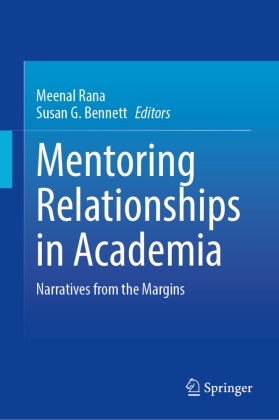
This book examines multiple aspects of mentoring relationships in academia through autoethnography and personal narratives. It emphasizes narratives from diverse populations, including first-generation college students, people of color, women, immigrants, those from intergenerational poverty, LGBTQIA2S+ people, and individuals with disabilities. The book identifies gaps in mentoring and offers strategies for closing them. It provides recommendations for potential mentees and discusses implications for professional development in academia.
Key areas of coverage include:
- Sociocultural and historical contexts of academic mentoring relationships.
- Qualities that make a successful academic mentor.
- Mentoring marginalized individuals in academia.
- Benefits of actively seeking and establishing academic mentor relationships.
Mentoring Relationships in Academia is a must-have resource for researchers, professors, graduate and undergraduate students as well as clinicians, therapists, and other professionals in developmental and clinical psychology, social work, public health, human development and family studies, arts and humanities, soci
List of contents
Chapter 1. Introduction.- Chapter 2. Breaking Barriers, Building Futures: A Mentor s Story of Impact and Growth.- Chapter 3. Mentorship as Relationship: Listening, Learning, and Becoming.- Chapter 4. Rooted in Care: Mentoring as Relationship, Advocacy, and Love.- Chapter 5. Principles and Processes of Mentoring Relationships.- Chapter 6. Transformative Mentorship for Scholarly Growth.- Chapter 7. Mentoring Across Generations, Genders, Social Class, and Religions.- Chapter 8. Texas Two Steppin': The Importance of Peers in Learning Academic Choreography.- Chapter 9. Whixolchwe : An Indigenous Perspective of Mentorship.- Chapter 10. Mentorship Relationships in Transcontinental Contexts.- Chapter 11. Feminist Co-Mentoring for a First-Generation Scholar: Cutting One s Path in Academia.- Chapter 12. Creating a Village in Higher Education: Mentorship, Identity, and Empowerment for Black women in Ph.D. Programs.- Chapter 13. Three Generations of Academic Mentorship: My Mentor, My Mentee, and Me.- Chapter 14. Enhancing Autonomy, Relatedness, and Competence in Cross-Cultural Mentorship: Insights from Social Learning and Self-Determination Theories .- Chapter 15. Mentoring in Academia: Recharging Mentoring Batteries through Maslow s Lens.- Chapter 16. Mentorship on the Margins: A Black Feminist Perspective on Navigating Race, Gender, and Power in Academia.- Chapter 17. Role of Mentorship in Nurturing My Success in Academia.- Chapter 18. Mentoring Human Potential: The Legacy of Dr. Tom Luster.- Chapter 19. Mentee to Mentor: Reflections Through Relational Developmental Systems.- Chapter 20. Reimagining Mentorship for Inclusive Leadership in Higher Education.- Chapter 21. Beyond Traditional Mentoring: Professional Playdates for Non-Traditional Junior Faculty.- Chapter 22. Hidden Curriculum and the Shadow Degree: Mentoring for Equity, Power, and Care in Higher Education.- Chapter 23. Conclusion: Mentorship as a Transformative Praxis.
About the author
Meenal Rana, Ph.D.,
has been teaching college students for the past fifteen years at three different institutions: Michigan State University, Brown University, and California State Polytechnic University, Humboldt. At Humboldt (since 2013), she teaches several classes in growth and development, methods of observation, professional development, children and stress, parent-child relationships, contemporary issues in child development, service learning, and field placement. Dr. Rana’s research interests include identity exploration/development, belongingness, and resilience among youth and college students. She enjoys working closely with her students whether it is through advising, mentoring, supervising field placements or engaging them in her research and advocacy projects.
Susan G. Bennett, Ph.D.,
began her teaching career as a middle school English teacher, and during the next fifty years has educated students as young as four through graduate students completing their doctoral dissertations. At both The University of Texas, Austin, and Humboldt State University (now California State Polytechnic University, Humboldt), Dr. Bennett has directed National Writing Project sites, taught courses, conducted research, and published in the areas of young adult and children’s literature, composition, writing theory and research, and secondary teaching methods in English. Her current interests include the role of mentorship in student success, resilience, and mental health.
Summary
This book examines multiple aspects of mentoring relationships in academia through autoethnography and personal narratives. It emphasizes narratives from diverse populations, including first-generation college students, people of color, women, immigrants, those from intergenerational poverty, LGBTQIA2S+ people, and individuals with disabilities. The book identifies gaps in mentoring and offers strategies for closing them. It provides recommendations for potential mentees and discusses implications for professional development in academia.
Key areas of coverage include:
- Sociocultural and historical contexts of academic mentoring relationships.
- Qualities that make a successful academic mentor.
- Mentoring marginalized individuals in academia.
- Benefits of actively seeking and establishing academic mentor relationships.
Mentoring Relationships in Academia is a must-have resource for researchers, professors, graduate and undergraduate students as well as clinicians, therapists, and other professionals in developmental and clinical psychology, social work, public health, human development and family studies, arts and humanities, social sciences, and educational leadership, and all related STEAM (science, technology, engineering, arts and mathematics) disciplines.