Read more
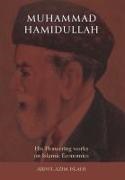
Dr. Muhammad Hamidullah was a genius and prolific writer. Anyone who has an interest in the Qur’ans translation, Hadith literature International Islamic Law, Islamic Politics and archival heritage of Islam cannot ignore Dr. Hamidullah’s contributions. He started writings on the subject of Islamic Economics as early as the 1930s. He was a pioneer in Islamic economics and many firsts in this subject belong to him. For instance: interest free financial institutions in the modern period, advocacy of mutuality as the basis for Islamic insurance, mutuality based Islamic finance and proposal for establishment of international interest-free monetary fund. He also critiques current systems and offers an alternative. His works are also a rich source of Islamic economic history. None of his contemporaries in the first half of twentieth century had written on such a diverse aspect of the subject.
List of contents
Acknowledgement
Foreword
Preface
Preface To The Second Edition
1 Muhammad Hamidullah: Life and Works
2 An Introduction to Hamidullah’s: Contributions to Islamic Economics
3 Zakah as The State Finance: A Critical Study of Hamidullah’s Views
4 Islam’s Solution of The Basic Economic Problems:
The Position of Labour
5 Property (An International Islamic Perspective)
6 Islamic Insurance
7 Interest-Free Cooperative Lending Societies
8 The Political Significance of Zakah
9 Islam and Communism
10 Haidarabad’s Contribution to Islamic Economic
Thought and Practice
11 A Suggestion for an Interest-Free Islamic
Monetary Fund
12 Budgeting and Taxation in The Time of
The Holy Prophet
13 The Economic System of Islam
14 Revenue and Calendar
15 Financial Administration in The Muslim State
16 Book Review – 1
17 Book Review – 2
18 Book Review – 3
Bibliography
Index
About the author
Abdul Azim Islahi is the editor and compiler of this book. He is the former Chief Editor of the Journal of King Abdulaziz University – Islamic Economics. He has spent more than 40 years in research, teaching, and expanding the frontiers of the discipline of Islamic economics. He obtained his PhD from Aligarh Muslim University in 1981. He is considered an authority on the history of Islamic economic thought. His most outstanding work is “Economic Concepts of Ibn Taimiyah” (Islamic Foundation, UK, 1988, republished in 1996). He has contributed four articles to the Encyclopaedia of Islamic Economics (London, 2009). He has to his credit 20 books and more than 100 research papers on the subject of Islamic Economics published in various national and international refereed journals. Prof. Islahi recently received the Istanbul-based Islamic Economics Research Centre, IKAM’s Islamic Economics Contribution Award for his Lifetime Achievement in the field of Islamic Economics.